You are reading a message from a friend.
They text: “I really need to talk.”
Now imagine they write:
“I REALLY need to talk.”
The words are the same, but the meaning feels different.
That is the power of emphasis in text.
Every day, people use emphasis in messages, emails, social media posts, and online conversations to show emotion, urgency, importance, excitement, or even sarcasm.
But many people misunderstand what emphasis actually means in written communication.
Does writing in all caps mean anger?
Does bold text always show importance?
Can emphasis change the emotional tone of a message?
The answer is yes.
In digital communication, emphasis does much more than highlight words. It changes how a message is understood.
A small formatting choice can make a sentence sound caring, serious, excited, dramatic, or aggressive.
This guide explains the complete meaning of “emphasized” in text, how people use it today, what it signals socially, and how to use it correctly across modern platforms in 2026.
By the end, you will understand exactly what emphasized text means and how to read it with confidence.
Quick Definition of “Emphasized”
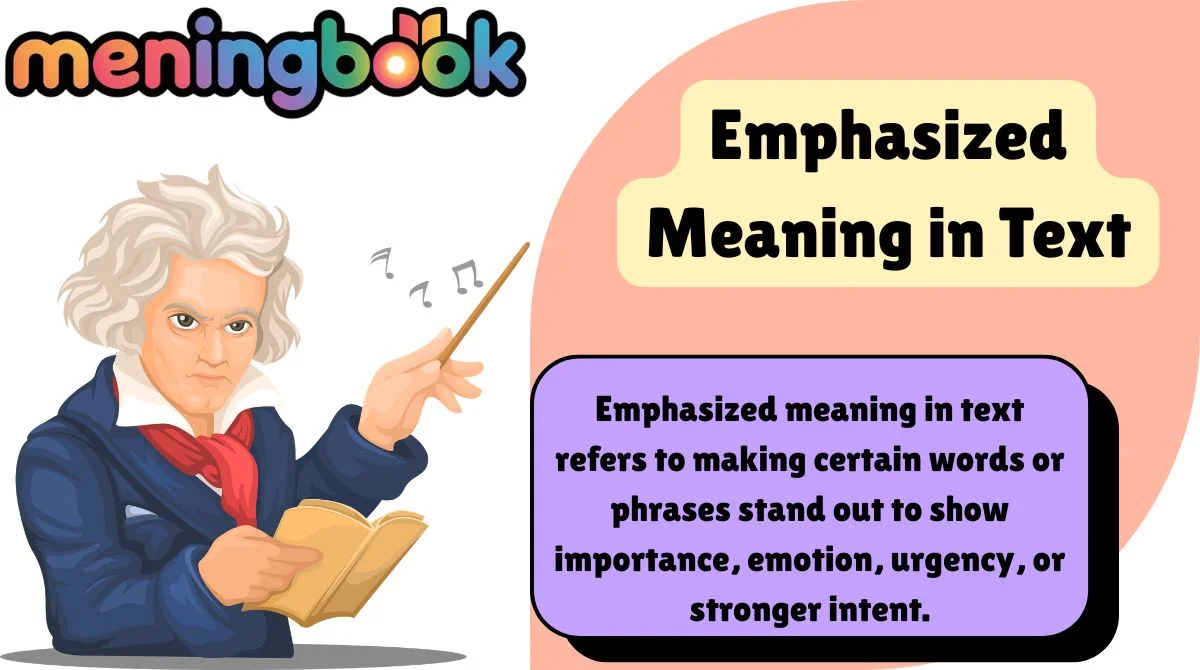
Emphasized meaning in text refers to making certain words or phrases stand out to show importance, emotion, urgency, or stronger intent.
It helps the writer direct attention to specific parts of a message.
Secondary meanings include:
- Showing emotional intensity
- Adding dramatic effect
- Clarifying tone
- Expressing sarcasm or frustration
- Highlighting urgency
In simple terms, emphasis tells the reader: pay special attention to this part.
Detailed Meaning Breakdown
The Primary Meaning
The main purpose of emphasis in text is to draw attention.
Writers emphasize words when they want readers to notice something important.
Examples:
“I said I’ll call you today.”
The emphasized word “today” shows timing matters.
“Please read the entire document.”
This tells the reader not to skip anything.
The emphasis adds weight.
Secondary Meanings
Emphasis often carries emotional signals.
Depending on context, it can show:
Excitement
“This is AMAZING!”
The writer is highly enthusiastic.
Urgency
“Please reply now.”
Immediate action is expected.
Frustration
“I literally told you three times.”
The writer feels annoyed.
Affection
“You’re so thoughtful.”
The emphasis increases emotional warmth.
Rare Meanings
Sometimes emphasis is used for style rather than meaning.
Examples include:
- Dramatic storytelling
- Humor
- Irony
- Meme culture
- Mock seriousness
Example:
“Oh yes, because that was a brilliant idea.”
Here, emphasis may indicate sarcasm.
What “Emphasized” Means in Different Situations
Everyday Texting
In personal texting, emphasis often reflects emotion.
People use:
- ALL CAPS
- Repeated letters
- Bold text
- Italics
- Emojis with emphasis
Examples:
“I’m soooo tired.”
This adds emotional depth.
“COME HERE.”
This feels urgent or intense.
Context matters.
A close friend may read it as playful.
Someone else may read it as aggressive.
Social Media Platforms
On social media, emphasis is used for visibility and emotional effect.
Examples include:
- Bold captions
- Capitalized words
- Repeated punctuation
- Strategic spacing
Example:
THIS. CHANGED. EVERYTHING.
This style grabs attention.
On platforms like Instagram, TikTok, and X, emphasis often increases engagement.
It makes posts feel stronger and more noticeable.
Dating & Relationships
In relationship communication, emphasis often reveals emotional intent.
Example:
“I really miss you.”
This sounds more heartfelt than:
“I miss you.”
Another example:
“You said you’d call me tonight.”
This may signal disappointment.
In romantic texts, emphasis can show:
- Love
- Neediness
- Excitement
- Frustration
- Emotional intensity
It often reveals what matters most emotionally.
Professional Communication
At work, emphasis should be used carefully.
Example:
Please submit this by 5 PM Friday.
This is clear and professional.
But:
PLEASE SEND THIS NOW!!!
This feels harsh.
Professional emphasis should guide, not pressure.
Safe methods include:
- Bold formatting
- Underlining key deadlines
- Bullet points
- Clear structure
Avoid emotional exaggeration.
Cultural or Regional Differences
Different cultures interpret emphasis differently.
In some regions, ALL CAPS is normal for clarity.
In others, it feels rude.
For example:
- Some English-speaking users read caps as shouting
- Some multilingual users use caps for visibility
- Younger users may use exaggerated emphasis humorously
Generational and cultural context shapes interpretation.
Psychological & Tone Analysis
Why People Use It
People emphasize text because written communication lacks vocal tone.
When speaking, we naturally use:
- Volume
- Pitch
- Pauses
- Facial expression
Text removes these signals.
Emphasis replaces them.
It helps simulate spoken emotion.
What It Signals Socially
Emphasized text often signals:
Confidence
“This is exactly what we need.”
Strong certainty.
Emotional Investment
“I’m really trying.”
Shows personal effort.
Authority
“This policy applies to everyone.”
Signals seriousness.
Urgency
“Call me immediately.”
Suggests importance.
The Emotional Layer Behind It
Readers often feel emphasis before they fully process it.
That is because emphasized text creates emotional weight.
Compare:
“I’m fine.”
vs
“I’m fine.”
The second version feels loaded.
It may imply hidden frustration.
Emphasis often carries unspoken emotion.
That is why it must be interpreted carefully.
15 Real Conversation Examples (Explained)
1. “I need your help.”
The need is urgent.
2. “That was so funny.”
Adds excitement.
3. “I said tomorrow, not today.”
Corrects misunderstanding.
4. “This is important.”
Signals priority.
5. “I’m REALLY tired.”
Shows intensity.
6. “Sure, that was smart.”
Likely sarcasm.
7. “Please don’t do that again.”
Adds warning.
8. “You looked amazing.”
Strong compliment.
9. “I’m fine.”
Could suggest hidden emotion.
10. “This is exactly what I wanted.”
Shows satisfaction.
11. “You were supposed to call me.”
Shifts focus to personal expectation.
12. “That’s your opinion.”
Creates contrast.
13. “I literally told you twice.”
Signals frustration.
14. “That was the best meal ever.”
Strong praise.
15. “I’m not saying it was bad, but it was interesting.”
Often indirect criticism.
When “Emphasized” Can Be Misunderstood
Context Confusion
Without context, emphasis can be read incorrectly.
Example:
“Okay.”
vs
“Okay.”
The second may feel passive-aggressive.
Intent depends on surrounding conversation.
Generational Gap
Older users often use emphasis for clarity.
Younger users may read it emotionally.
Example:
“CALL ME.”
An older sender may mean urgency.
A younger reader may interpret anger.
Platform Differences
Different apps shape interpretation.
On professional platforms, emphasis feels formal.
On casual platforms, it may feel emotional.
Example:
Bold text in Slack is normal.
All caps in personal texting can feel intense.
Similar Words, Symbols, or Abbreviations
Here are 10 related terms.
1. Bold
Makes text visually stronger.
2. Italics
Adds subtle stress.
3. ALL CAPS
Strong emphasis or shouting.
4. Underlining
Highlights importance.
5. Exclamation Marks
Adds excitement or urgency.
6. Repetition
“So so so good.”
Adds emotional force.
7. Elongation
“Pleaaase.”
Shows dramatic tone.
8. Asterisks
Really
Common digital emphasis.
9. Emojis
Add emotional emphasis.
Example: “Now. 🔥”
10. Text Formatting
Color, spacing, and font choices can create emphasis.
When Not to Use “Emphasized”
Professional Risks
Too much emphasis looks unprofessional.
Avoid:
“THIS NEEDS TO BE FIXED NOW!!!”
Better:
“This requires attention today.”
Cultural Risks
Some readers see strong emphasis as disrespectful.
Be cautious with:
- All caps
- Excess punctuation
- Dramatic repetition
Tone Risks
Overusing emphasis weakens its effect.
Example:
“This is really very extremely super important.”
This feels exaggerated.
Strong communication is often simple.
Expert Tips for Using “Emphasized” Correctly
Focus on one key word
Do not emphasize everything.
Choose the most important word.
Match the platform
Casual texting allows playful emphasis.
Professional settings need restraint.
Consider emotional impact
Ask how the reader may feel.
Avoid all caps unless necessary
Caps can feel aggressive.
Use sparingly.
Use formatting for clarity
Bold works better than multiple exclamation marks.
Read it aloud
If it sounds harsh, revise it.
Watch for sarcasm confusion
Text can hide tone.
Be careful.
Less is more
Strong emphasis works best when rare.
Frequently Asked Questions
What does emphasized mean in texting?
It means certain words are made stronger to show emotion, urgency, or importance.
Does emphasized text always mean anger?
No.
It can show excitement, love, urgency, humor, or seriousness.
Why do people use all caps for emphasis?
To make text stand out quickly.
It often mimics louder speech.
Is bold text better than all caps?
Usually yes.
Bold feels clearer and more professional.
Can emphasis change sentence meaning?
Yes.
It shifts focus and emotional interpretation.
How do I know if emphasis is sarcasm?
Look at context, relationship, and sentence structure.
Is emphasized text rude?
Not always.
It depends on tone and platform.
Should I use emphasis in professional emails?
Yes, but carefully.
Use bold formatting, not caps or excessive punctuation.
Final Summary
Emphasized meaning in text is about making certain words stand out to add clarity, emotion, urgency, or stronger intent.
It helps replace spoken cues that are missing in written communication.
When used correctly, emphasis improves understanding.
When used poorly, it creates confusion.
The key is context.
Always consider:
- Who is reading
- Where the message appears
- What emotional tone you want to create
A single emphasized word can completely change meaning.
That is why digital communication today requires more awareness than ever.
Use emphasis thoughtfully.
Keep it clear.
Keep it intentional.
And when in doubt, choose subtle emphasis over dramatic formatting.
That approach creates smarter, more confident communication in every setting.

I am Noah Peterson, an educational content writer passionate about simplifying complex topics into clear and practical learning