Have you ever received a text containing “DTTM” and wondered what it meant? You’re not alone.
Text messaging, social media, and online conversations are full of abbreviations that can be confusing, especially when new slang appears or older acronyms take on different meanings.
A simple four-letter abbreviation like DTTM can have multiple interpretations depending on the conversation, platform, and relationship between the people communicating.
What seems obvious to one person may be completely unclear to another.
Understanding the meaning behind text abbreviations is important because context can change everything. A misunderstanding can lead to confusion, awkward conversations, or even the wrong response.
This guide explains the meaning of DTTM, how people use it in texting and online communication, real-life examples, common misunderstandings, related abbreviations, and expert tips for using it correctly.
By the end, you’ll know exactly how to interpret DTTM in modern digital communication.
Quick Definition of “DTTM”
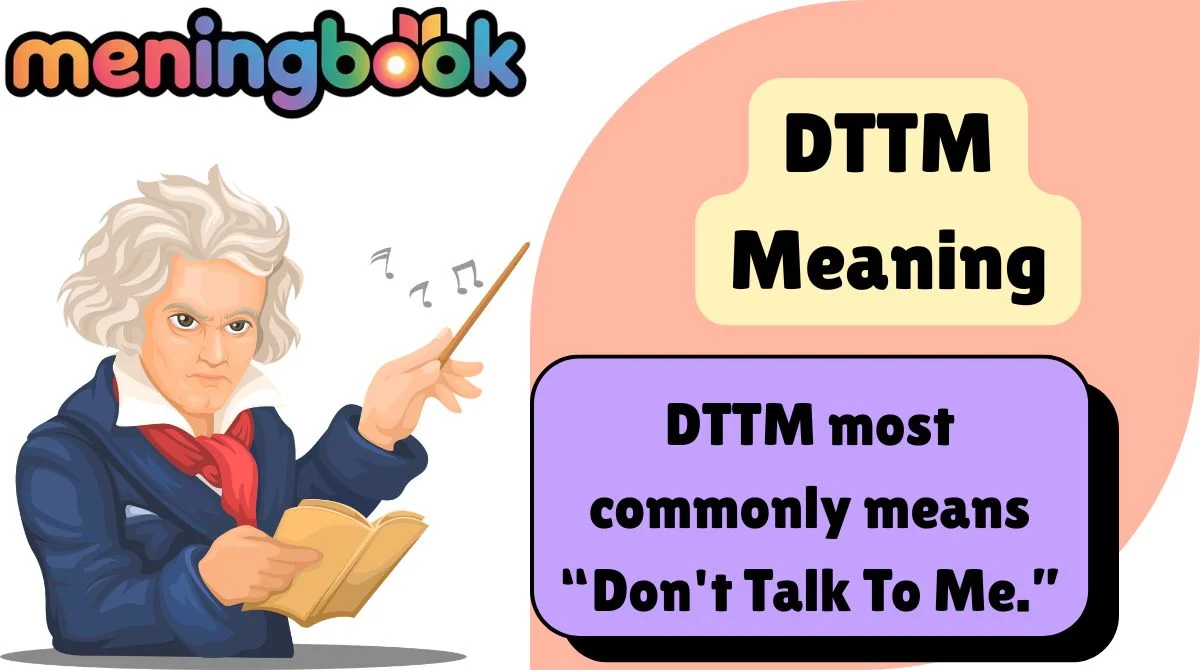
DTTM most commonly means “Don’t Talk To Me.” It is used in text messages, social media posts, chats, and online conversations to indicate frustration, annoyance, sadness, embarrassment, or a desire to be left alone.
Depending on context, DTTM can occasionally have alternative meanings, but “Don’t Talk To Me” is by far the most common interpretation in modern texting slang.
Detailed Meaning Breakdown
Primary Meaning: Don’t Talk To Me
The most widely accepted meaning of DTTM is “Don’t Talk To Me.”
People use it when they want space, are upset, feel embarrassed, or simply do not want to continue a conversation at that moment.
Examples include:
- Feeling frustrated after a bad day
- Being embarrassed by a mistake
- Reacting to shocking news
- Expressing temporary annoyance
In many cases, DTTM is not meant literally. The sender may simply be expressing an emotion rather than permanently ending communication.
Secondary Meanings
Although uncommon, DTTM can sometimes represent different phrases depending on a specific community, workplace, gaming group, or online forum.
Examples include:
- Internal company abbreviations
- Project names
- Community-specific slang
- Personal shorthand between friends
When context is unclear, it is always best to ask the sender what they mean.
Rare Meanings
Rare interpretations exist in specialized industries, technical discussions, and private groups. However, these uses are far less common than “Don’t Talk To Me” and rarely appear in everyday texting.
What “DTTM” Means in Different Situations
Everyday Texting
In everyday conversations, DTTM usually expresses a strong emotional reaction.
Examples:
- After failing an exam
- Missing a train
- Losing an important item
- Making an embarrassing mistake
The phrase often communicates frustration more than an actual request for silence.
Example:
“DTTM, I just spilled coffee all over my laptop.”
Here, the sender is expressing frustration rather than truly ending the conversation.
Social Media Platforms
On platforms such as TikTok, Instagram, Snapchat, and X, DTTM often appears in captions, comments, memes, and reaction posts.
Examples:
- DTTM after watching that ending.
- DTTM, this is too funny.
- DTTM because I can’t believe I did that.
Social media users frequently employ DTTM dramatically for humor or exaggeration.
Dating & Relationships
In dating situations, DTTM may carry stronger emotional weight.
Possible meanings include:
- Temporary frustration
- Feeling hurt
- Needing personal space
- Being emotionally overwhelmed
Example:
“DTTM right now. I need some time to think.”
In this context, respecting boundaries is important.
Professional Communication
DTTM is generally inappropriate in professional environments.
Most workplaces prefer direct and respectful language.
Instead of using DTTM, professionals might say:
- I’m unavailable right now.
- Let’s discuss this later.
- I need some time to focus.
- I’ll respond when available.
Using DTTM at work can appear rude or unprofessional.
Cultural or Regional Differences
The interpretation of DTTM can vary slightly among age groups, countries, and online communities.
Younger users often understand it immediately as internet slang.
Older users may not recognize the abbreviation and could misunderstand its meaning.
Because texting culture evolves rapidly, familiarity often depends on online experience rather than geographic location.
Psychological & Tone Analysis
Why People Use It
People use DTTM because it quickly communicates emotion.
Instead of writing a long explanation, they can express:
- Frustration
- Embarrassment
- Disappointment
- Shock
- Overwhelm
What It Signals Socially
DTTM often signals:
- Emotional intensity
- Desire for space
- Temporary withdrawal
- Playful exaggeration
The phrase can act as a social shortcut that immediately communicates mood.
Emotional Layer Behind It
The emotional meaning depends heavily on context.
DTTM can indicate:
- Genuine anger
- Mild annoyance
- Self-directed frustration
- Humor
- Sarcasm
Understanding the sender’s personality and recent conversation helps determine the intended tone.
15 Real Conversation Examples (Explained)
Example 1
Friend: “Did you forget the tickets again?”
You: “DTTM.”
Explanation: Embarrassment and frustration.
Example 2
Friend: “We missed the flight.”
You: “DTTM.”
Explanation: Stress and disappointment.
Example 3
Friend: “I just saw your dance video.”
You: “DTTM.”
Explanation: Playful embarrassment.
Example 4
Friend: “You sent that message to the wrong person.”
You: “DTTM.”
Explanation: Extreme embarrassment.
Example 5
Friend: “Your team lost again.”
You: “DTTM.”
Explanation: Sports-related frustration.
Example 6
Friend: “The exam results are out.”
You: “DTTM until tomorrow.”
Explanation: Anxiety and avoidance.
Example 7
Friend: “You locked yourself out again?”
You: “DTTM.”
Explanation: Self-directed annoyance.
Example 8
Friend: “That joke was terrible.”
You: “DTTM.”
Explanation: Humorous reaction.
Example 9
Friend: “The package got delayed.”
You: “DTTM.”
Explanation: Mild frustration.
Example 10
Friend: “You forgot our anniversary.”
Partner: “DTTM.”
Explanation: Hurt feelings and disappointment.
Example 11
Friend: “You accidentally posted it publicly.”
You: “DTTM.”
Explanation: Panic and embarrassment.
Example 12
Friend: “The concert was canceled.”
You: “DTTM.”
Explanation: Disappointment.
Example 13
Friend: “I ate the leftovers.”
You: “DTTM.”
Explanation: Lighthearted annoyance.
Example 14
Friend: “You were muted during the whole presentation.”
You: “DTTM.”
Explanation: Professional embarrassment.
Example 15
Friend: “You just won free tickets.”
You: “DTTM, no way!”
Explanation: Shock and excitement used humorously.
When “DTTM” Can Be Misunderstood
Context Confusion
The biggest issue with DTTM is context.
A person may intend humor while the recipient interprets genuine anger.
Generational Gap
Younger users are generally more familiar with internet abbreviations.
Older users may not recognize DTTM at all.
This can create communication gaps.
Platform Differences
Different platforms encourage different communication styles.
A DTTM caption on TikTok may be humorous.
The same message in a private conversation may appear serious.
Always consider where the abbreviation is being used.
Similar Words, Symbols, or Abbreviations
LOL
Laughing Out Loud.
SMH
Shaking My Head.
IDC
I Don’t Care.
TBH
To Be Honest.
BRB
Be Right Back.
FOMO
Fear Of Missing Out.
IMO
In My Opinion.
IRL
In Real Life.
NVM
Never Mind.
OMW
On My Way.
These abbreviations frequently appear alongside DTTM in digital conversations.
When Not to Use “DTTM”
Professional Risks
Avoid DTTM in:
- Business emails
- Workplace chats
- Client communication
- Job applications
It may seem disrespectful.
Cultural Risks
Not everyone understands internet slang.
Using DTTM with unfamiliar audiences can create confusion.
Tone Risks
The phrase may appear harsher than intended.
Someone might believe you genuinely want them to stop talking.
When discussing serious issues, clear communication is usually better.
Expert Tips for Using “DTTM” Correctly
Know Your Audience
Use it with people familiar with texting slang.
Consider the Context
Think about how the message may be interpreted.
Avoid Professional Settings
Choose formal language in workplace communication.
Use Additional Emojis When Necessary
Emojis can clarify tone.
Example:
“DTTM 😂”
This signals humor.
Don’t Overuse It
Repeated use may seem dramatic or rude.
Clarify Serious Situations
If you genuinely need space, explain your feelings directly.
Pay Attention to Relationships
Close friends may understand your intent better than acquaintances.
Read the Conversation First
Context determines meaning more than the abbreviation itself.
Frequently Asked Questions
What does DTTM mean in texting?
DTTM most commonly means “Don’t Talk To Me.” It is often used to express frustration, embarrassment, disappointment, or a desire for temporary space.
Is DTTM rude?
Not necessarily. The tone depends on context. It can be humorous among friends but may appear rude in serious conversations.
What does DTTM mean from a girl?
Usually, it still means “Don’t Talk To Me.” The intended tone may range from playful annoyance to a genuine request for space depending on the situation.
What does DTTM mean from a guy?
The meaning is generally the same. Context determines whether it expresses humor, frustration, disappointment, or emotional distance.
Is DTTM popular in 2026?
Yes. While slang changes constantly, DTTM continues to appear in texting, social media conversations, memes, and casual online communication.
Can DTTM be used jokingly?
Absolutely. Many people use DTTM in exaggerated or humorous ways after experiencing something funny, shocking, or embarrassing.
Should I use DTTM at work?
No. Professional communication is usually clearer and more appropriate without slang abbreviations like DTTM.
How do I respond when someone sends DTTM?
Consider the context. If they seem upset, give them space. If the message appears playful, respond according to the tone of the conversation.
Final Summary
DTTM most commonly stands for “Don’t Talk To Me” in modern texting and online communication. People use it to express frustration, embarrassment, disappointment, shock, or a temporary desire for space.
While the abbreviation is often playful and exaggerated among friends, its meaning can become more serious depending on the situation.
The key to understanding DTTM is context. The same abbreviation can communicate humor, annoyance, emotional overwhelm, or simple self-deprecating frustration.
Before reacting, consider the relationship, platform, and overall tone of the conversation.
By understanding how DTTM is used across texting, social media, dating, and everyday communication, you can interpret messages more accurately and communicate with greater confidence in today’s digital world.

I am Noah Peterson, an educational content writer passionate about simplifying complex topics into clear and practical learning