Have you ever opened a text message, seen someone reply with “lok,” and paused for a second trying to figure out what they meant?
This happens a lot in digital conversations. Texting has changed how people write. Many words are shortened, misspelled on purpose, or used as internet slang.
Sometimes these terms are easy to understand. Other times, like with “lok,” they can create confusion.
You might see “lok” in a casual text, social media comment, gaming chat, or even in online discussions and wonder if it is a typo, an abbreviation, or a slang term with a hidden meaning.
The truth is that “lok” can mean different things depending on the context.
In most cases, it is simply a typing variation of another word. In some cases, it carries cultural or regional meaning. Understanding how it is used helps you avoid misunderstandings and respond correctly.
This guide explains everything you need to know about lok meaning in text, including its definition, usage examples, tone, social meaning, and when you should or should not use it.
Quick Definition of “lok”
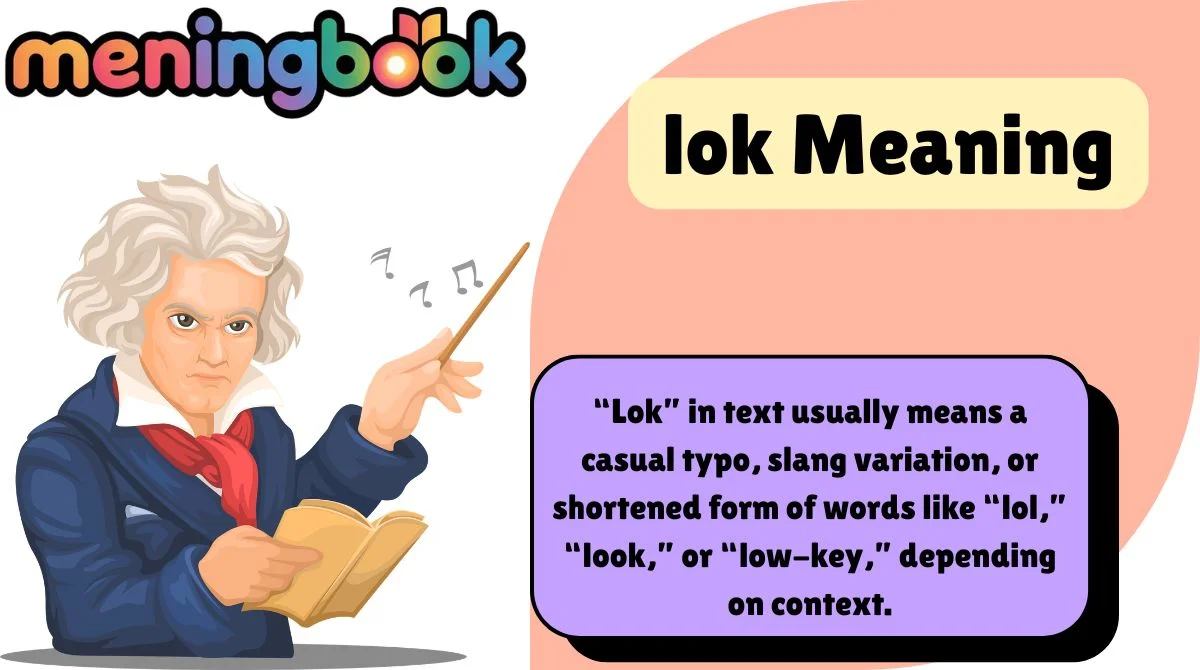
“Lok” in text usually means a casual typo, slang variation, or shortened form of words like “lol,” “look,” or “low-key,” depending on context.
It is commonly seen in fast digital communication where people type quickly. In some cultures and languages, “lok” can also have separate meanings related to people, community, or public spaces.
The exact meaning depends entirely on how and where it is used.
Detailed Meaning Breakdown
Understanding “lok” requires looking at its most common interpretations.
The Primary Meaning
The most common meaning of “lok” in texting is an accidental or intentional variation of “lol.”
For example:
- “That was funny lok”
Here, the sender likely meant “lol” but typed “lok” by mistake, or used it casually as a playful variation.
Since the letters K and L sit close together on many keyboards, this typing error is common.
Secondary Meanings
Short for “Look”
Sometimes “lok” is a shortened or mistyped version of “look.”
Example:
- “Lok at this picture”
This usually happens during fast typing.
Variation of “Low-Key”
In certain online conversations, people use “lok” as shorthand related to low-key, especially in informal chats.
Example:
- “I’m lok tired today”
This means:
“I’m low-key tired today.”
It expresses mild or subtle emotion.
Cultural Meanings
In several South Asian languages, including Hindi and Punjabi, “lok” means people, public, or community.
Examples include:
- Lok Sabha
- Lok geet
- Lok culture
If someone uses “lok” in a regional discussion, it may not be internet slang at all.
Rare Meanings
Less commonly, “LOK” may appear as:
- A gaming clan tag
- A username abbreviation
- A reference to fictional media titles
- Brand or product shorthand
Context is always the key.
What “lok” Means in Different Situations
The meaning changes depending on where it appears.
Everyday Texting
In casual texting, “lok” is often a typo or playful spelling.
Example:
“Lok that’s”
Likely meaning:
“Lol that’s”
or
“Look, that’s.”
You must read the full sentence to know.
Social Media Platforms
On platforms like Instagram, TikTok, and Snapchat, users often shorten words.
“lok” may appear as:
- Fast typing
- Intentional meme-style spelling
- Inside joke language
Example:
“Lok no way this happened”
The casual style fits social posting.
Dating & Relationships
In relationship chats, “lok” may signal a relaxed tone.
Example:
“I lok miss you”
This could mean:
- “I low-key miss you”
- A typo for “lowkey”
This adds emotional softness without sounding too direct.
Professional Communication
In work emails or formal chats, “lok” is usually seen as a typo.
Example:
“Please lok into this.”
This likely means:
“Please look into this.”
In professional settings, this can create confusion and reduce clarity.
Cultural or Regional Differences
In South Asian communication, “lok” may refer to society or people.
Example:
“Lok ki soch”
Meaning:
“The thinking of people.”
This usage has nothing to do with texting slang.
Psychological & Tone Analysis
Why do people use “lok”?
The answer is linked to digital behavior.
Speed
People type quickly and often do not proofread.
This creates shorthand like “lok.”
Informality
Using relaxed spelling shows comfort.
It tells the reader:
“This is casual conversation.”
Social Belonging
Internet slang creates group identity.
People often mirror the typing style of friends or online communities.
Using unusual forms like “lok” can signal familiarity.
Emotional Softening
If “lok” means low-key, it helps people express emotion carefully.
Instead of saying:
“I’m upset”
They may say:
“I’m lok upset.”
This feels less intense.
15 Real Conversation Examples (Explained)
1. “Lok that was hilarious”
Likely means “lol.”
The sender is reacting with laughter.
2. “Can you lok at this?”
Means “look.”
Simple typo.
3. “I’m lok nervous”
Means “low-key.”
Expresses mild nervousness.
4. “Lok, I told you already”
Could mean “look.”
Used to get attention.
5. “That party was fun lok”
Likely accidental “lol.”
Adds playful tone.
6. “Lok I kinda agree”
Could mean:
“Low-key I kinda agree.”
Shows quiet agreement.
7. “Lok this meme”
Means “look.”
Request to view something.
8. “I lok miss those days”
Means “low-key.”
Shows subtle nostalgia.
9. “Lok bruh”
Usually typo for “lol.”
Reaction-based.
10. “The lok need change”
Cultural meaning.
Refers to “people.”
11. “Lok what happened”
Means “look.”
Attention-grabbing.
12. “I’m lok excited”
Means low-key excited.
Controlled enthusiasm.
13. “Lok omg”
Likely typo.
Quick reaction.
14. “Lok sab culture”
Regional meaning.
Connected to society or public culture.
15. “That’s wild lok”
Likely “lol.”
Ends sentence casually.
When “lok” Can Be Misunderstood
Because it has multiple meanings, confusion happens easily.
Context Confusion
Without sentence clues, it is hard to decode.
Example:
“lok sure”
Could mean many things.
Generational Gap
Younger users may understand digital shorthand faster.
Older readers may see it only as an error.
Platform Differences
Gaming chats often accept shorthand.
Professional messaging apps expect clearer writing.
Cultural Interpretation
A South Asian reader may assign regional meaning.
An English-speaking reader may assume typo.
Similar Words, Symbols, or Abbreviations
Here are related texting terms.
LOL
Laughing out loud
LMAO
Laughing very hard
Lowkey
Subtle or mild feeling
BRB
Be right back
IMO
In my opinion
TBH
To be honest
SMH
Disapproval or disbelief
FR
For real
NGL
Not gonna lie
IDK
I don’t know
These are clearer than “lok.”
When Not to Use “lok”
Even though it is common in casual chats, there are times to avoid it.
Professional Risks
In business communication, it may appear careless.
Avoid using it in:
- Work emails
- Job applications
- Client messages
- Academic writing
Cultural Risks
Different audiences may interpret it differently.
This can cause misunderstanding.
Tone Risks
If someone expects clarity, shorthand feels lazy.
Example:
Sending “lok” during a serious conversation may seem dismissive.
Formal Settings
Clear language always works better.
Write the full intended word.
Expert Tips for Using “lok” Correctly
Understand Your Audience
Use it only if the reader understands texting slang.
Check Context
Make sure the sentence clearly shows intended meaning.
Avoid in Formal Writing
Always replace it with the correct full word.
Use Sparingly
Too much slang weakens clarity.
Clarify If Needed
If someone seems confused, explain.
Example:
“I meant low-key.”
Proofread Important Messages
Catch accidental “lok” typos before sending.
Learn Platform Norms
What works on social media may not work elsewhere.
Be Intentional
Do not rely on ambiguity.
Choose clear wording.
Frequently Asked Questions
What does lok mean in text messages?
It usually means a typo for “lol” or “look,” though it can also mean “low-key” depending on context.
Is lok a real texting abbreviation?
Not officially. It is mostly informal shorthand or accidental spelling.
Does lok mean low-key?
Sometimes yes, especially when expressing mild emotion.
Example:
“I’m lok happy.”
Why do people type lok instead of lol?
Usually fast typing or keyboard error.
Some also use it intentionally.
Is lok rude?
No, but it can seem careless in formal communication.
What does lok mean in South Asian languages?
It often means “people,” “public,” or “community.”
Should I use lok in professional chats?
No. Use the correct intended word.
How can I tell what lok means?
Read the full sentence and identify context clues.
Final Summary
“Lok” is a flexible digital term with several possible meanings.
Most often, it is:
- A typo for “lol”
- A typo for “look”
- Short for “low-key”
In regional contexts, it can also mean people or public community.
The best way to understand it is to study the sentence around it.
If you are texting friends, “lok” may feel natural.
If you are writing professionally, avoid it and use the full intended word.
Smart communication is not about using trendy slang.
It is about choosing language your audience understands clearly.
When in doubt, write the full word.
That keeps your message accurate, clear, and easy to understand.

I am Noah Peterson, an educational content writer passionate about simplifying complex topics into clear and practical learning