You’re texting someone, and suddenly they reply with just “uhm…”—and nothing else. Now you’re stuck wondering: Are they confused? Hesitating? Annoyed? Or just thinking?
Small words like “uhm” can create big confusion in digital conversations. Unlike face-to-face speech, where tone and body language help you understand meaning, text strips everything down to just words.
That’s why something as simple as “uhm” can feel unclear—or even awkward.
This guide breaks it all down in a simple, practical way.
You’ll learn exactly what “uhm” means in text, how it changes depending on context, and how to use (or avoid) it like a pro. By the end, you’ll never second-guess it again.
Quick Definition of “uhm meaning in text”
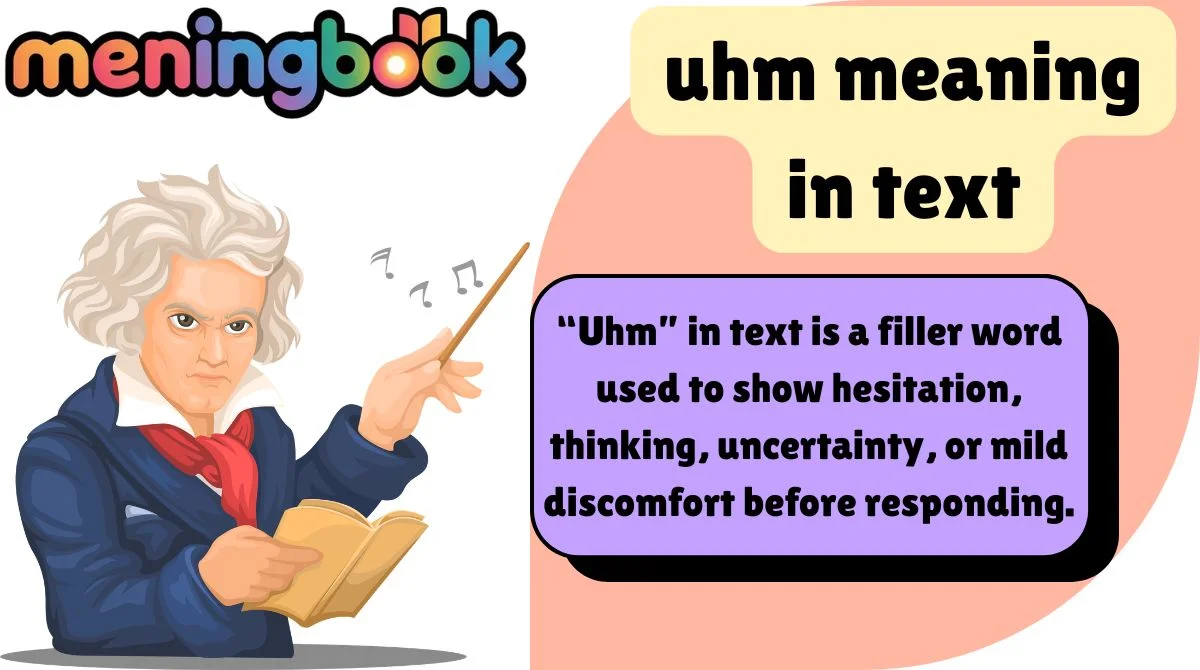
“Uhm” in text is a filler word used to show hesitation, thinking, uncertainty, or mild discomfort before responding.
It can also signal surprise, awkwardness, or a pause while the sender decides what to say next. In some cases, it adds tone—making a message feel softer, more human, or slightly unsure.
Detailed Meaning Breakdown
Primary Meaning
The main meaning of “uhm” is a pause for thought.
It’s the digital version of what people say out loud when they need a moment. Instead of replying instantly, they use “uhm” to signal they’re processing something.
Example:
- “Uhm… I’m not sure about that.”
Here, it shows hesitation before giving an answer.
Secondary Meanings
“Uhm” can also mean:
- Uncertainty – The person doesn’t fully agree or understand
- Mild disagreement – A soft way to challenge something
- Awkwardness – They feel uncomfortable or unsure how to respond
- Delay tactic – Buying time to think or avoid answering directly
Rare Meanings
In some contexts, “uhm” can signal:
- Sarcasm or disbelief (especially with punctuation like “uhm??”)
- Polite rejection (common in casual chats)
- Confusion when something doesn’t make sense
What “uhm” Means in Different Situations
Everyday Texting
In casual chats, “uhm” usually means:
- “I’m thinking”
- “I’m not sure”
- “Give me a second”
Example:
- “Uhm… maybe we should check first.”
Tone: neutral, thoughtful
Social Media Platforms
On platforms like chats or comments:
- It can show reaction or hesitation
- Often used before questioning something
Example:
- “Uhm… what did I just watch?”
Tone: confused or amused
Dating & Relationships
Here, “uhm” can carry emotional weight:
- Hesitation before answering a serious question
- Avoidance or discomfort
- Soft way to disagree
Example:
- “Uhm… I don’t think I’m ready yet.”
Tone: cautious, sensitive
Professional Communication
In work settings, “uhm” is less common and can feel:
- Unprofessional
- Uncertain
- Lacking confidence
Example:
- “Uhm… I think we should delay the meeting.”
Better alternative:
- “I suggest we delay the meeting.”
Cultural or Regional Differences
- In English-speaking cultures, “uhm” is normal and widely understood
- Some cultures may see it as lack of confidence
- Younger generations use it more casually in text
Psychological & Tone Analysis
Why People Use It
People use “uhm” because:
- They need time to think
- They want to soften their response
- They feel unsure or awkward
It acts as a social buffer.
What It Signals Socially
Using “uhm” can signal:
- You’re being careful
- You’re not fully confident
- You’re trying to avoid sounding harsh
Emotional Layer Behind It
“Uhm” often carries subtle emotion:
- Nervousness
- Doubt
- Politeness
- Mild discomfort
The meaning depends heavily on context and punctuation.
15 Real Conversation Examples (Explained)
- “Uhm… I don’t think that’s right.”
→ Hesitant disagreement - “Uhm, what do you mean?”
→ Confusion - “Uhm… sure, I guess.”
→ Uncertain agreement - “Uhm… can we talk later?”
→ Avoidance or discomfort - “Uhm?? Why would you do that?”
→ Surprise or disbelief - “Uhm… okay…”
→ Awkward acceptance - “Uhm I’m busy right now.”
→ Soft rejection - “Uhm… let me think.”
→ Processing - “Uhm… I forgot.”
→ Embarrassment - “Uhm… not really.”
→ Gentle refusal - “Uhm… that’s interesting.”
→ Polite but unsure reaction - “Uhm… are you serious?”
→ Doubt or disbelief - “Uhm… I’ll see.”
→ Non-committal answer - “Uhm… yeah, maybe.”
→ Lack of confidence - “Uhm… I don’t know how to say this.”
→ Emotional hesitation
When “uhm” Can Be Misunderstood
Context Confusion
Without tone, “uhm” can be read as:
- Rude
- Passive-aggressive
- Confused
Generational Gap
- Younger users: casual and normal
- Older users: may see it as unprofessional or unclear
Platform Differences
- Text messages: neutral
- Emails: risky
- Social media: expressive
Similar Words, Symbols, or Abbreviations
- Um – Same as “uhm,” shorter
- Uh – Even quicker pause
- Hmm – Thinking or considering
- Er – British-style hesitation
- Well… – Soft intro to response
- Like… – Casual filler
- I mean… – Clarifying thought
- … (ellipsis) – Silent pause
- Hmm okay – Thoughtful agreement
- Wait… – Processing or surprise
When Not to Use “uhm”
Professional Risks
Avoid in:
- Emails
- Reports
- Formal chats
It can make you seem unsure or unprepared.
Cultural Risks
In some cultures:
- It may signal lack of confidence
- Could be seen as weak communication
Tone Risks
“Uhm” can accidentally sound:
- Passive-aggressive
- Awkward
- Dismissive
Especially with punctuation like:
- “uhm…”
- “uhm??”
Expert Tips for Using “uhm” Correctly
- Use it only in casual conversations
- Avoid it in professional settings
- Pair it with clear words to avoid confusion
- Don’t overuse—it loses meaning
- Watch punctuation (it changes tone)
- Use it to soften responses, not replace them
- If clarity matters, skip it entirely
- Match your tone to the situation
Frequently Asked Questions
What does “uhm” mean in texting?
It means hesitation, thinking, or uncertainty before responding.
Is “uhm” rude in messages?
Not usually, but it can feel awkward or passive depending on tone.
What’s the difference between “uhm” and “um”?
They mean the same; “uhm” just looks more expressive in text.
Why do people type “uhm…” with dots?
The dots show a longer pause or deeper hesitation.
Can “uhm” mean disagreement?
Yes, especially when followed by a contrasting statement.
Is it okay to use “uhm” in professional emails?
No, it can make you appear unsure or informal.
What emotion does “uhm” show?
It can show confusion, hesitation, nervousness, or politeness.
How do I respond to “uhm” in text?
Give clarity. Ask follow-up questions if needed.
Conclusion
“Uhm” is a small word with flexible meaning. At its core, it signals a pause—whether for thinking, uncertainty, or emotional processing.
In casual conversations, it adds a human touch and softens communication. But in formal situations, it can weaken your message.
The key is context. Pay attention to tone, punctuation, and situation.
Use “uhm” when you want to sound natural and thoughtful—but skip it when clarity and confidence matter most.
Mastering small words like this can greatly improve how you communicate in modern digital conversations.

I am Noah Peterson, an educational content writer passionate about simplifying complex topics into clear and practical learning