When someone sends a message like “luv ya ❤️” or “thanks luv,” many people understand the feeling but still wonder what “luv” really means. Is it the same as “love”? Is it romantic? Is it friendly? Does it have a different meaning in texting compared with real conversations?
The word “luv” has become common in digital communication because people often shorten words to make messages faster, softer, and more casual. However, the meaning depends heavily on the person, relationship, tone, and situation.
A message from a partner may carry deep affection, while the same word from a friend or stranger may simply show kindness.
Understanding “luv” helps you read messages more accurately and avoid misunderstandings. This guide explains the meaning of “luv” in text, its emotional tone, examples, social uses, and when you should or should not use it.
Quick Definition of “Luv Meaning in Text”
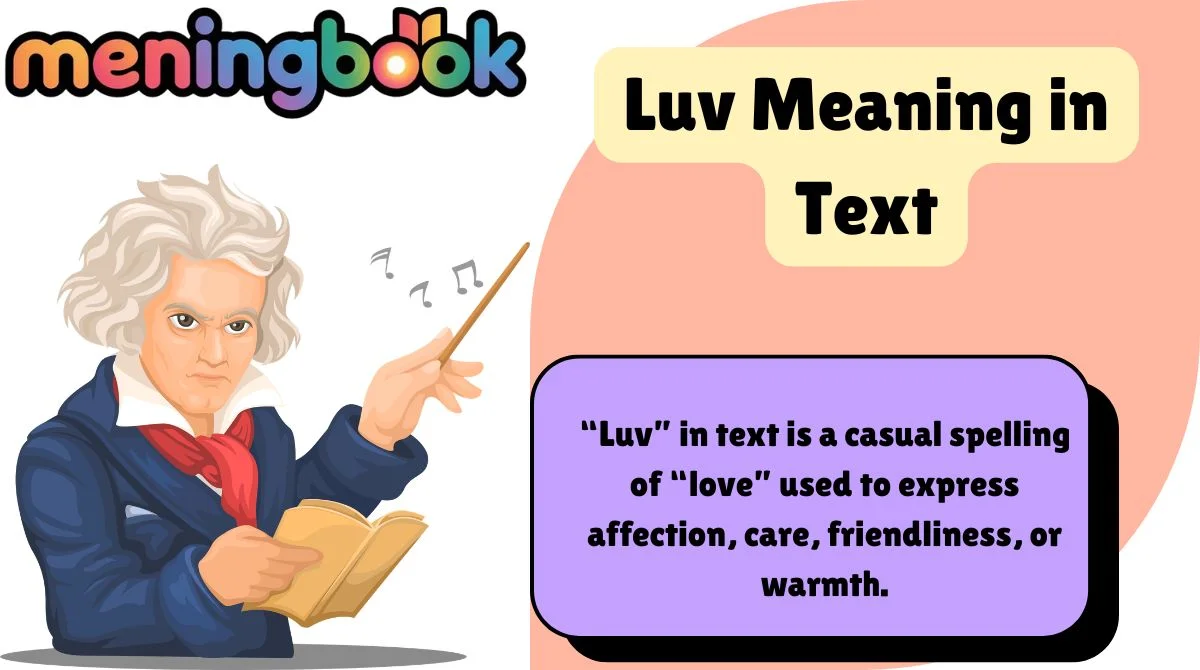
“Luv” in text is a casual spelling of “love” used to express affection, care, friendliness, or warmth. It can describe romantic feelings, friendship, appreciation, or a playful tone. In some situations, “luv” is also used as a friendly nickname or polite expression, especially in casual conversations.
Detailed Meaning Breakdown
Primary Meaning of “Luv”
The main meaning of “luv” is simply love written in an informal way. People use it in texts, chats, comments, and social media because it feels more relaxed and personal than the standard spelling.
Examples:
- “I luv this song”
- “Luv you ❤️”
- “Thanks luv”
In these examples, “luv” carries the same basic meaning as “love,” but the spelling creates a casual digital style.
Secondary Meanings of “Luv”
“Luv” does not always mean romantic love. It can also express:
- Friendship
- Appreciation
- Support
- Kindness
- Excitement about something
For example:
“I luv your new haircut”
This usually means the person likes the haircut, not that they have romantic feelings.
Rare Meanings of “Luv”
In some regions, especially in casual British-style speech, “luv” can be used as a friendly way to address someone.
Example:
“Are you okay, luv?”
This may simply mean “friend,” “dear,” or “mate.” It does not automatically show emotional attachment.
What “Luv” Means in Different Situations
Everyday Texting
In normal texting, “luv” is usually a softer and more casual version of “love.”
People use it because:
- It feels warmer
- It sounds less formal
- It adds personality to messages
- It creates a friendly tone
Example:
“Goodnight luv”
The meaning depends on the relationship. Between couples, it may be romantic. Between friends, it may simply be caring.
Social Media Platforms
On social media, “luv” is often used to show positive reactions.
Examples:
- “Luv this photo”
- “Luv your style”
- “Sending luv”
Here, it often means appreciation rather than deep personal emotion.
Social media encourages shorter and more expressive language, so words like “luv,” “love,” “xoxo,” and emojis are common.
Dating & Relationships
In romantic conversations, “luv” can show affection.
Examples:
- “Miss you luv”
- “Good morning luv ❤️”
- “Always luv you”
However, the seriousness depends on the relationship stage. Someone casually using “luv” may not mean the same thing as a partner saying “I love you.”
Professional Communication
Using “luv” in professional messages is usually not recommended.
Example:
“Thanks luv”
This may sound too personal or informal in a workplace setting.
Professional communication usually needs clearer and more neutral language.
Cultural or Regional Differences
The meaning of “luv” can change depending on culture.
In some places, especially parts of the UK, “luv” may be used casually when speaking to someone, even a stranger. It can be similar to saying “dear.”
In other cultures, people may understand “luv” only as a romantic or affectionate word.
Psychological & Tone Analysis
People use “luv” because language is not only about information; it is also about emotion.
The spelling “luv” creates a feeling that is:
- Softer
- Friendlier
- Less serious
- More personal
Someone choosing “luv” instead of “love” may be trying to make the message feel relaxed.
For example:
“I love this”
sounds slightly more standard.
“I luv this”
sounds more casual and emotional.
The word can signal closeness, comfort, or friendliness. However, the emotional meaning comes from the entire conversation, not just the word itself.
15 Real Conversation Examples (Explained)
1. “Good morning luv ❤️”
Meaning: A warm greeting.
Explanation: Often used by couples or close people to show affection.
2. “I luv your dress!”
Meaning: Strong liking or appreciation.
Explanation: This is usually a compliment, not romantic.
3. “Thanks luv”
Meaning: Friendly gratitude.
Explanation: Depending on the person, it can mean “thank you dear.”
4. “Miss you luv”
Meaning: Emotional connection.
Explanation: Usually shows that someone feels close to another person.
5. “Luv ya”
Meaning: Casual affection.
Explanation: Friends and family may use this without romantic meaning.
6. “Sending luv”
Meaning: Sending support or kindness.
Explanation: Common online expression after emotional situations.
7. “You’re the best luv”
Meaning: Appreciation.
Explanation: Shows gratitude or admiration.
8. “Luv this idea!”
Meaning: Strong approval.
Explanation: Common in online discussions.
9. “Take care luv”
Meaning: Caring goodbye.
Explanation: May be friendly or affectionate.
10. “My luv”
Meaning: A term of affection.
Explanation: Meaning depends on the relationship.
11. “Luv u always”
Meaning: Strong affection.
Explanation: Usually used between people with a close bond.
12. “Hey luv, how are you?”
Meaning: Friendly greeting.
Explanation: Could be romantic, friendly, or regional.
13. “Luv your energy”
Meaning: Positive compliment.
Explanation: Refers to personality or attitude.
14. “Sending lots of luv and hugs”
Meaning: Emotional support.
Explanation: Common in caring conversations.
15. “Luv it!”
Meaning: I really like it.
Explanation: Used for things, ideas, music, fashion, and experiences.
When “Luv” Can Be Misunderstood
Context Confusion
The biggest problem with “luv” is that it can have different meanings.
A partner may use it romantically, while a friend may use it casually.
Example:
“Thanks luv”
Could mean:
- Thank you, dear
- Thank you friend
- A casual expression
Generational Gap
Older and younger people may interpret “luv” differently.
Some people see it as a cute texting style, while others see it as informal slang.
Platform Differences
The same word may feel different depending on where it appears.
A private message:
“luv you ❤️”
may feel personal.
A public comment:
“luv this”
is usually just appreciation.
Similar Words, Symbols, or Abbreviations
1. Love
The standard spelling expressing affection or strong liking.
2. ❤️
A heart symbol showing love, care, or support.
3. Luv ya
A casual way of saying “love you.”
4. Xoxo
A symbol for hugs and kisses.
5. Dear
A friendly or affectionate term.
6. Babe
A romantic or affectionate nickname.
7. Sweetie
A caring nickname.
8. Adore
A stronger word meaning deep liking.
9. Like
A weaker form of positive feeling.
10. Bestie
A casual term for a close friend.
When Not to Use “Luv”
Professional Risks
Avoid “luv” in:
- Business emails
- Job applications
- Formal messages
- Customer communication
It may appear unprofessional.
Cultural Risks
Some people may not understand the casual meaning and may think it is too personal.
Tone Risks
Using “luv” with someone you do not know well can sometimes feel:
- Too familiar
- Flirty
- Overly casual
Expert Tips for Using “Luv” Correctly
- Understand the relationship first.
Use “luv” with people who are comfortable with casual language. - Look at the conversation tone.
A romantic conversation and a casual chat have different meanings. - Avoid using it professionally.
Choose clear and respectful wording at work. - Do not assume romance.
“Luv” can simply mean kindness. - Match the other person’s style.
If they use casual words, it may fit naturally. - Use emojis carefully.
“Luv ❤️” feels more emotional than “luv.” - Think about cultural differences.
Some people may interpret it differently.
Frequently Asked Questions
What does luv mean in text?
“Luv” means “love” in a casual texting style. It can show affection, friendliness, appreciation, or support depending on the situation.
Is luv the same as love?
Yes, the basic meaning is the same, but “luv” feels more informal and relaxed.
Does luv mean someone loves you romantically?
Not always. It can be romantic, but it can also be friendly or casual.
Why do people write luv instead of love?
People use “luv” because it feels shorter, softer, and more like everyday online communication.
Is luv flirting?
Sometimes it can be, but not always. The relationship and message context decide the meaning.
Can friends say luv?
Yes. Many friends use “luv” to show care or appreciation without romantic meaning.
Is luv appropriate in professional messages?
Usually no. It is better to use more formal language at work.
What is the difference between luv and love?
“Love” is the standard spelling, while “luv” is an informal version often used in casual conversations.
Final Summary
“Luv” in text is a modern, casual form of “love” used to express affection, friendliness, appreciation, and warmth. Its meaning changes depending on the relationship, platform, and conversation style.
It can be romantic between partners, supportive between friends, or simply a friendly expression in everyday communication. The safest way to understand “luv” is to look at the full message and the connection between the people involved.
Using “luv” correctly means matching the tone, understanding the situation, and knowing when casual language is appropriate.

I am Noah Peterson, an educational content writer passionate about simplifying complex topics into clear and practical learning