When someone sends a short message online, even a few characters can create confusion.
A simple abbreviation, symbol, or phrase may have a completely different meaning depending on the person, platform, relationship, or situation. This is why people often search for the meaning of small text expressions before replying.
The phrase “… meaning in text” is commonly searched because digital communication has changed the way people express emotions, reactions, and ideas.
Unlike traditional writing, texting depends heavily on context, tone, and shared understanding.
This guide explains the meaning of “…” in text conversations, how people use it in different situations, what emotions it can represent, and when it may create misunderstandings.
Whether you see it in a casual chat, social media comment, relationship conversation, or workplace message, this explanation will help you understand the real meaning behind it.
Quick Definition of “…”
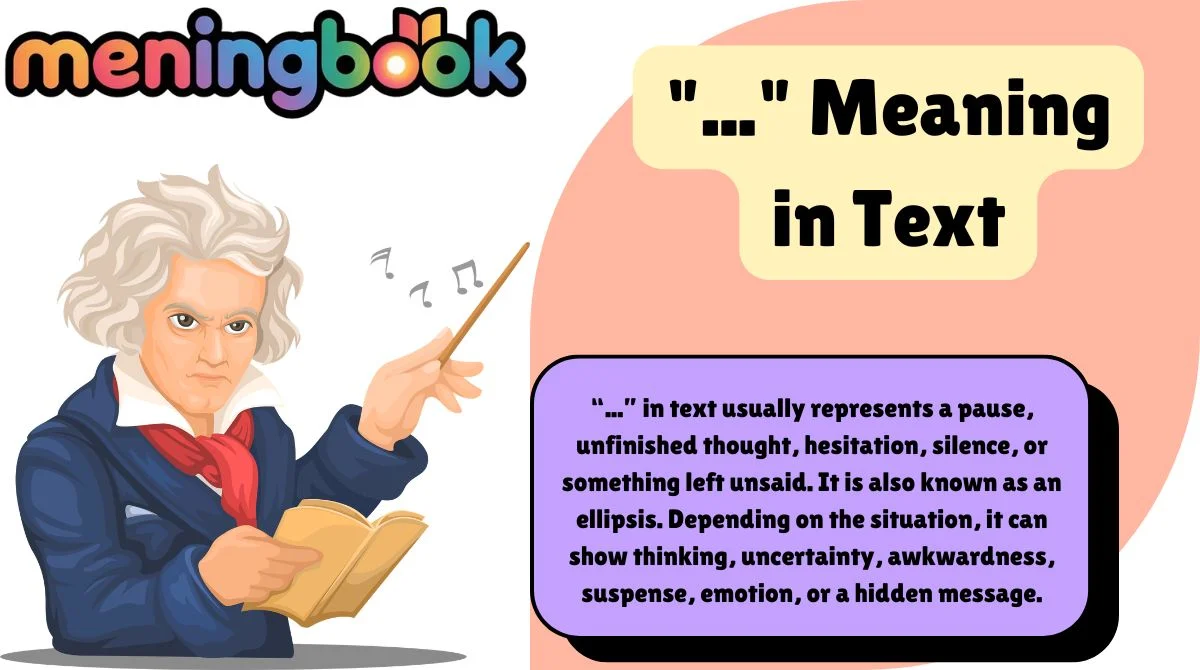
“…” in text usually represents a pause, unfinished thought, hesitation, silence, or something left unsaid. It is also known as an ellipsis. Depending on the situation, it can show thinking, uncertainty, awkwardness, suspense, emotion, or a hidden message.
In some conversations, “…” can have secondary meanings such as disappointment, sarcasm, confusion, or a request for someone to continue explaining.
Detailed Meaning Breakdown
Primary Meaning
The main meaning of “…” is a pause. It shows that the writer has stopped briefly or has not completed the sentence.
Example:
“I thought you knew…”
The three dots suggest that there is something more behind the words. The person may be surprised, disappointed, or expecting the other person to understand.
In normal writing, an ellipsis means missing words or a break in thought. In texting, however, it often carries emotional meaning.
Secondary Meanings
The meaning changes depending on tone and relationship.
Common secondary meanings include:
- Thinking before answering
- Feeling unsure
- Avoiding a direct response
- Creating suspense
- Showing disappointment
- Suggesting something without saying it clearly
Example:
“Okay…”
This could mean agreement, but it could also mean the person is unhappy.
Rare Meanings
Sometimes “…” is used for dramatic effect or humor.
Example:
“And then he said…”
The dots create curiosity and make the reader expect more information.
What “…” Means in Different Situations
Everyday Texting
In normal conversations, “…” often shows a pause or unfinished idea.
Example:
“I don’t know…”
This may mean the person is unsure, thinking, or avoiding giving a clear answer.
Friends may also use it casually to make messages feel more natural.
Social Media Platforms
On social media, “…” can create suspense or emotional impact.
Example:
“People really believe that…”
The writer may be suggesting disagreement without directly saying it.
Comments containing “…” can sometimes feel negative because readers may interpret them as judgment or criticism.
Dating & Relationships
In romantic conversations, “…” can carry strong emotional meaning.
Example:
“I miss you…”
The dots may make the message feel emotional, shy, or deeper than a normal sentence.
However, they can also create confusion.
Example:
“Sure…”
A partner may interpret this as a lack of excitement or hidden frustration.
Professional Communication
In professional messages, “…” should be used carefully.
A manager writing:
“Please review this…”
may sound normal.
But:
“Your work was interesting…”
could sound like criticism because the unfinished feeling creates uncertainty.
Cultural or Regional Differences
Different people interpret “…” differently.
Some cultures use it simply as a writing habit, while others may see it as a sign of annoyance or indirect communication.
Age differences also matter. Younger users may use it casually, while older users may interpret it more seriously.
Psychological & Tone Analysis
People use “…” because written communication lacks facial expressions and voice tone. The dots help replace some of the emotional signals that normally appear during speaking.
It can signal:
- A pause in thinking
- Emotional hesitation
- Uncertainty
- Hidden feelings
- A desire to avoid saying something directly
Socially, “…” can create a feeling that there is more information behind the message.
For example:
“I guess that is fine…”
The words say agreement, but the dots may suggest the person is not completely happy.
The emotional layer depends on the relationship between the people talking.
15 Real Conversation Examples (Explained)
1.
Person A: “Are you coming tonight?”
Person B: “Maybe…”
Explanation: The person is uncertain or does not want to give a clear answer.
2.
Person A: “I thought we were friends…”
Explanation: The dots show disappointment or emotional hurt.
3.
Person A: “Wow…”
Explanation: This can show surprise, shock, or disbelief.
4.
Person A: “Okay…”
Explanation: It may mean acceptance, but it can also suggest annoyance.
5.
Person A: “You really did that…”
Explanation: The person may be surprised or judging the action.
6.
Person A: “I have something to tell you…”
Explanation: The dots create suspense.
7.
Person A: “I don’t know…”
Explanation: Shows uncertainty or hesitation.
8.
Person A: “Fine…”
Explanation: Could mean agreement, but may also show frustration.
9.
Person A: “So…”
Explanation: May invite the other person to continue.
10.
Person A: “Interesting…”
Explanation: Depending on tone, it may mean genuine interest or sarcasm.
11.
Person A: “You said you would…”
Explanation: Suggests disappointment.
12.
Person A: “I guess…”
Explanation: Shows uncertainty or weak confidence.
13.
Person A: “Really…”
Explanation: Could show surprise or doubt.
14.
Person A: “That’s one way to see it…”
Explanation: Often suggests disagreement.
15.
Person A: “I understand…”
Explanation: The dots may suggest there are additional feelings not being expressed.
When “…” Can Be Misunderstood
Context Confusion
The biggest problem with “…” is that it depends on interpretation.
A person may use it casually, while the receiver may think they are upset.
Generational Gap
Older and younger users may understand it differently.
Some people see “…” as normal punctuation, while others see it as emotional distance.
Platform Differences
Text messages, emails, comments, and online chats have different communication styles.
A casual use on social media may feel inappropriate in a workplace email.
Similar Words, Symbols, or Abbreviations
- … (Ellipsis) – A pause or unfinished thought.
- Hmm – Shows thinking or uncertainty.
- IDK – Means “I don’t know.”
- TBH – Means “to be honest.”
- LOL – Shows laughter.
- 🙂 – Represents a friendly or positive emotion.
- ?? – Shows confusion or a question.
- !!! – Shows excitement or strong emotion.
- BRB – Means “be right back.”
- OMG – Shows surprise.
When Not to Use “…”
Professional Risks
In business communication, “…” may appear unclear or passive-aggressive.
A direct sentence is often better.
Instead of:
“Your report was good…”
Use:
“Your report was good. I liked the research section.”
Cultural Risks
Some readers may interpret “…” as negativity or hidden criticism.
Tone Risks
If the conversation is already serious, adding “…” can increase confusion.
Expert Tips for Using “…” Correctly
- Use it when you want to show a natural pause.
- Avoid using it too often because it can make messages feel unclear.
- Consider your relationship with the reader.
- Do not use it when a direct answer is needed.
- Remember that tone changes the meaning.
- In professional writing, choose clear sentences instead.
- If your message could be misunderstood, explain your meaning.
- Match the communication style of the platform.
Frequently Asked Questions
What does “…” mean in texting?
“…” usually means a pause, unfinished thought, hesitation, or something left unsaid. The exact meaning depends on the conversation.
Is using “…” rude in messages?
Not always. It can be normal, but in some situations it may appear negative or uninterested.
Why do people put three dots after words?
People use three dots to show a pause, emotion, suspense, or an incomplete idea.
Does “…” mean someone is angry?
Not necessarily. It can show anger, but it can also mean thinking, surprise, or uncertainty.
What does “okay…” mean in a text?
“Okay…” may mean agreement, doubt, disappointment, or hesitation depending on the situation.
Is “…” professional in emails?
It can be used, but it is better to avoid it when clarity is important.
What is the difference between “.” and “…” in texting?
A period usually ends a thought. Three dots create a pause or suggest something more.
Why does “…” feel emotional in conversations?
Because it creates space between words, making readers imagine the missing thoughts or feelings.
Final Summary
“…” in text is a small symbol with a powerful effect. Its basic meaning is a pause or unfinished thought, but modern digital communication has given it many emotional meanings.
It can show hesitation, suspense, uncertainty, disappointment, or hidden feelings. The correct interpretation always depends on context, relationship, and tone.
Using “…” carefully can make conversations feel natural and expressive. However, overusing it may create confusion. Understanding how it works helps you communicate more clearly in texting, social media, relationships, and professional conversations.

I am Noah Peterson, an educational content writer passionate about simplifying complex topics into clear and practical learning