Have you ever received a message like “OOP 😭” or “OOP, I didn’t mean that” and wondered what the person actually meant?
Online conversations move quickly, and short forms like OOP can have different meanings depending on where and how they are used.
The confusion happens because OOP is not limited to one definition. In texting, social media, gaming, and online communities, the meaning can change based on the situation, tone, and platform.
Someone using OOP in a casual chat may be expressing surprise, while someone in a technology discussion may be talking about programming.
This guide explains the complete meaning of OOP in text, its common uses, emotional tone, examples, and how to understand it correctly in modern communication.
By the end, you will know exactly what OOP means and when to use it.
Quick Definition of “OOP”
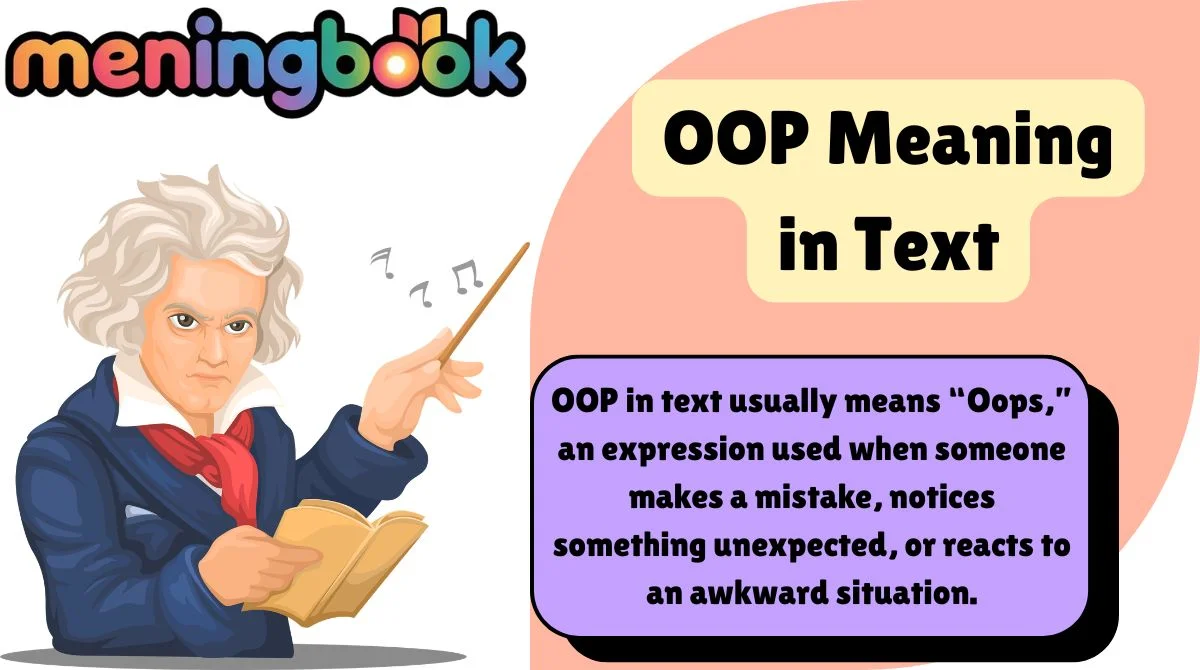
OOP in text usually means “Oops,” an expression used when someone makes a mistake, notices something unexpected, or reacts to an awkward situation. It can also mean “Object-Oriented Programming” in technology discussions. The correct meaning depends on the conversation context.
Detailed Meaning Breakdown
Primary Meaning: OOP = Oops
The most common meaning of OOP in casual texting is a shortened version of “oops.”
People use it when:
- They make a small mistake
- They realize something went wrong
- They accidentally say or send something
- They react to an unexpected event
Examples:
- “OOP I forgot your birthday”
- “OOP sent that to the wrong person”
- “OOP my bad”
In this context, OOP is usually playful and informal. It often shows that the person is acknowledging a mistake without making the situation too serious.
Secondary Meaning: OOP = Object-Oriented Programming
In technology, software, and coding conversations, OOP means Object-Oriented Programming.
It is a programming style based on objects, classes, and reusable code structures.
Example:
- “I am learning OOP in Python.”
Here, OOP has nothing to do with mistakes or reactions. It refers to a computer science concept.
Rare Meanings of OOP
Depending on the community, OOP can also have other meanings, such as:
- Original Original Poster (sometimes used in online discussions)
- Out Of Place (rare abbreviation)
- Other specialized meanings in specific industries
These meanings are uncommon in normal texting.
What “OOP” Means in Different Situations
Everyday Texting
In normal chats, OOP usually means “oops.”
It creates a casual and friendly tone.
Example:
Friend: “You told everyone my surprise plan.”
Reply: “OOP 😭”
Meaning:
“I made a mistake” or “I didn’t realize that happened.”
It can also be used dramatically for humor.
Example:
“OOP I bought another pair of shoes.”
Meaning:
“I accidentally did something funny or unnecessary.”
Social Media Platforms
On platforms like TikTok, Instagram, Snapchat, and Twitter/X, OOP is often used as a reaction.
People use it when:
- Someone says something shocking
- A funny mistake happens
- A person reveals unexpected information
Example:
Comment:
“Her old photo appeared from 2012.”
Reply:
“OOP 👀”
Meaning:
“That was unexpected” or “Something interesting just happened.”
The tone is usually humorous, not negative.
Dating & Relationships
In dating conversations, OOP can carry playful emotions.
Examples:
“I accidentally liked your old picture.”
“OOP 😭”
Meaning:
“I made an embarrassing mistake.”
It can also create a cute or teasing moment between two people.
However, tone matters. A simple “OOP” may sound funny with emojis but confusing without context.
Professional Communication
In workplaces, OOP usually does not mean “oops” unless the environment is very casual.
In professional technology discussions:
“OOP principles improve software design.”
Here it means Object-Oriented Programming.
In formal emails or business messages, writing “OOP” for a mistake may look too informal.
Better options:
- “Sorry, I made an error.”
- “Apologies, I sent the wrong file.”
Cultural or Regional Differences
OOP as “oops” is widely understood online because English internet slang spreads globally.
However, people from different age groups may interpret it differently.
Younger internet users often use OOP casually as a reaction.
Older users may not recognize it or may only know OOP as a programming term.
Psychological & Tone Analysis
The reason people use OOP is often connected to emotion and social connection.
It Shows Self-Awareness
When someone says OOP, they are usually admitting a small mistake.
It signals:
“I noticed what happened.”
“I know that was awkward.”
“I’m not taking this too seriously.”
It Reduces Awkwardness
A mistake can create tension. Using OOP makes the situation lighter.
Example:
“I accidentally replied to the wrong chat. OOP.”
The word makes the mistake feel less serious.
It Creates Humor
Online communication often uses exaggeration and reactions.
“OOP” can turn a normal mistake into a funny moment.
Emotional Meaning Depends on Tone
“OOP 😭” may mean:
“That is hilarious.”
“OOP…” may mean:
“That was awkward.”
“OOP!” may mean:
“I just noticed something.”
15 Real Conversation Examples (Explained)
1.
Person A: Did you send the message already?
Person B: OOP yes.
Explanation:
They realized they already did something.
2.
Friend: You posted the surprise gift online.
Reply: OOP my bad.
Explanation:
The person admits a mistake.
3.
Someone: I accidentally called my teacher “mom.”
Reply: OOP 😭
Explanation:
Used as a funny reaction.
4.
Person: OOP I forgot to save the file.
Explanation:
A small problem was noticed.
5.
Comment: OOP this video was unexpected.
Explanation:
Used as a reaction to surprising content.
6.
Friend: I saw your old embarrassing photo.
Reply: OOP delete that.
Explanation:
Playful embarrassment.
7.
Person: OOP I ordered the wrong size.
Explanation:
They made an accidental mistake.
8.
Friend: You liked their photo from 5 years ago.
Reply: OOP.
Explanation:
Embarrassed reaction.
9.
Developer: OOP makes code easier to organize.
Explanation:
OOP means Object-Oriented Programming.
10.
Student: We have an OOP exam tomorrow.
Explanation:
Programming meaning.
11.
Person: OOP I forgot your name for a second.
Explanation:
Acknowledging a social mistake.
12.
Friend: You revealed the ending.
Reply: OOP sorry.
Explanation:
Accidental spoiler.
13.
Comment: OOP someone got exposed.
Explanation:
Reaction to unexpected information.
14.
Person: OOP wrong chat.
Explanation:
Message sent to the wrong place.
15.
Friend: You bought another phone?
Reply: OOP.
Explanation:
Playful reaction to an unexpected choice.
When “OOP” Can Be Misunderstood
Context Confusion
The biggest problem is that OOP has multiple meanings.
A programmer may think:
“OOP = Object-Oriented Programming”
A social media user may think:
“OOP = Oops”
Always check the topic.
Generational Gap
Younger users may use OOP naturally as slang.
Older users may not understand why someone writes “OOP” instead of “oops.”
Platform Differences
A coding forum and a TikTok comment section will likely have completely different meanings.
The platform helps determine the meaning.
Similar Words, Symbols, or Abbreviations
- Oops – A reaction to a mistake.
- My bad – A casual apology.
- LOL – Laughing or finding something funny.
- OMG – Expression of surprise.
- IDK – I don’t know.
- BRB – Be right back.
- OMG – Strong surprise reaction.
- SMH – Disbelief or disappointment.
- WTH – Reaction to confusion or surprise.
- LOLZ – Playful version of laughing.
When Not to Use “OOP”
Professional Risks
Using OOP instead of “sorry” in formal communication may seem careless.
Example:
Not recommended:
“OOP I missed the meeting.”
Better:
“Apologies, I missed the meeting.”
Cultural Risks
Some people may not understand internet slang.
Clear language works better in serious conversations.
Tone Risks
“OOP” may sound funny when someone expects a serious apology.
Always consider the situation.
Expert Tips for Using “OOP” Correctly
- Use OOP mainly in casual conversations.
- Add emojis when you want to show emotion.
Example:
“OOP 😭”
- Avoid using it in formal emails.
- Check the topic before assuming the meaning.
- Use “oops” if you are unsure.
- Remember that technology conversations may use OOP differently.
- Match the communication style of the person you are talking with.
Frequently Asked Questions
What does OOP mean in texting?
OOP usually means “oops” in texting. It shows that someone made a small mistake or noticed something unexpected.
Is OOP the same as Oops?
Yes, in casual texting OOP is often a shortened or stylized version of “oops.”
What does OOP mean from a girl in text?
If a girl texts OOP, it usually means she is reacting to a mistake, surprise, or awkward moment. The exact meaning depends on the conversation.
What does OOP mean on social media?
On social media, OOP is commonly used as a reaction to surprising, funny, or unexpected situations.
Does OOP always mean a mistake?
No. In programming discussions, OOP means Object-Oriented Programming.
Is OOP a slang word?
Yes, when used as “oops,” it is internet slang.
Can OOP sound rude?
Usually no, but in serious situations it may seem too casual.
Should I use OOP in professional messages?
Generally no. Use clearer words like “sorry” or “apologies.”
Final Summary
OOP in text most commonly means “oops,” a casual reaction used when someone makes a mistake, notices something unexpected, or wants to make an awkward moment lighter. On the internet, it is often playful and connected with humor.
However, OOP can also mean Object-Oriented Programming in technology conversations. Understanding the context, platform, and relationship between speakers is the key to interpreting it correctly.
Use OOP confidently in casual chats, but choose clearer language when communicating professionally.

I am Noah Peterson, an educational content writer passionate about simplifying complex topics into clear and practical learning