Have you ever sent someone a message, then received a reply with just three dots?
“…”
No words. No explanation. Just those three tiny dots.
You probably paused and wondered what it meant. Were they upset? Thinking? Being sarcastic? Ignoring you? In modern texting, small symbols often carry big meaning, and few are more confusing than the three dots.
The three dots are everywhere. They appear in text messages, social media comments, emails, online chats, and even professional conversations.
Sometimes they signal hesitation. Other times they create suspense, show discomfort, or suggest unfinished thoughts.
The tricky part is that their meaning changes depending on the context, tone, and relationship between the people communicating.
This guide explains exactly what three dots mean in text, how people use them in different situations, why they can be misunderstood, and how to interpret them correctly in 2026 digital communication.
By the end, you’ll know how to read between the dots and use them with confidence.
Quick Definition of “three dots meaning in text”
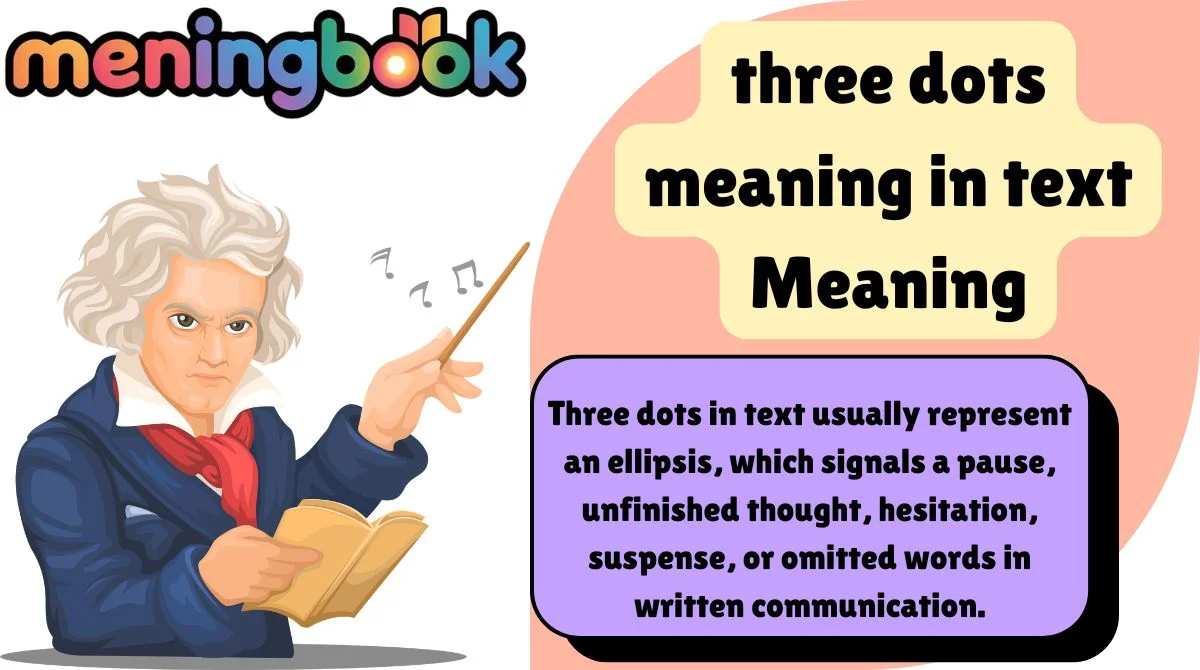
Three dots in text usually represent an ellipsis, which signals a pause, unfinished thought, hesitation, suspense, or omitted words in written communication.
In texting and online messaging, they can also suggest emotional tone, awkwardness, sarcasm, passive aggression, reflection, or anticipation depending on context.
Detailed Meaning Breakdown
The Primary Meaning: A Pause or Incomplete Thought
The most common meaning of three dots is a pause.
It tells the reader that the sentence is unfinished or that there is more left unsaid.
Examples:
- “I was going to tell you something…”
- “Well… maybe.”
In these cases, the dots create space. They mimic natural speech patterns where someone pauses before continuing.
This use comes from traditional writing, where an ellipsis shows omitted words or trailing thoughts.
Secondary Meanings
In digital communication, three dots have developed extra meanings.
Hesitation
They can show uncertainty.
Example:
“I guess… if you want.”
This often means the sender feels unsure.
Suspense
They can build anticipation.
Example:
“You won’t believe what happened next…”
This creates curiosity.
Emotional Distance
Sometimes they suggest emotional withdrawal.
Example:
“Okay…”
This may feel colder than simply saying “Okay.”
Passive Aggression
Used in some conversations, they can imply dissatisfaction.
Example:
“Sure…”
This can sound annoyed or skeptical.
Rare Meanings
Less commonly, three dots may indicate:
- Dramatic effect
- Thoughtfulness
- Confusion
- Intentional vagueness
- Silent judgment
These meanings depend heavily on context.
What “three dots meaning in text” Means in Different Situations
Everyday Texting
In casual texting, three dots often soften statements.
Example:
“I’m not sure…”
This feels gentler than:
“I’m not sure.”
The dots reduce bluntness.
People also use them when thinking while typing.
Example:
“So… what are your plans?”
This sounds conversational.
Social Media Platforms
On social media, three dots often create intrigue.
Examples:
- “Wait until you hear this…”
- “Some people never learn…”
This style encourages readers to keep reading or react.
On platforms like messaging apps, users may also send just “…” to show speechlessness.
That often means:
- Shock
- Disbelief
- Confusion
- Mild frustration
Dating & Relationships
This is where interpretation becomes tricky.
Three dots can suggest:
Nervousness
“I was wondering… if you’re free later?”
The sender may feel shy.
Emotional Tension
“Okay…”
This can suggest disappointment.
Flirting
“Maybe…”
Used playfully, it can create mystery.
In romantic chats, context matters more than punctuation.
Professional Communication
In workplace messaging, three dots can feel unclear.
Example:
“Can we talk…”
This often causes anxiety because it sounds serious.
Professional communication values clarity.
Better alternatives:
- “Can we discuss tomorrow’s meeting?”
- “I have a quick question.”
Avoid unnecessary suspense.
Cultural or Regional Differences
Communication style differs across generations and regions.
Older users often use ellipses naturally because formal writing taught this punctuation style.
Younger users may read it differently.
To many Gen Z users:
“Thanks…”
can feel awkward or passive-aggressive.
This generational gap causes many misunderstandings.
Psychological & Tone Analysis
Why do people use three dots?
The answer lies in psychology.
To Simulate Real Speech
Text lacks voice tone.
Three dots help recreate pauses.
Example:
“Well… I’m not sure.”
This feels more human.
To Soften Directness
People often fear sounding harsh.
Instead of:
“No.”
They write:
“No…”
This sounds less abrupt.
To Express Uncertainty
The dots show internal hesitation.
They reflect thinking in progress.
To Create Emotional Weight
A sentence ending in dots feels heavier.
Compare:
“I understand.”
vs.
“I understand…”
The second carries deeper emotional nuance.
Social Signaling
Three dots can signal:
- Thoughtfulness
- Doubt
- Suspicion
- Discomfort
- Curiosity
Readers often decode these subconsciously.
15 Real Conversation Examples (Explained)
1. “Okay…”
Usually signals hesitation, concern, or hidden emotion.
2. “Sure…”
May imply reluctance or skepticism.
3. “I guess…”
Shows uncertainty.
4. “Well…”
Suggests thinking before speaking.
5. “Interesting…”
Could mean genuine curiosity or subtle judgment.
6. “You did what…?”
Shows surprise or disbelief.
7. “Maybe…”
Creates ambiguity.
8. “I see…”
Often reflective, sometimes disappointed.
9. “Thanks…”
Can feel awkward depending on context.
10. “We need to talk…”
Creates tension and concern.
11. “That’s fine…”
May suggest it is not actually fine.
12. “Wow…”
Could mean amazement or disapproval.
13. “Right…”
Often skeptical.
14. “Go on…”
Invites continuation.
15. “I’m thinking…”
Literally indicates reflection.
When “three dots meaning in text” Can Be Misunderstood
Three dots are highly context-dependent.
That creates confusion.
Context Confusion
The same phrase can mean different things.
Example:
“Fine…”
Possible meanings:
- Genuine acceptance
- Annoyance
- Disappointment
- Sarcasm
Without tone of voice, readers guess.
Generational Gap
Older adults often use ellipses casually.
Younger readers may interpret emotional subtext.
This leads to accidental tension.
Platform Differences
Meaning shifts by platform.
Formal pause or omitted thought.
Text Message
Emotional nuance.
Social Media
Drama or suspense.
Workplace Chat
Potential concern.
Platform shapes interpretation.
Similar Words, Symbols, or Abbreviations
Here are related symbols often confused with three dots.
1. Period (.)
A complete statement.
2. Double dots (..)
Informal pause.
3. Dash (—)
Abrupt pause or interruption.
4. Comma (,)
Short pause.
5. “LOL”
Signals humor.
6. “Hmm”
Shows thinking.
7. “IDK”
Expresses uncertainty.
8. Question mark (?)
Requests clarification.
9. Typing indicator
Shows someone is actively composing.
Not the same as sent ellipsis.
10. “…”
The proper single-character ellipsis.
Same meaning as three typed periods.
When Not to Use “three dots”
Three dots are useful, but not always appropriate.
In Professional Messages
Avoid:
“Please review this…”
It may sound vague.
Use direct wording instead.
During Serious Discussions
If clarity matters, dots can create anxiety.
Avoid:
“We need to discuss something…”
Better:
“We need to discuss the project deadline.”
Across Cultural Differences
Not everyone interprets them the same way.
This can create unintended tension.
When Giving Instructions
Dots reduce clarity.
Avoid:
“Submit the file… then wait.”
Use precise punctuation.
In Sensitive Emotional Conversations
Ambiguous punctuation can worsen misunderstandings.
Be explicit.
Expert Tips for Using “three dots” Correctly
1. Use Them Sparingly
Too many dots look unclear.
Bad:
“Okay… I mean… maybe… later…”
2. Match Context
Casual texting allows flexibility.
Professional settings need clarity.
3. Consider Your Audience
Different generations interpret them differently.
4. Avoid Creating Unnecessary Suspense
If urgency is not intended, avoid dramatic dots.
5. Use Them for Natural Pauses
Best use:
“Well… I’m still deciding.”
6. Don’t Replace Clear Words
If explanation is needed, write it.
7. Watch Emotional Tone
“Sure…”
may sound annoyed.
8. Re-read Before Sending
Ask yourself:
Could this be misunderstood?
If yes, revise.
Frequently Asked Questions
What do three dots mean in a text message?
They usually indicate a pause, unfinished thought, hesitation, or emotional nuance depending on context.
Are three dots rude in texting?
Not always. They can seem rude if interpreted as passive-aggressive or dismissive.
Why do people text only “…” ?
This often expresses speechlessness, confusion, awkwardness, or disbelief.
Do three dots mean someone is upset?
Sometimes, but not necessarily. Context determines emotional meaning.
What does “Okay…” mean from a girl or guy?
It often suggests hesitation, uncertainty, disappointment, or emotional subtext.
Why do older people use ellipses more?
Traditional writing habits taught ellipses as natural pauses in written communication.
Should I use three dots in professional emails?
Usually no. Clear punctuation is more effective and professional.
Is three dots the same as the typing indicator?
No. The typing indicator shows someone is composing a message. Sent three dots are intentional punctuation.
Final Summary
Three dots may look simple, but they carry powerful meaning in digital communication.
At their core, they represent a pause or unfinished thought.
Yet in modern texting, they can also signal:
- Hesitation
- Suspense
- Reflection
- Emotional distance
- Sarcasm
- Uncertainty
Their meaning depends on context, platform, relationship, and generation.
The smartest way to interpret them is to look at the full conversation, not just the punctuation.
The smartest way to use them is with purpose.
Use three dots when you want to create a natural pause or thoughtful tone.
Avoid them when clarity is essential.
When used correctly, they add subtle depth to your messages.
When overused or misplaced, they create confusion.
Understanding the meaning behind these three tiny dots helps you communicate with more confidence in today’s fast-moving digital world.

I am Noah Peterson, an educational content writer passionate about simplifying complex topics into clear and practical learning