You’re texting someone, and they reply with just two letters: “ig.” No punctuation.
No emojis. Just “ig.” Now you’re stuck wondering—are they agreeing? Being unsure? Or just brushing you off?
Short abbreviations like this are everywhere in modern texting. They save time, but they also create confusion.
The same two letters can carry different meanings depending on tone, context, and who’s using them. That’s why “ig” often leaves people second-guessing conversations.
This guide clears it all up. You’ll learn exactly what “ig” means, how it’s used in different situations, what tone it carries, and when you should—or shouldn’t—use it. By the end, you won’t have to guess anymore. You’ll understand it instantly and use it confidently.
Quick Definition of “ig meaning in text message”
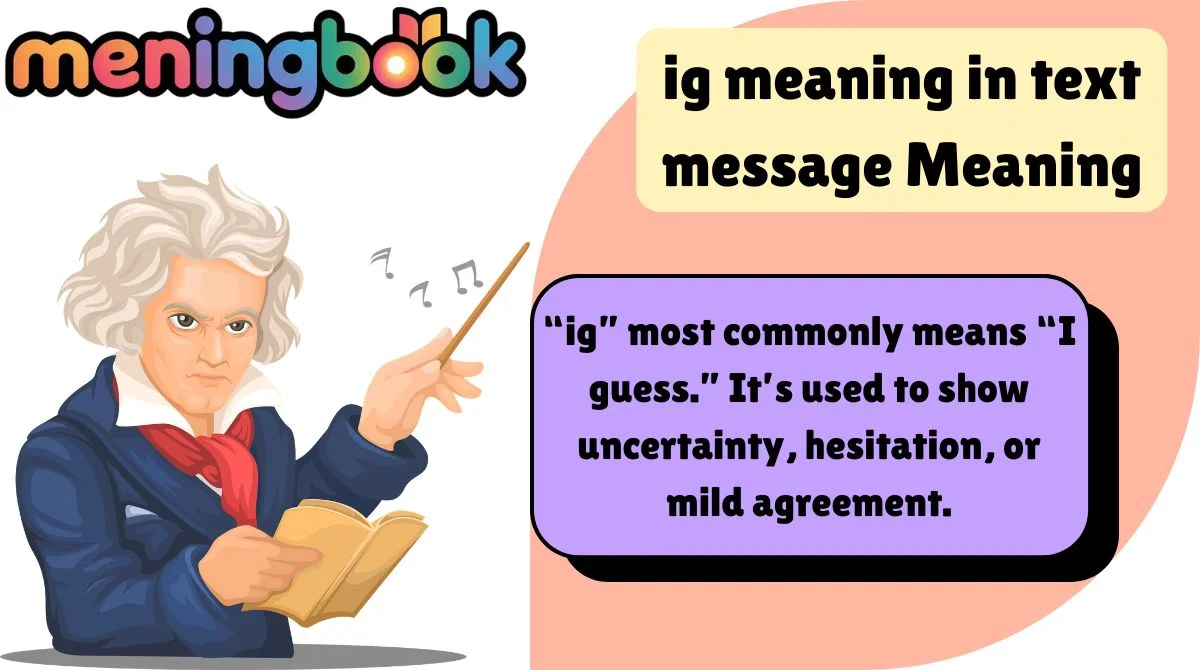
“ig” most commonly means “I guess.” It’s used to show uncertainty, hesitation, or mild agreement.
In some contexts, it can also mean “Instagram”, especially when discussing social media.
Detailed Meaning Breakdown
Primary Meaning: “I Guess”
The main meaning of “ig” is “I guess.” People use it when they are unsure, not fully committed, or slightly indifferent.
It often softens a statement. Instead of sounding firm or confident, it adds a layer of doubt or casualness.
Example:
- “We can go later, ig.”
This suggests agreement—but not strong enthusiasm.
Secondary Meaning: “Instagram”
In social media contexts, “ig” often stands for Instagram.
Example:
- “Follow me on ig.”
Here, there is no emotional tone—it’s purely a shorthand for the platform.
Rare or Situational Meanings
Although uncommon, “ig” can sometimes appear in niche contexts:
- As a typo for “I’m” or “it’s”
- As shorthand in gaming or group chats with unique meanings
However, these uses are rare. In most cases, it means “I guess.”
What “ig” Means in Different Situations
Everyday Texting
In casual conversations, “ig” usually signals hesitation or mild agreement.
Example:
- “Do you want pizza?”
- “Yeah ig.”
This means “yes,” but not with excitement.
Social Media Platforms
On platforms like Instagram, TikTok, or Snapchat, “ig” appears in captions or comments.
Two meanings dominate:
- “I guess” (tone-based)
- “Instagram” (reference-based)
Example:
- “Post it on ig later.”
Dating & Relationships
In dating, “ig” can carry emotional weight. It may signal:
- Uncertainty
- Lack of enthusiasm
- Passive agreement
Example:
- “We can hang out tomorrow ig.”
This might suggest they’re not very excited—or just unsure.
Professional Communication
In work settings, “ig” is usually inappropriate.
It can come across as:
- Uncertain
- Unprofessional
- Disengaged
Example:
- “We can finalize this tomorrow ig.”
This weakens your authority and clarity.
Cultural or Regional Differences
Younger users tend to use “ig” more frequently and casually. Older generations may:
- Misinterpret it
- See it as careless or vague
In some regions, texting culture favors clarity, making “ig” less common.
Psychological & Tone Analysis
Why People Use It
People use “ig” to:
- Avoid sounding too direct
- Express uncertainty
- Keep conversations casual
- Reduce emotional intensity
What It Signals Socially
“ig” often communicates:
- Low commitment
- Mild agreement
- Emotional distance
- Indifference (in some cases)
Emotional Layer Behind It
Tone depends on context:
- Friendly: “Sure ig 🙂”
- Neutral: “ok ig”
- Dismissive: “fine ig”
The same word can feel warm or cold depending on delivery.
15 Real Conversation Examples (Explained)
- “We can go now ig.”
→ Agreement, but not enthusiastic. - “That movie was good ig.”
→ Mild approval, not strong praise. - “I’ll try ig.”
→ Low commitment. - “Yeah ig you’re right.”
→ Reluctant agreement. - “We could talk later ig.”
→ Uncertain plan. - “It’s okay ig.”
→ Not impressed. - “I like it ig.”
→ Mixed feelings. - “Sure ig.”
→ Passive acceptance. - “I’ll come ig.”
→ Possibly not excited to attend. - “You can join ig.”
→ Casual permission. - “That’s fair ig.”
→ Logical agreement, low emotion. - “I guess we’ll see ig.”
→ Double uncertainty. - “It works ig.”
→ Acceptable, not ideal. - “Yeah ig that makes sense.”
→ Understanding with hesitation. - “Fine ig.”
→ Slight frustration or resignation.
When “ig” Can Be Misunderstood
Context Confusion
Without context, “ig” can mean:
- Agreement
- Disinterest
- Doubt
The reader must interpret tone, which can lead to errors.
Generational Gap
Younger users understand subtle tone shifts. Older users may see “ig” as:
- Rude
- Lazy
- Confusing
Platform Differences
On Instagram:
- Likely means “Instagram”
In chats:
- Likely means “I guess”
Mixing these can cause confusion.
Similar Words, Symbols, or Abbreviations
- idk – I don’t know
- imo – In my opinion
- tbh – To be honest
- fr – For real
- bet – Agreement or approval
- meh – Indifference
- k – Short acknowledgment
- ok – Neutral agreement
- lol – Laughing or softening tone
- hmm – Thinking or hesitation
Each of these carries its own tone, similar to how “ig” softens statements.
When Not to Use “ig”
Professional Risks
Avoid using “ig” in:
- Emails
- Reports
- Work chats
It weakens clarity and authority.
Cultural Risks
In formal cultures, casual abbreviations may seem disrespectful or careless.
Tone Risks
“ig” can accidentally sound:
- Passive-aggressive
- Disinterested
- Dismissive
Especially in sensitive conversations.
Expert Tips for Using “ig” Correctly
- Use it only in casual conversations.
- Avoid it when clarity is important.
- Pair it with emojis if you want a softer tone.
- Don’t use it in serious discussions.
- Be aware of how the other person texts.
- Replace it with full sentences in formal settings.
- Use it to soften opinions—not decisions.
- If unsure, skip it and be direct.
Frequently Asked Questions
What does “ig” mean in texting?
It usually means “I guess,” showing uncertainty or mild agreement.
Does “ig” always mean Instagram?
No. It only means Instagram when the context clearly refers to social media.
Is “ig” rude?
Not inherently, but it can sound dismissive depending on tone.
Why do people use “ig” instead of “I guess”?
It’s faster, more casual, and fits modern texting habits.
Can “ig” mean something else?
Rarely. In most cases, it means “I guess.”
Is it okay to use “ig” in professional messages?
No. It appears unprofessional and unclear.
What tone does “ig” usually carry?
Uncertain, casual, or mildly indifferent.
How can I avoid misunderstanding “ig”?
Look at the full conversation context and the sender’s usual texting style.
Final Summary
“ig” is a small abbreviation with a big impact. Most of the time, it means “I guess,” signaling uncertainty, hesitation, or casual agreement. In social media contexts, it may refer to Instagram.
The key to understanding “ig” is context. The same message can feel friendly, neutral, or dismissive depending on how it’s used.
That’s why paying attention to tone, situation, and relationship matters.
Use “ig” when you want to keep things light and informal. Avoid it when clarity, professionalism, or emotional sensitivity is important.
Mastering small details like this makes your communication sharper and more effective.
Instead of guessing what “ig” means, you now know exactly how to read—and use—it with confidence.

I am Noah Peterson, an educational content writer passionate about simplifying complex topics into clear and practical learning