When someone sends a simple “K” in a text message, it can create more confusion than a long sentence.
A person may think, “Are they upset?” “Are they ignoring me?” or “Do they simply mean okay?” The meaning of “K” depends heavily on the situation, relationship, and tone behind the conversation.
In modern texting culture, short replies have developed their own emotional meanings. While “K” technically comes from “okay,” it can sometimes feel different from writing “okay,” “ok,” or “sure.”
A message from a close friend, partner, coworker, or stranger can carry different meanings even when the exact word is the same.
This guide explains what “K” means in text, how people use it across different platforms, what emotions it may represent, examples of real conversations, and how to understand it correctly in 2026 communication culture.
Quick Definition of “K”
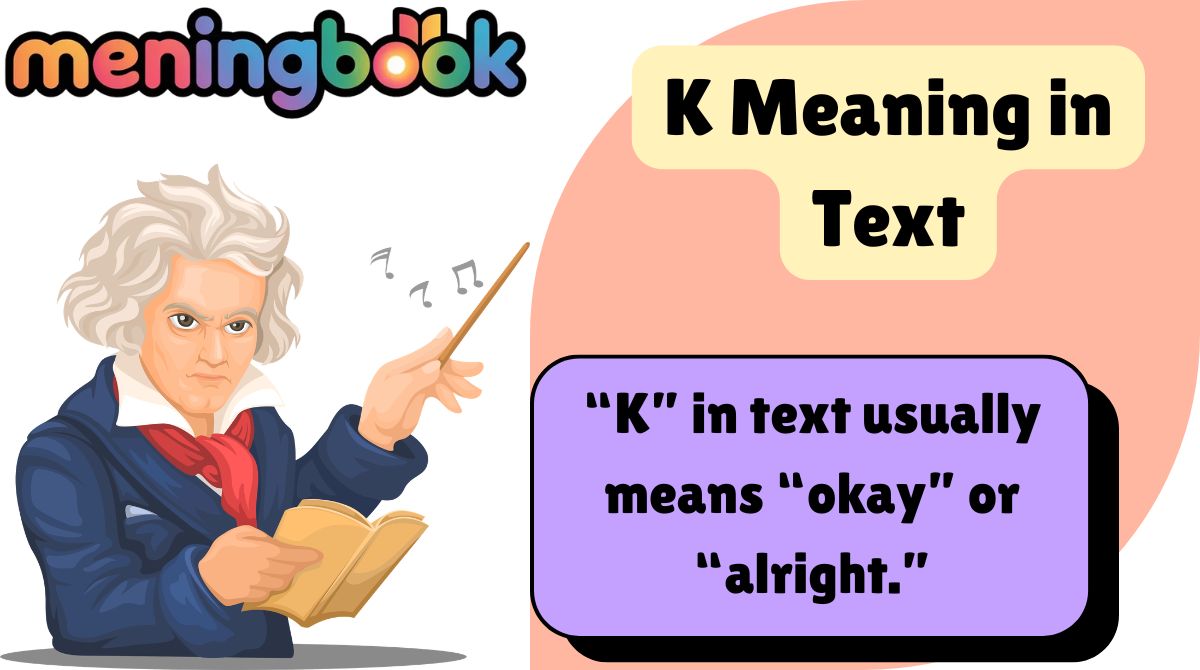
“K” in text usually means “okay” or “alright.” It is a shortened version of “OK” used to confirm information, agree with something, or acknowledge a message. However, depending on context, “K” can also sound cold, annoyed, dismissive, or uninterested. The meaning depends on the relationship, conversation, and tone.
Detailed Meaning Breakdown
Primary Meaning of K in Text
The main meaning of “K” is simply:
K = Okay / Got it / I understand
People often use it as a quick response when they do not need to add more details.
Example:
Person A: “I will call you after work.”
Person B: “K”
Meaning: “Okay, I understand.”
In this situation, “K” is neutral.
Secondary Meanings of K
Although the basic meaning is “okay,” people often attach emotions to short replies.
“K” can mean:
- Agreement
- Acknowledgment
- Ending a conversation
- Lack of interest
- Being busy
- Feeling annoyed
- Wanting a shorter conversation
For example:
Person A: “Sorry I forgot to reply.”
Person B: “K”
The meaning may feel different because the situation involves an apology. The person receiving “K” may interpret it as disappointment or irritation.
Rare Meanings of K
In some contexts, “K” can have other meanings:
- K = thousand (example: 5K = 5,000)
- K = a letter abbreviation in names or usernames
- K = a chemical symbol for potassium
However, in normal texting conversations, “K” usually means “okay.”
What “K” Means in Different Situations
Everyday Texting
In normal daily conversations, “K” is often used as a fast reply.
Examples:
“Meet at 7?”
“K”
Meaning:
“Yes, that works.”
However, some people prefer “okay” because “K” feels shorter and less friendly.
A single-letter reply can sometimes appear emotionally distant because it gives no extra information.
Social Media Platforms
On platforms like messaging apps, comments, and direct messages, “K” can have different tones.
Among friends:
Friend: “I bought the new phone.”
Reply: “K”
This may simply mean the person saw the message.
In arguments:
Person A: “You never listen.”
Person B: “K”
Here, “K” may appear sarcastic or dismissive.
Social media communication depends heavily on timing, previous messages, and relationship.
Dating & Relationships
In romantic conversations, “K” is often analyzed more deeply.
A partner sending only:
“K”
after a serious message may feel cold because emotional conversations usually need more explanation.
Example:
Person A: “I feel like we have not talked much lately.”
Person B: “K”
The receiver may feel ignored because the response does not show emotional engagement.
However, one “K” message does not always mean anger. The person may be tired, distracted, or unsure what to say.
Professional Communication
In work conversations, “K” is usually not recommended.
Example:
Manager: “Please complete the report before Friday.”
Employee: “K”
Although the meaning is understood, it may appear too casual or unprofessional.
Better options:
- Okay
- Understood
- Got it
- I will do that
Professional communication usually needs clarity and politeness.
Cultural or Regional Differences
Different groups use texting styles differently.
Some people see “K” as normal and efficient. Others see it as rude or passive-aggressive.
Younger generations may use short replies more casually, while older users may interpret them more seriously.
The relationship between the people matters more than the letter itself.
Psychological & Tone Analysis
Why do people use “K” instead of “okay”?
There are several reasons:
Speed and Convenience
Typing one letter is faster. Many people use “K” because they want to respond quickly.
Emotional Distance
A short reply can create distance.
For example:
“Okay 😊”
feels warmer than:
“K”
The absence of extra words or emojis can change the emotional feeling.
Conversation Control
Sometimes people use “K” because they want to end the conversation.
Example:
Person A: “I have explained everything.”
Person B: “K”
It may signal the conversation is finished.
Hidden Emotions
A person might use “K” when they are:
- Upset
- Busy
- Tired
- Not interested
- Trying not to argue
But assumptions should be avoided without more context.
15 Real Conversation Examples (Explained)
1.
A: “I sent you the file.”
B: “K”
Meaning:
“I received your message.”
Tone:
Neutral.
2.
A: “Are you coming tonight?”
B: “K”
Meaning:
Can be unclear.
Possible meaning:
“I saw your message,” but not a direct answer.
3.
A: “I will be late.”
B: “K”
Meaning:
“Okay, I understand.”
4.
A: “I’m sorry for what happened.”
B: “K”
Meaning:
Could sound emotionally cold.
Possible feeling:
The person may still be upset.
5.
A: “Don’t forget to buy milk.”
B: “K”
Meaning:
“Got it.”
6.
A: “I passed my exam!”
B: “K”
Meaning:
Could sound uninterested because excitement was expected.
Better:
“Congrats!”
7.
A: “We need to talk.”
B: “K”
Meaning:
Acknowledgment.
Tone depends on the relationship.
8.
A: “Your appointment is confirmed.”
B: “K”
Meaning:
Confirmation received.
9.
A: “I don’t want to argue anymore.”
B: “K”
Meaning:
Conversation ending.
10.
A: “I changed the plan.”
B: “K”
Meaning:
“I understand.”
11.
A: “Can you help me?”
B: “K”
Meaning:
May sound incomplete because help was not confirmed.
12.
A: “I’m going home now.”
B: “K”
Meaning:
Acknowledgment.
13.
A: “That hurt my feelings.”
B: “K”
Meaning:
May appear dismissive.
14.
A: “See you tomorrow.”
B: “K”
Meaning:
Simple goodbye response.
15.
A: “I got the job!”
B: “K”
Meaning:
Could be interpreted as lack of excitement.
When “K” Can Be Misunderstood
Context Confusion
The biggest problem with “K” is missing emotional information.
Text messages do not show:
- Facial expressions
- Voice tone
- Body language
A simple reply can be interpreted in many ways.
Generational Gap
Some people view short messages as efficient. Others view them as rude.
A younger person may send “K” casually, while another person may think something is wrong.
Platform Differences
A “K” on a quick chat app may feel normal.
A “K” after a serious conversation may feel negative.
The same word can have different meanings depending on where and when it appears.
Similar Words, Symbols, or Abbreviations
1. OK
Means agreement or acceptance.
2. Okay
A more complete and friendly version of “K.”
3. Ok
A casual version of okay.
4. Got it
Shows understanding.
5. Sure
Shows agreement.
6. Yup
Informal yes.
7. Yep
Casual confirmation.
8. Alright
Means acceptance or agreement.
9. 👍
A thumbs-up emoji meaning acknowledgment.
10. KK
Often means “okay okay” and can sound friendlier than “K.”
When Not to Use “K”
Professional Risks
A single “K” may look careless in workplace communication.
Use:
“Understood” or “Thanks, I’ll handle it.”
instead.
Cultural Risks
Some people strongly associate “K” with anger or annoyance.
If you do not know the person well, clearer words are safer.
Tone Risks
Avoid “K” when:
- Someone shares emotional news
- Someone apologizes
- Someone asks for help
- You need to show excitement
A longer response usually communicates better.
Expert Tips for Using “K” Correctly
- Consider your relationship with the person before sending it.
- Avoid using only “K” during serious conversations.
- Add warmth when needed:
“Okay 😊” feels different. - Use complete words in professional situations.
- Do not assume someone is angry because they sent “K.”
- Look at the entire conversation, not one message.
- Match the communication style of the other person.
- When emotions matter, explain more clearly.
Frequently Asked Questions
What does K mean in texting?
K usually means “okay” or “got it.” It is a shortened texting form of agreement or acknowledgment.
Is K rude in a text message?
Not always. It depends on context. Between friends it can be normal, but during emotional conversations it may appear cold.
What does K mean from a girl in text?
A girl sending “K” can simply mean okay, but the meaning depends on the conversation, relationship, and tone.
Is K different from OK?
Yes. Both mean okay, but “K” is shorter and can sometimes feel less friendly.
Why do people reply with only K?
People may use “K” because they are busy, want a quick response, or want to end the conversation.
Does K mean someone is angry?
Not necessarily. It can mean anger, but it can also be a normal acknowledgment.
What is the difference between K and KK?
“K” can feel more direct, while “KK” often feels softer or friendlier.
Should I use K at work?
It is better to avoid it in professional communication because it may seem too casual.
Final Summary
“K” in text mainly means “okay,” but modern communication has given it different emotional meanings.
It can show agreement, acknowledgment, or a quick reply. In some situations, it may also appear cold, distant, or annoyed.
The correct meaning depends on the person, conversation, platform, and emotional situation. Understanding context is the key to interpreting short text messages correctly.
Using “K” casually with friends may be fine, but in important conversations, professional messages, or emotional situations, clearer words usually create better communication.

I am Noah Peterson, an educational content writer passionate about simplifying complex topics into clear and practical learning