You’re texting someone, and they reply with “fm.” That’s it—just two letters. No emoji, no punctuation.
Now you’re stuck wondering: What does that even mean? Is it casual? Is it rude? Are they agreeing, dismissing you, or just typing fast?
Short abbreviations like “fm” are common in modern texting, but they can feel confusing because they depend heavily on context.
The same two letters can mean different things depending on who is using them, where, and why.
This guide clears up that confusion. You’ll learn exactly what “fm” means in text, how it’s used across different situations, and how to interpret its tone.
By the end, you’ll not only understand it—you’ll know when to use it yourself with confidence.
Quick Definition of “fm meaning in text”
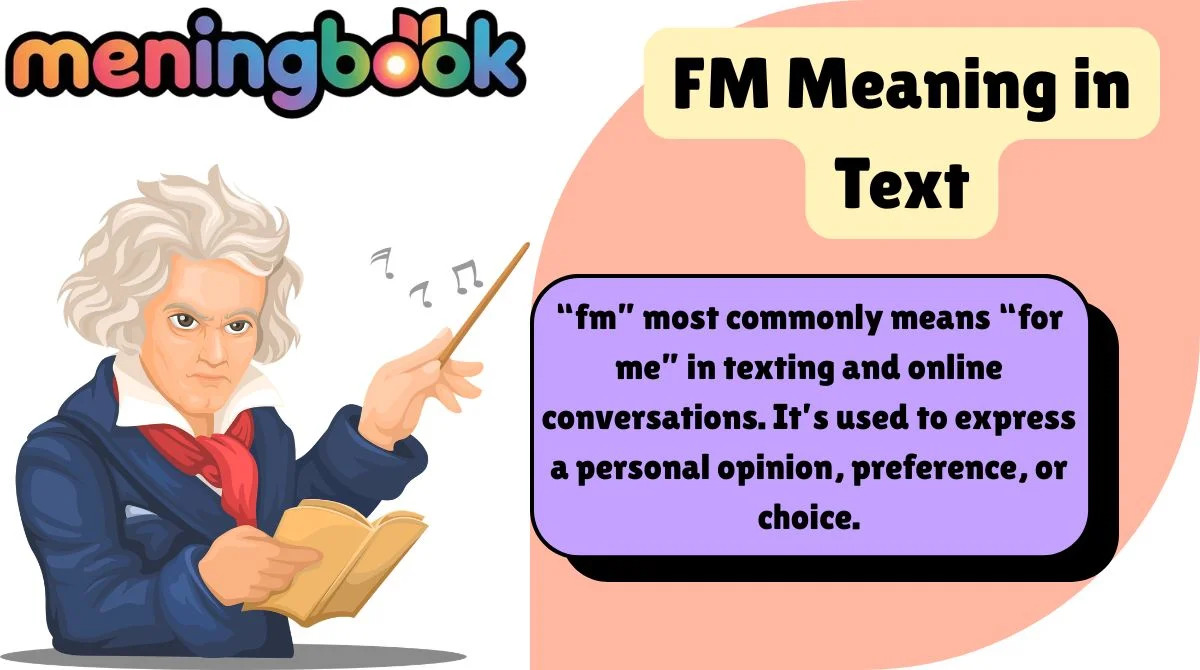
“fm” most commonly means “for me” in texting and online conversations. It’s used to express a personal opinion, preference, or choice.
Secondary meanings include “from me” (used when sending something) and, less commonly, shorthand tied to specific communities or inside jokes.
Detailed Meaning Breakdown
Primary Meaning: “For Me”
The most widely accepted meaning of “fm” is “for me.” It’s a quick way to express your personal view without typing the full phrase.
Example:
“I’ll go with pizza fm” = “I’ll go with pizza for me”
This usage is casual, efficient, and common in fast-paced conversations.
Secondary Meaning: “From Me”
In some contexts, “fm” can mean “from me,” especially when sharing or offering something.
Example:
“This gift is fm” = “This gift is from me”
This meaning is less common but still relevant.
Rare or Niche Meanings
In certain online communities, “fm” might have specialized meanings, such as:
- Shortened usernames or slang
- Gaming shorthand
- Inside jokes between friends
These are not universal and depend heavily on context.
What “fm” Means in Different Situations
Everyday Texting
In casual conversations, “fm” almost always means “for me.”
Example:
“Coffee fm today”
Meaning: “I’m choosing coffee today”
It’s quick, informal, and often used when typing fast.
Social Media Platforms
On platforms like chats, comments, or captions, “fm” is used to:
- Share opinions
- Add personal perspective
Example:
“Best movie this year fm”
Meaning: “Best movie this year for me”
It signals subjectivity.
Dating & Relationships
In dating conversations, “fm” softens opinions and avoids sounding too strong.
Example:
“That works fm”
Meaning: “That works for me”
It shows agreement without being overly formal.
Professional Communication
“fm” is rarely used in professional settings. It can appear:
- In internal chats
- Between close colleagues
Example:
“Schedule is fine fm”
However, this may come across as too casual or unclear.
Cultural or Regional Differences
While “fm” is globally understood in English texting, its usage frequency varies:
- More common among younger users
- Less used in formal cultures or older age groups
Some people may not recognize it at all.
Psychological & Tone Analysis
Why People Use It
People use “fm” because it:
- Saves time
- Feels natural in fast chats
- Keeps conversations flowing
What It Signals Socially
Using “fm” often signals:
- Informality
- Comfort with the person
- Digital fluency
It shows you’re used to modern texting styles.
Emotional Layer Behind It
“fm” can subtly change tone:
- Softer than direct statements
- Less confrontational
- More personal
Example:
“This is better fm” sounds less aggressive than “This is better.”
15 Real Conversation Examples (Explained)
- “Pizza fm tonight”
→ Personal choice: they prefer pizza. - “That works fm”
→ Agreement without enthusiasm or resistance. - “Not a good idea fm”
→ Polite disagreement. - “I’ll pass fm”
→ Declining something casually. - “Best option fm honestly”
→ Personal opinion emphasized. - “I think this is fine fm”
→ Soft approval. - “Nothing special fm”
→ Mild opinion, not strong. - “Same fm”
→ Agreement with someone else’s view. - “Too expensive fm”
→ Personal financial judgment. - “Looks okay fm”
→ Neutral reaction. - “That’s enough fm”
→ Setting a boundary. - “I prefer this fm”
→ Expressing preference. - “Not worth it fm”
→ Negative opinion. - “Good choice fm”
→ Approval. - “I’ll go later fm”
→ Personal plan decision.
Each example shows how “fm” adds a personal tone without sounding harsh.
When “fm” Can Be Misunderstood
Context Confusion
Without context, “fm” can feel vague:
- Is it “for me” or “from me”?
- Is it agreement or indifference?
Generational Gap
Older users may:
- Not recognize “fm”
- Misinterpret it
Younger users are more likely to understand it instantly.
Platform Differences
On some platforms:
- Short forms are expected
- On others, they look unprofessional
Example:
Fine in chat apps, unclear in emails.
Similar Words, Symbols, or Abbreviations
- IMO – In my opinion
- IMHO – In my humble opinion
- TBH – To be honest
- IDK – I don’t know
- FYI – For your information
- SMH – Shaking my head
- BTW – By the way
- NVM – Never mind
- IKR – I know, right
- TBF – To be fair
All of these, like “fm,” add tone and context to messages.
When Not to Use “fm”
Professional Risks
Avoid using “fm” in:
- Emails
- Job applications
- Formal reports
It can look unpolished or unclear.
Cultural Risks
Some audiences:
- Prefer full sentences
- May view abbreviations as disrespectful
Tone Risks
“fm” can sometimes sound:
- Dismissive
- Lazy
- Indifferent
Example:
“That’s fine fm” might feel cold.
Expert Tips for Using “fm” Correctly
- Use it in casual conversations only
- Make sure the context is clear
- Avoid it in important messages
- Pair it with full sentences when needed
- Don’t overuse it in one conversation
- Know your audience before using it
- Use it to soften opinions, not replace clarity
- When in doubt, write the full phrase
Frequently Asked Questions
What does “fm” stand for in texting?
It usually stands for “for me,” expressing a personal opinion or preference.
Can “fm” mean something else?
Yes, it can also mean “from me,” but that usage is less common.
Is “fm” rude in messages?
Not inherently, but it can feel dismissive depending on tone and context.
Do people still use “fm” in 2026?
Yes, especially in fast, informal chats among younger users.
Is “fm” appropriate for work chats?
Only in very casual internal chats; otherwise, avoid it.
How do I know what “fm” means in a message?
Look at the sentence context—most of the time, it means “for me.”
Is “fm” better than typing “for me”?
It’s faster, but less clear. Use it when clarity isn’t critical.
Can “fm” be misunderstood easily?
Yes, especially by people unfamiliar with texting abbreviations.
Final Summary
“fm” is a simple but powerful abbreviation that mostly means “for me.”
It adds a personal touch to messages while keeping them short and efficient. However, its meaning depends heavily on context, tone, and audience.
Use it in casual conversations where speed and simplicity matter.
Avoid it in formal settings where clarity is more important than brevity. When used correctly, “fm” helps you communicate naturally and smoothly in modern digital conversations.
The key is balance: keep it clear, keep it appropriate, and use it where it fits.

I am Noah Peterson, an educational content writer passionate about simplifying complex topics into clear and practical learning