You’re texting someone, and suddenly they reply with “igu.” You pause.
Is it a typo? A slang word? Something sarcastic? In today’s fast-moving digital conversations, short forms like this can feel confusing—especially when meanings shift depending on tone and context.
“igu” is one of those abbreviations that looks simple but carries layered meaning.
It can express agreement, acknowledgment, or even subtle emotion depending on how it’s used. Without understanding it properly, it’s easy to misread the intent behind a message.
This guide breaks everything down clearly. You’ll learn exactly what “igu” means, how people use it across different platforms, and how to respond confidently.
Whether you’re chatting casually, texting someone you like, or trying to keep up with modern slang, this article gives you the clarity you need.
Quick Definition of “igu”
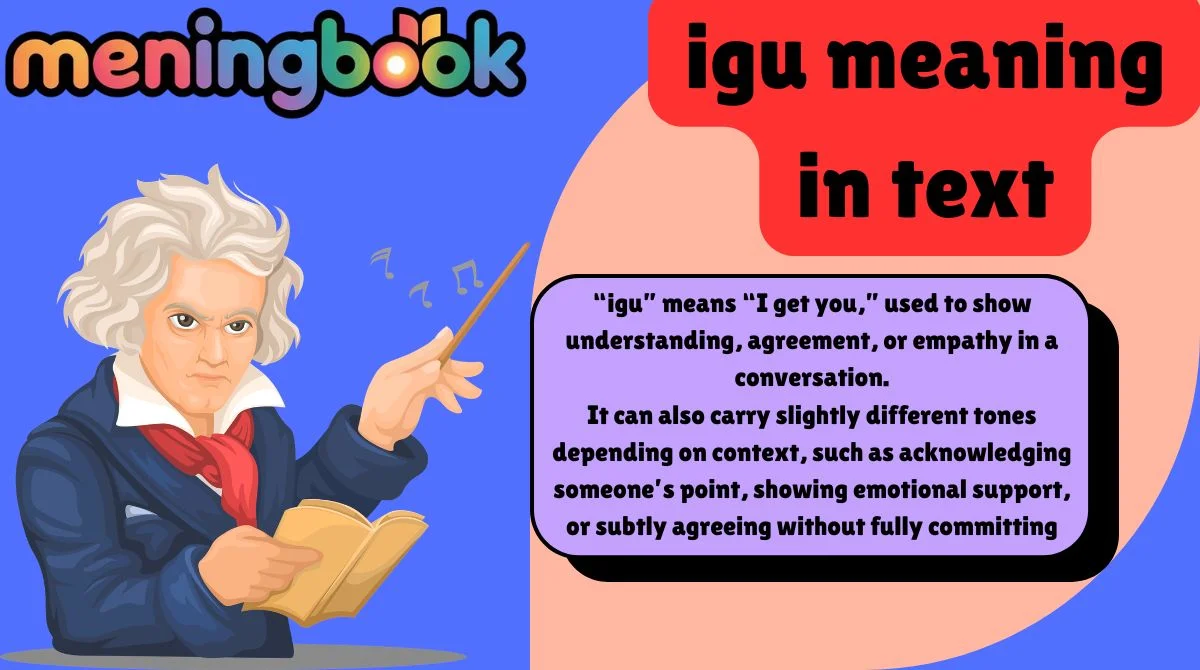
“igu” means “I get you,” used to show understanding, agreement, or empathy in a conversation.
It can also carry slightly different tones depending on context, such as acknowledging someone’s point, showing emotional support, or subtly agreeing without fully committing.
Detailed Meaning Breakdown
Primary Meaning
At its core, “igu” stands for “I get you.” It’s a quick way to tell someone you understand what they’re saying. This doesn’t always mean you agree completely—it just means you recognize their point or feelings.
Example:
- “That situation sounds stressful.”
- “igu”
Here, the person is acknowledging the feeling behind the message.
Secondary Meanings
Depending on tone and context, “igu” can also mean:
- Agreement: “I agree with you.”
- Recognition: “I see what you mean.”
- Support: “I understand what you’re going through.”
Rare Meanings
In some rare cases, especially with different typing styles, “igu” might be:
- A typo for “idk” or “ig u” (I guess you)
- A clipped or rushed version of a longer sentence
However, in most modern usage, it clearly means “I get you.”
What “igu” Means in Different Situations
Everyday Texting
In casual texting, “igu” is used to keep conversations quick and smooth. It shows you’re listening without typing a full response.
Example:
- “I didn’t sleep well last night.”
- “igu”
This signals empathy without needing a long reply.
Social Media Platforms
On platforms like chats or comments, “igu” is used to react quickly.
Example:
- “This app update is so annoying.”
- “igu”
Here, it shows shared frustration.
Dating & Relationships
In dating, “igu” can carry emotional nuance. It may show understanding—but sometimes it can feel distant if overused.
Example:
- “I feel like you’ve been busy lately.”
- “igu”
Depending on tone, this could feel supportive or slightly disengaged.
Professional Communication
“igu” is generally not appropriate in professional settings. It can seem too casual or unclear.
Instead of:
- “igu”
Use:
- “I understand”
- “That makes sense”
Cultural or Regional Differences
“igu” is widely understood in English-speaking online spaces, especially among younger users. However:
- Older generations may not recognize it
- Some regions may interpret it as unclear or incomplete
Psychological & Tone Analysis
Why People Use It
People use “igu” because it is:
- Fast
- Low effort
- Emotionally neutral
- Conversationally efficient
It allows users to respond without committing to a long reply.
What It Signals Socially
“Igu” can signal:
- Active listening
- Mild agreement
- Emotional awareness
- Casual engagement
However, it can also signal:
- Minimal effort
- Lack of enthusiasm (if overused)
Emotional Layer Behind It
Tone matters a lot. “igu” can feel:
- Warm and understanding
- Neutral and distant
- Slightly dismissive (in the wrong context)
The emotional impact depends on the relationship and conversation depth.
15 Real Conversation Examples (Explained)
“I’ve been really stressed about work.”
“igu”
→ Shows empathy without expanding the conversation.
“This movie was kind of boring.”
“igu”
→ Signals agreement.
“I feel like no one listens to me.”
“igu”
→ Acknowledges feelings, but may feel too brief.
“I don’t think that plan will work.”
“igu”
→ Recognizes the opinion without arguing.
“I miss how things used to be.”
“igu”
→ Shows emotional understanding.
“That exam was way harder than expected.”
“igu”
→ Shared experience or agreement.
“I’m just tired of everything lately.”
“igu”
→ Supportive, but could feel distant if no follow-up.
“I think we should leave early.”
“igu”
→ Agreement or acceptance.
“I feel like you’re not listening.”
“igu”
→ Ironically may worsen the situation.
“This place is overpriced.”
“igu”
→ Casual agreement.
“I don’t want to argue anymore.”
“igu”
→ Signals de-escalation.
“I wish I handled that better.”
“igu”
→ Acknowledges regret.
“This trend is overrated.”
“igu”
→ Social agreement.
“I need some space today.”
“igu”
→ Accepts the request calmly.
“I think we need to talk later.”
“igu”
→ Neutral acknowledgment.
When “igu” Can Be Misunderstood
Context Confusion
Without tone or punctuation, “igu” can feel:
- Supportive
- Indifferent
- Dismissive
The reader has to guess intent.
Generational Gap
- Younger users understand it instantly
- Older users may find it confusing or incomplete
Platform Differences
- In casual chats: normal
- In formal messages: unclear or inappropriate
- In emotional conversations: may feel too brief
Similar Words, Symbols, or Abbreviations
- ig – I guess
- idk – I don’t know
- ikr – I know, right
- fr – For real
- bet – Agreement or confirmation
- tbh – To be honest
- imo – In my opinion
- lmk – Let me know
- k – Okay (can feel dismissive)
- understood – Formal version of “igu”
When Not to Use “igu”
Professional Risks
Avoid using “igu” in:
- Emails
- Work chats
- Client communication
It may appear unprofessional or unclear.
Cultural Risks
In some cultures or formal settings, short slang can seem:
- Disrespectful
- Lazy
- Impolite
Tone Risks
“Igu” may feel:
- Cold in emotional conversations
- Dismissive during conflict
- Uninterested if overused
Expert Tips for Using “igu” Correctly
- Use it in casual conversations only
- Add context if the topic is emotional
- Avoid using it as your only response repeatedly
- Pair it with emojis if tone matters (e.g., “igu 🙂”)
- Don’t use it in serious discussions without follow-up
- Consider the relationship before using it
- Replace it with full sentences in important conversations
- Use it to acknowledge—not end—meaningful discussions
Frequently Asked Questions
What does “igu” mean in texting?
It means “I get you,” showing understanding or agreement in a short, casual way.
Is “igu” the same as “I agree”?
Not always. It shows understanding, which may or may not include agreement.
Can “igu” be rude?
Yes, if used in emotional or serious conversations without additional context.
Is “igu” commonly used in 2026?
Yes, especially in casual texting and social media among younger users.
Should I use “igu” in professional messages?
No. Use full phrases like “I understand” instead.
Does “igu” show empathy?
It can, but it may feel weak without a follow-up response.
What’s the difference between “igu” and “idk”?
“Igu” means understanding; “idk” means lack of knowledge.
Can “igu” end a conversation?
Sometimes, yes. It can signal acknowledgment without continuing the discussion.
Conclusion
“Igu” is a simple but powerful texting shortcut that means “I get you.” It helps keep conversations quick and smooth while showing understanding or agreement.
However, its tone depends heavily on context.
Used correctly, it can make communication feel natural and efficient.
Used poorly, it can seem distant or dismissive. The key is balance—use it in casual situations, but switch to fuller responses when clarity and emotion matter.
If you stay aware of tone, audience, and context, “igu” becomes a useful tool rather than a confusing one.
Mastering small expressions like this can greatly improve how you connect and communicate in modern digital conversations.

I am Noah Peterson, an educational content writer passionate about simplifying complex topics into clear and practical learning