You’re scrolling through messages, and suddenly someone replies with “gs.” No emojis.
No explanation. Just two letters. You pause. Is it positive? Negative? Sarcastic? Friendly?
Short abbreviations like this can be confusing because their meaning changes based on context.
What looks simple can carry different tones in texting, social media, or even work conversations.
“gs” is one of those abbreviations that doesn’t have a single fixed definition. Its meaning depends on who’s using it, where it’s used, and how the conversation flows.
This guide clears that confusion. You’ll learn exactly what “gs” means, how to interpret it in different situations, and how to use it correctly without sounding awkward or misunderstood.
Quick Definition of “gs”
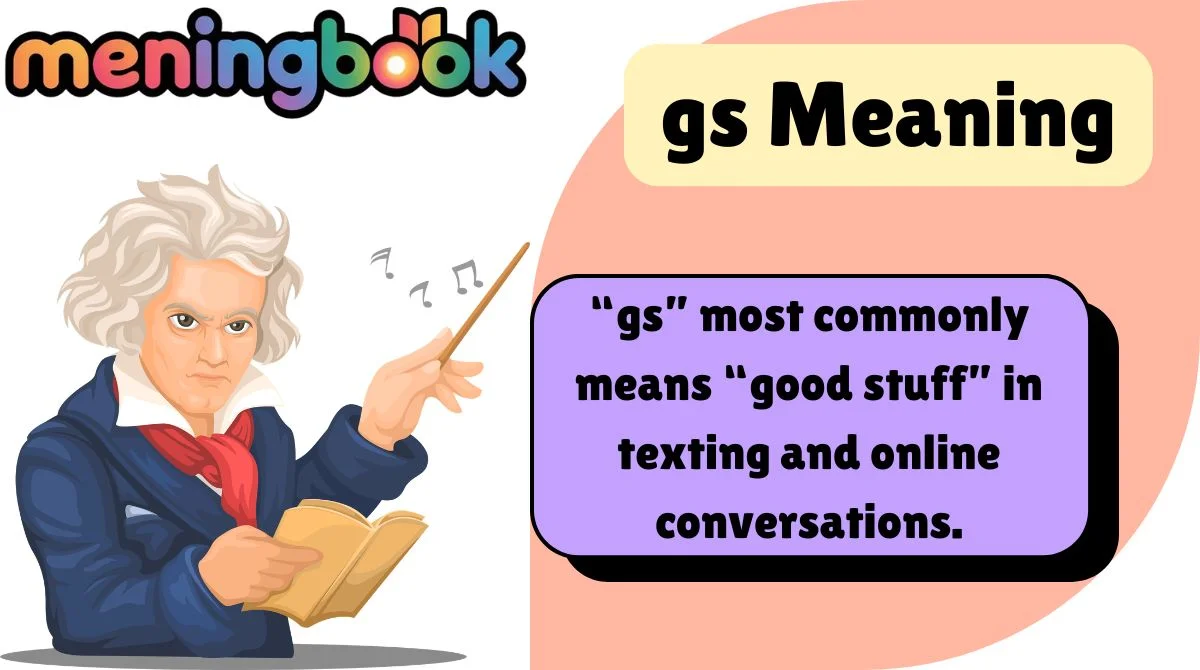
“gs” most commonly means “good stuff” in texting and online conversations.
It can also stand for “good shot,” “good service,” or refer to specific terms depending on context, such as gaming slang or professional abbreviations.
Detailed Meaning Breakdown
Primary Meaning: “Good Stuff”
The most widely used meaning of “gs” is “good stuff.” It’s a quick way to show approval, appreciation, or agreement.
People use it to react to something positive, like:
- A helpful message
- A good idea
- A strong performance
It’s short, casual, and often used in fast-paced chats.
Secondary Meanings
Depending on context, “gs” can also mean:
- Good Shot – Common in gaming or sports chats
- Good Service – Used in business or customer service feedback
- Get Started – Occasionally used in task-oriented chats
- Group Stage – Seen in sports discussions or tournaments
Rare or Niche Meanings
Less common meanings include:
- Grade School – In educational contexts
- Gold Standard – In finance or quality discussions
- Game Server – In technical or gaming environments
These meanings are usually clear from the surrounding conversation.
What “gs” Means in Different Situations
Everyday Texting
In casual chats, “gs” almost always means “good stuff.”
Example:
- “I finished the project early.”
- “gs 👏”
Here, it shows approval or encouragement.
Social Media Platforms
On platforms like Instagram, TikTok, or X, “gs” is used as a quick reaction.
People comment “gs” under:
- Creative posts
- Achievements
- Memes
It works like a short compliment.
Dating & Relationships
In personal conversations, “gs” can feel supportive or warm—but also slightly distant if overused.
Example:
- “I got the job!”
- “gs, proud of you”
It’s positive, but not deeply emotional.
Professional Communication
In work settings, “gs” is risky.
Some teams use it informally in chats:
- “Report looks clean. gs.”
But in formal emails or presentations, it can seem unprofessional or unclear.
Cultural or Regional Differences
“gs” is not tied to one region, but usage varies:
- Younger users: More likely to use it casually
- Older users: May not recognize it
- Gaming communities: Often interpret it as “good shot”
Context matters more than geography.
Psychological & Tone Analysis
Why People Use “gs”
- Saves time
- Feels casual and modern
- Signals quick approval
- Fits fast messaging habits
What It Signals Socially
Using “gs” suggests:
- You’re relaxed and informal
- You’re part of digital communication culture
- You prefer efficiency over long replies
Emotional Layer Behind It
“gs” is generally:
- Positive
- Neutral in depth
- Low emotional intensity
It’s supportive—but not deeply expressive.
15 Real Conversation Examples (Explained)
- “Nice presentation today” → “gs”
Shows approval in a quick, casual way. - “I hit a new high score” → “gs!”
Means “good shot” or “good stuff.” - “Check out this design” → “gs, clean work”
Compliment plus added detail. - “We won the match” → “gs team”
Encourages the group. - “Here’s the final draft” → “gs, approved”
Informal professional approval. - “Just finished gym” → “gs 💪”
Motivational and supportive. - “Posted a new video” → “gs 🔥”
Social media praise. - “Client was happy” → “gs”
Acknowledges success. - “I cooked this today” → “gs!”
Complimenting effort. - “We solved the bug” → “gs team”
Team appreciation. - “I passed the exam” → “gs, proud”
Supportive but concise. - “Look at this shot” → “gs!”
Likely means “good shot.” - “New business deal closed” → “gs”
Positive acknowledgment. - “Started learning coding” → “gs, keep going”
Encouragement. - “Finished reading that book” → “gs 👍”
Light approval.
When “gs” Can Be Misunderstood
Context Confusion
Without context, “gs” can feel unclear:
- Is it praise?
- Is it sarcasm?
Short replies often lack tone.
Generational Gap
Older users may:
- Not recognize it
- Misinterpret it
- Ask for clarification
Platform Differences
- Gaming: “good shot”
- Business chat: “good service”
- Social media: “good stuff”
Same letters, different meanings.
Similar Words, Symbols, or Abbreviations
- GG – Good game
- WP – Well played
- NS – Nice shot
- TY – Thank you
- IMO – In my opinion
- BRB – Be right back
- LOL – Laughing out loud
- 🔥 emoji – Something impressive
- 👏 emoji – Applause
- Nice – Simple approval
These alternatives often carry clearer meaning.
When Not to Use “gs”
Professional Risks
Avoid “gs” in:
- Formal emails
- Reports
- Client communication
It may look careless or unclear.
Cultural Risks
Not everyone understands internet slang. Using it in global communication can confuse people.
Tone Risks
“gs” can feel:
- Too short
- Emotionally distant
- Dismissive in serious conversations
Example:
- “I’m feeling down today” → “gs” (inappropriate)
Expert Tips for Using “gs” Correctly
- Use it only in casual conversations
- Add emojis to clarify tone
- Avoid it in serious discussions
- Pair it with words for clarity (“gs, nice work”)
- Know your audience before using it
- Don’t overuse it—it loses impact
- Use full phrases when clarity matters
- Adapt based on platform (gaming vs work chat)
Frequently Asked Questions
What does “gs” mean in texting?
It usually means “good stuff,” used to show approval or appreciation.
Is “gs” a positive or negative term?
It’s almost always positive, but tone depends on context.
What does “gs” mean in gaming?
In gaming, it often means “good shot” or sometimes “good strategy.”
Can “gs” be used professionally?
Only in very informal team chats. Avoid it in formal communication.
Why do people use “gs” instead of full words?
It saves time and fits fast-paced digital communication.
Is “gs” rude or dismissive?
It can feel dismissive if used in serious or emotional conversations.
Do all age groups understand “gs”?
No. Younger users are more familiar with it than older users.
Should I use “gs” in social media comments?
Yes, it works well as a quick compliment on posts.
Final Summary
“gs” is a short, flexible abbreviation that usually means “good stuff.” It’s widely used in texting, social media, and gaming to show quick approval or encouragement.
However, its meaning shifts based on context. In gaming, it may mean “good shot.” In business chats, it might hint at “good service.” Without context, it can confuse or feel vague.
The key to using “gs” correctly is awareness:
- Know your audience
- Understand the platform
- Match the tone of the conversation
Use it when speed and casual tone matter. Avoid it when clarity, professionalism, or emotional depth is required.
Mastering small terms like “gs” improves how you communicate in modern digital spaces—making your messages both efficient and effective.

I am Noah Peterson, an educational content writer passionate about simplifying complex topics into clear and practical learning