You’re texting someone, and they reply with just “b.” No emoji, no extra words—just a single letter.
You pause and wonder: is that friendly, lazy, rude, or something else entirely?
Short text messages like this are common today, but they can be confusing. A single letter can carry multiple meanings depending on context, tone, and relationship.
What “b” means to a close friend may feel completely different coming from a coworker or a new romantic interest.
This guide clears up that confusion. You’ll learn exactly what “b” means in text, how it’s used across different situations, and how to interpret it correctly.
You’ll also see real examples, common misunderstandings, and expert tips so you can use it confidently—or avoid it when needed.
Quick Definition of “b Meaning in Text”
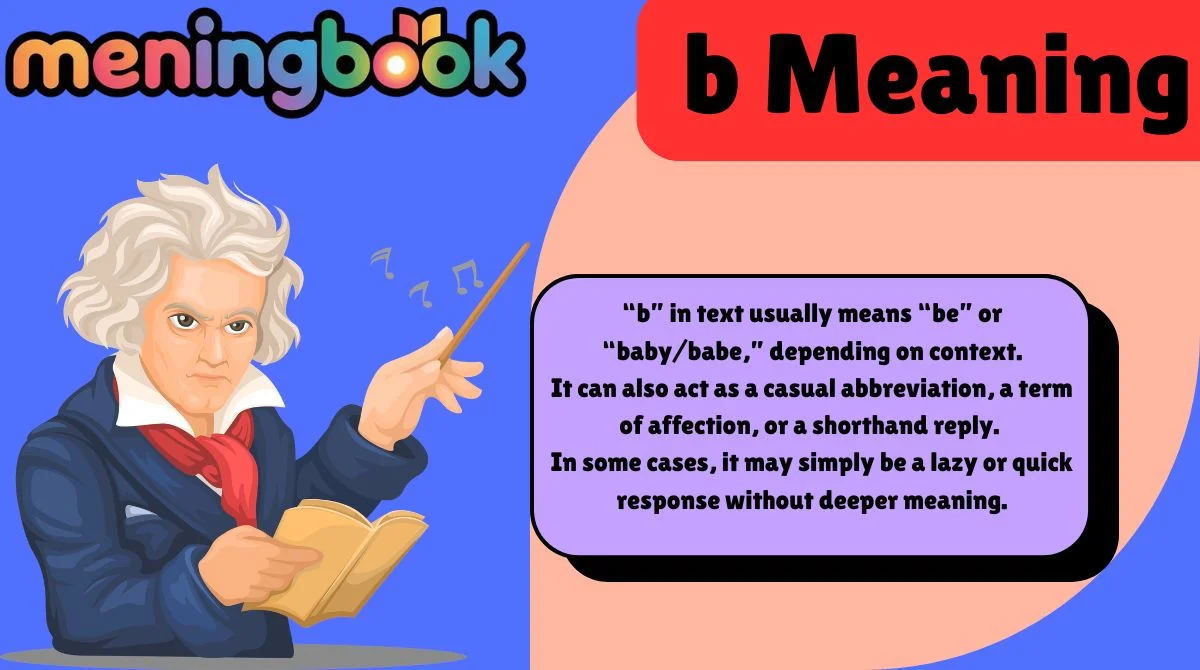
“b” in text usually means “be” or “baby/babe,” depending on context.
It can also act as a casual abbreviation, a term of affection, or a shorthand reply.
In some cases, it may simply be a lazy or quick response without deeper meaning.
Detailed Meaning Breakdown
Primary Meaning
The most common meaning of “b” is a shorthand for “be.”
Example:
- “I’ll b there soon” = “I’ll be there soon”
This use comes from fast typing habits, where people shorten words to save time.
Secondary Meanings
- “Babe” or “Baby”
- Used in romantic or friendly contexts
- Example: “Miss you b”
- Casual nickname
- Sometimes used like “bro” or “buddy”
- Example: “What’s up b?”
- Minimal acknowledgment
- A quick reply without effort
- Example: “Ok b”
Rare Meanings
- Tone filler: Used just to keep the conversation going
- Stylistic choice: Some people prefer single-letter texting for aesthetic or habit reasons
What “b” Means in Different Situations
Everyday Texting
In normal conversations, “b” often replaces “be” or acts as a casual shorthand.
Example:
- “Just b patient” = “Just be patient”
Tone: neutral and efficient.
Social Media Platforms
On platforms like Instagram, TikTok, or Snapchat, “b” often feels more relaxed and stylized.
Example:
- “Love u b” = affectionate tone
It may also reflect trends where minimal typing is considered “cool.”
Dating & Relationships
In romantic settings, “b” often means “babe” or “baby.”
Example:
- “Goodnight b” = warm and affectionate
But tone matters:
- Short replies like “ok b” can feel distant or passive.
Professional Communication
Using “b” in work-related messages is risky and often inappropriate.
Example:
- “I’ll b there” in a professional email can seem careless
Tone: may come across as unprofessional or lazy.
Cultural or Regional Differences
- In Western texting culture, “b” is widely understood
- In some regions, it may confuse users unfamiliar with shorthand
- Younger audiences use it more frequently than older ones
Psychological & Tone Analysis
Why People Use It
- Speed: faster typing
- Habit: learned from texting culture
- Style: minimalist communication trend
- Emotional closeness: shorthand feels personal
What It Signals Socially
- Informality
- Comfort with the person
- Low effort (sometimes)
Emotional Layer
“b” can feel:
- Warm (if used affectionately)
- Neutral (if used as shorthand)
- Cold (if used in short replies)
Tone depends heavily on context and relationship.
15 Real Conversation Examples (Explained)
- “I’ll b there in 5”
- Meaning: “be”
- Tone: practical
- “Miss u b”
- Meaning: “babe”
- Tone: affectionate
- “Ok b”
- Meaning: acknowledgment
- Tone: can feel dismissive
- “Stay strong b”
- Meaning: supportive nickname
- Tone: encouraging
- “Don’t b late”
- Meaning: “be”
- Tone: direct
- “Hey b, what you doing?”
- Meaning: casual nickname
- Tone: friendly
- “Love you b”
- Meaning: romantic
- Tone: warm
- “Cool b”
- Meaning: acknowledgment
- Tone: neutral
- “Just b yourself”
- Meaning: “be”
- Tone: motivational
- “Where u at b?”
- Meaning: casual address
- Tone: informal
- “Thanks b”
- Meaning: friendly shorthand
- Tone: appreciative
- “I’ll b honest”
- Meaning: “be”
- Tone: serious
- “Nah b”
- Meaning: rejection
- Tone: casual or blunt
- “Good morning b”
- Meaning: affectionate
- Tone: warm
- “Sure b whatever”
- Meaning: dismissive tone
- Tone: slightly annoyed
When “b” Can Be Misunderstood
Context Confusion
Without context, “b” can mean different things:
- “be”
- “babe”
- nickname
This leads to mixed interpretations.
Generational Gap
- Younger users: understand instantly
- Older users: may find it confusing or unclear
Platform Differences
- On casual apps: acceptable
- On email or LinkedIn: inappropriate
Similar Words, Symbols, or Abbreviations
- u – you
- r – are
- ur – your/you’re
- luv – love
- bb – baby
- bae – romantic partner
- bro – friend
- fam – close group
- ok – acknowledgment
- lol – laughing out loud
When Not to Use “b”
Professional Risks
- Emails
- Job applications
- Business chats
It can make you appear careless.
Cultural Risks
- Not everyone understands shorthand
- Can cause confusion in global communication
Tone Risks
- May sound lazy
- May feel dismissive
- Can weaken emotional clarity
Expert Tips for Using “b” Correctly
- Use it only in casual conversations
- Match the other person’s texting style
- Avoid it in serious discussions
- Be careful with tone—short replies can feel cold
- Use it affectionately only with close people
- Don’t overuse shorthand—it reduces clarity
- Switch to full words when meaning matters
- Consider context before sending
Frequently Asked Questions
What does “b” mean in texting from a girl?
It usually means “babe” or is used casually. Tone depends on context and relationship.
Is “b” rude in messages?
Not always, but it can feel rude if used in short or dismissive replies.
Does “b” always mean “babe”?
No. It can also mean “be” or act as a casual nickname.
Is “b” used in professional texting?
No. It’s considered too informal for professional communication.
Why do people type “b” instead of “be”?
To save time and keep messages short.
Can “b” be romantic?
Yes, especially when used as “babe” or “baby.”
Is “b” popular in 2026 texting culture?
Yes, especially among younger users and on social platforms.
How do I know what “b” means in a message?
Look at context, tone, and your relationship with the sender.
Conclusion
The meaning of “b” in text is simple—but its tone is not. It can mean “be,” “babe,” or act as a casual nickname.
The real meaning depends on context, relationship, and delivery.
Used correctly, it feels natural and friendly. Used poorly, it can sound lazy or confusing.
The smartest approach is to stay aware of tone and audience.
Use “b” in relaxed conversations, avoid it in formal settings, and always consider how your message might be interpreted.
Clear communication is more important than short communication. When in doubt, spell it out.

I am Noah Peterson, an educational content writer passionate about simplifying complex topics into clear and practical learning