Have you ever received a message that ends with “PS: Don’t forget your keys” and wondered what those two letters really mean? In texting, emails, social media comments, and online conversations, small abbreviations can create confusion because their meaning often depends on the situation.
The abbreviation “PS” has been used for many years, but its role has changed with modern communication. Some people use it to add an extra thought after finishing a message, while others may use it in different digital contexts. Understanding the correct meaning helps you read messages clearly and avoid misunderstandings.
This guide explains the meaning of PS in text, where it comes from, how people use it today, its emotional tone, examples from real conversations, and situations where using PS may not be the best choice.
Quick Definition of “PS”
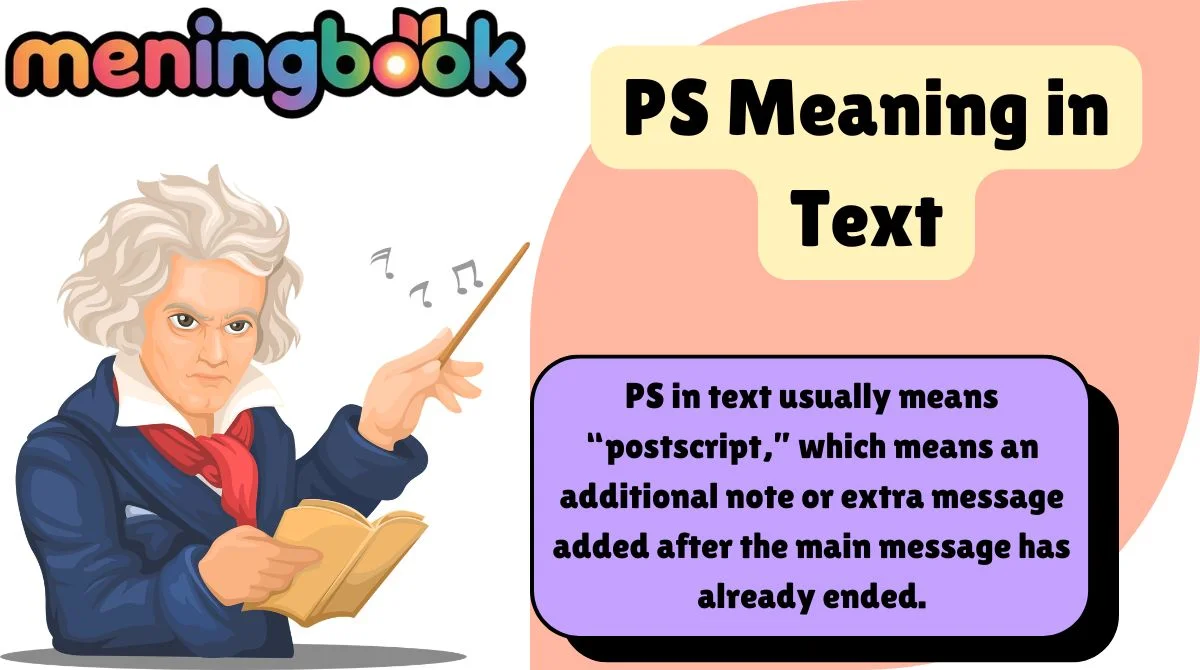
PS in text usually means “postscript,” which means an additional note or extra message added after the main message has already ended. It is commonly used in texts, emails, letters, and social media to add something important, forgotten, or interesting. In some contexts, PS may have other meanings depending on the platform or community.
Detailed Meaning Breakdown
Primary Meaning of PS
The most common meaning of PS is “postscript.” The word comes from Latin:
- “Post” means after
- “Script” means written
Together, postscript means “written after.”
Traditionally, people used PS in handwritten letters when they finished writing but remembered something they wanted to add. Instead of rewriting the entire letter, they added a final note at the end.
Example:
“Thank you for helping me today.
PS: Bring your charger tomorrow.”
The main message is already complete, but the sender adds one more thought.
Secondary Meanings of PS
Although “postscript” is the main meaning, PS can represent other things in different situations:
- PlayStation – A gaming console brand
- Public Service – Used in organizations or announcements
- Personal Statement – Common in education applications
- Photoshop – Sometimes used informally in creative communities
The correct meaning depends on the conversation.
Rare Meanings of PS
In some professional, technical, or specialized fields, PS can have additional meanings, such as:
- Power Supply
- Patient Summary
- Professional Services
- Political Science
However, these meanings are uncommon in normal texting.
What “PS” Means in Different Situations
Everyday Texting
In everyday messages, PS usually means “one more thing.”
People use it when they remember something after sending or writing the main message.
Example:
“See you at 7 tonight.
PS: I saved you a seat.”
It creates a casual and friendly feeling.
Social Media Platforms
On platforms like comments, posts, and captions, PS is often used to highlight an extra detail.
Example:
“Loved this restaurant! PS: Their dessert is amazing.”
Here, PS draws attention to a small but interesting point.
It can also be used humorously:
“PS: I totally didn’t eat the last slice.”
Dating & Relationships
In romantic conversations, PS can add emotional meaning.
Example:
“Good night ❤️
PS: I miss you already.”
The extra note can feel personal because it adds a hidden or softer message.
People sometimes use PS to make a message feel warmer or more memorable.
Professional Communication
In emails and work messages, PS is sometimes used but should be handled carefully.
Example:
“Thank you for your response.
PS: I have attached the updated document.”
In professional writing, it is usually better to include important information in the main message instead of adding it as a PS.
Cultural or Regional Differences
PS is understood in many English-speaking regions because of its long history in letters and writing.
However, younger internet users may not always use it because modern texting favors shorter styles. Some people use emojis, separate messages, or phrases like:
- “By the way”
- “Also”
- “One more thing”
instead of PS.
Psychological & Tone Analysis
The use of PS is not only about adding information. It also affects how a message feels.
Why People Use PS
People often use PS because:
- They remembered something late
- They want to emphasize a point
- They want to make a message more personal
- They want to add humor or emotion
Social Signal
PS can create a feeling of:
- Friendliness
- Informality
- Personal connection
- Extra attention
When someone adds a PS, it can feel like they are sharing an additional thought that they did not want to leave out.
Emotional Layer
A PS can make a message feel more meaningful.
Compare:
“Good luck tomorrow.”
With:
“Good luck tomorrow.
PS: I believe in you.”
The second version feels more supportive because the extra line adds emotional value.
15 Real Conversation Examples (Explained)
1.
Message:
“Thanks for coming today. PS: I really enjoyed talking with you.”
Explanation:
The sender adds a personal feeling after completing the main message.
2.
Message:
“Meeting starts at 10 AM. PS: Don’t forget your ID.”
Explanation:
PS adds a reminder.
3.
Message:
“Happy birthday! PS: Your gift is arriving tomorrow.”
Explanation:
The sender adds extra information.
4.
Message:
“Great job on the project. PS: The design looks amazing.”
Explanation:
PS adds praise.
5.
Message:
“I ordered dinner. PS: I got your favorite.”
Explanation:
It creates a caring tone.
6.
Message:
“See you soon. PS: Bring a jacket.”
Explanation:
A practical extra note.
7.
Message:
“Loved your photo. PS: The location is beautiful.”
Explanation:
Adds a compliment.
8.
Message:
“Goodnight. PS: Sweet dreams.”
Explanation:
Adds warmth.
9.
Message:
“Please check the file. PS: I corrected the mistakes.”
Explanation:
Adds a work-related update.
10.
Message:
“Thanks for your help. PS: You made my day.”
Explanation:
Adds emotional appreciation.
11.
Message:
“Nice meeting you. PS: Let’s talk again soon.”
Explanation:
Shows interest in continuing communication.
12.
Message:
“The event was fun. PS: The food was excellent.”
Explanation:
Adds an extra opinion.
13.
Message:
“Congratulations! PS: I’m proud of you.”
Explanation:
Adds emotional support.
14.
Message:
“I sent the details. PS: Check your spam folder too.”
Explanation:
Adds helpful advice.
15.
Message:
“Enjoy your trip. PS: Send pictures!”
Explanation:
Adds a friendly request.
When “PS” Can Be Misunderstood
Context Confusion
The biggest problem with PS is that it can have different meanings.
Example:
“PS5 is amazing.”
Here, PS means PlayStation 5, not postscript.
Generational Gap
Older generations may immediately understand PS because of letters and formal writing.
Some younger users may not recognize it or may see it as old-fashioned.
Platform Differences
On gaming platforms, PS often means PlayStation.
On messaging apps, it usually means postscript.
Always check the surrounding words.
Similar Words, Symbols, or Abbreviations
- BTW – Means “by the way.” Used to add extra information.
- FYI – Means “for your information.” Used to share useful details.
- Note: – Used to highlight an important point.
- P.S.S. – Sometimes used for “post-postscript,” meaning another note after PS.
- Also – A simple way to add another idea.
- BTW2 – Informal online version meaning another additional point.
- TL;DR – Means “too long; didn’t read.” Used for summaries.
- IMO – Means “in my opinion.”
- BTW/By the way – Similar purpose but more common in modern texting.
- Reminder – Used when adding something someone should remember.
When Not to Use “PS”
Professional Risks
Using PS in a formal business email can sometimes look casual.
Important information should usually appear in the main message.
Cultural Risks
Some readers may see PS as old-fashioned or unnecessary.
Tone Risks
Adding a PS after serious information can sometimes weaken the message.
Example:
“Your application was rejected. PS: Have a nice day.”
The extra note may feel inappropriate.
Expert Tips for Using “PS” Correctly
- Use PS for extra thoughts, not the main message.
- Avoid adding important deadlines or instructions in PS.
- Use PS naturally in friendly conversations.
- Consider your audience before using it.
- Check the context because PS has multiple meanings.
- Use capitalization correctly: PS or P.S. are both accepted.
- Do not overuse it because too many extra notes can make messages messy.
- In professional writing, use it only when it improves clarity.
Frequently Asked Questions
What does PS mean in texting?
PS usually means “postscript,” which is an extra note added after the main message.
Is PS still used in modern texting?
Yes. Many people still use PS in texts, emails, and social media, especially when adding a final thought.
Does PS mean something different on social media?
Usually it means postscript, but on gaming-related platforms it may refer to PlayStation.
Is PS formal or informal?
PS can be used in both, but it is more common in casual communication.
What is the difference between PS and BTW?
PS usually comes at the end of a message, while BTW can appear anywhere.
Can I use PS in a business email?
Yes, but avoid putting important information only in the PS section.
Why do people add PS at the end of messages?
People use it to add forgotten information, emphasis, humor, or emotional details.
Is P.S. the same as PS?
Yes. Both forms mean the same thing.
Final Summary
PS in text mainly means “postscript,” an extra note added after the main message is finished. It is commonly used to share forgotten details, reminders, emotions, or additional thoughts.
The meaning depends on context. In normal conversations, PS creates a friendly and personal feeling. In gaming or professional situations, it may represent something completely different.
Understanding how and when to use PS helps you communicate more clearly and avoid confusion in modern digital conversations.

I am Noah Peterson, an educational content writer passionate about simplifying complex topics into clear and practical learning