You’re texting someone, and they reply with just one word: “oss.” No emoji, no extra context. You pause. Is it a typo? A slang term? Something cultural?
This kind of confusion is common today. Texting language evolves fast, and short expressions like “oss” can carry different meanings depending on who’s using them and where.
If you’ve seen “oss” in messages, social media, or chats and weren’t sure what it meant, you’re not alone.
The same three letters can signal respect, agreement, discipline, or even just casual acknowledgment.
This guide breaks everything down clearly. You’ll learn what “oss” means, how it’s used in real conversations, when to use it (and when not to), and how to avoid misunderstandings.
By the end, you’ll know exactly how to read and use “oss” with confidence.
Quick Definition of “oss”
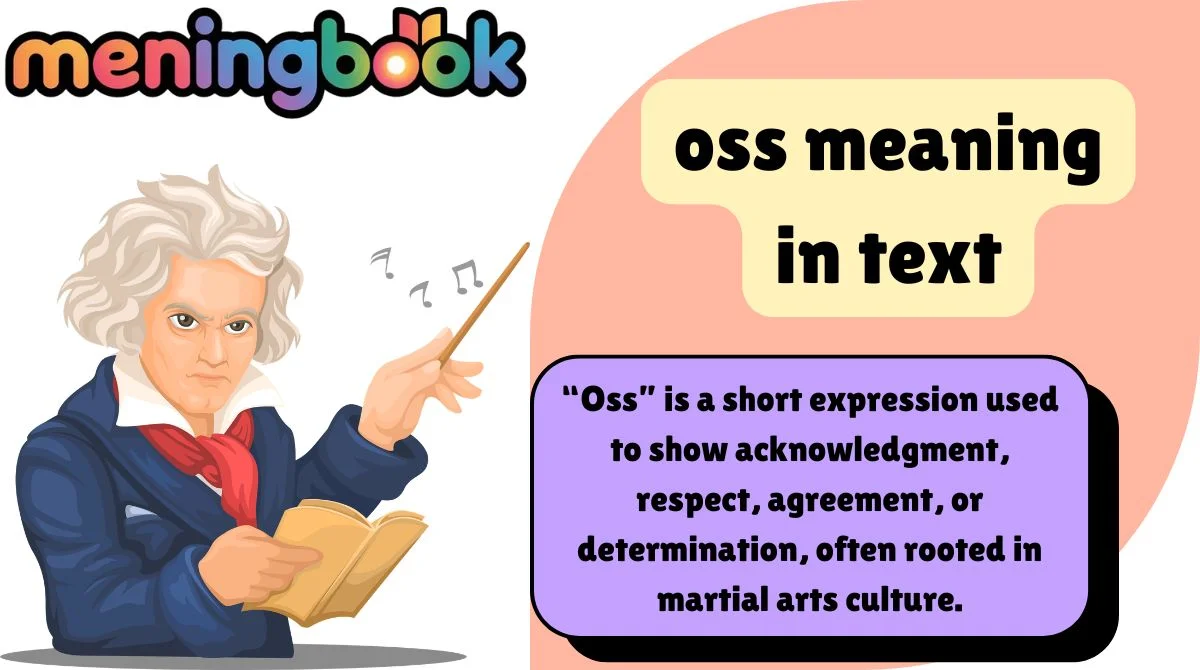
“Oss” is a short expression used to show acknowledgment, respect, agreement, or determination, often rooted in martial arts culture.
In texting, it can mean “got it,” “yes,” or “I understand.” In some contexts, it also carries a tone of discipline, focus, or mutual respect.
Detailed Meaning Breakdown
Primary Meaning
At its core, “oss” is a verbal signal of acknowledgment and respect. It often means:
- “Understood”
- “Yes”
- “I hear you”
- “I’ll do it”
It is short, direct, and carries a tone of seriousness or commitment.
Secondary Meanings
Depending on context, “oss” can also mean:
- Agreement without elaboration
- Motivation or determination
- Respect toward someone (especially authority or peers)
Rare Meanings
In some niche communities:
- It can reflect group identity (e.g., martial arts practitioners)
- It may be used humorously to imitate discipline or toughness
What “oss” Means in Different Situations
Everyday Texting
In casual chats, “oss” is often used as a quick acknowledgment:
- Similar to “ok,” “got it,” or “sure”
- Usually brief and neutral in tone
Example:
“Meet at 6.”
“Oss.”
It shows compliance without adding emotion.
Social Media Platforms
On platforms like comments or group chats:
- It may signal agreement or support
- Sometimes used playfully to sound intense or disciplined
Example:
“Time to grind again tomorrow.”
“Oss 💪”
Here, it adds a motivational tone.
Dating & Relationships
In personal conversations:
- It can feel distant or overly serious if overused
- May signal acknowledgment without emotional engagement
Example:
“I miss you.”
“Oss.”
This can come across as cold or unresponsive.
Professional Communication
In work settings:
- Rarely appropriate unless within a specific culture
- May be misunderstood as informal or unclear
Better alternatives:
- “Understood”
- “Noted”
- “Will do”
Cultural or Regional Differences
“Oss” has roots in Japanese martial arts culture. In that context:
- It reflects discipline, respect, and perseverance
- Often used between students and instructors
Outside that culture:
- It may lose depth and become simple slang
- Some people may not understand it at all
Psychological & Tone Analysis
Why People Use It
People use “oss” because it is:
- Short and efficient
- Strong in tone
- Associated with discipline and respect
It allows someone to respond quickly without overexplaining.
What It Signals Socially
Using “oss” can signal:
- Confidence
- Focus
- Loyalty to a group or mindset
- No-nonsense communication style
Emotional Layer Behind It
Unlike emojis or expressive words, “oss” is:
- Emotionally restrained
- Direct and controlled
- Sometimes perceived as distant
Its tone depends heavily on context and relationship.
15 Real Conversation Examples (Explained)
- “Training starts at 5 AM.”
“Oss.”
→ Shows commitment and readiness. - “Don’t forget the meeting.”
“Oss.”
→ Acknowledgment without extra detail. - “Push harder today.”
“Oss!”
→ Motivational and energetic. - “Can you send the file?”
“Oss.”
→ Means “I’ll handle it.” - “We need discipline.”
“Oss.”
→ Agreement with tone of seriousness. - “Let’s go again tomorrow.”
“Oss 💪”
→ Adds enthusiasm. - “You good?”
“Oss.”
→ Could feel vague or emotionally closed. - “I’m really upset.”
“Oss.”
→ May seem insensitive or dismissive. - “Practice every day.”
“Oss!”
→ Signals motivation. - “Join the call at 3.”
“Oss.”
→ Quick acknowledgment. - “We did great today.”
“Oss!”
→ Shared pride and energy. - “Call me later.”
“Oss.”
→ Agreement to follow through. - “Stay focused.”
“Oss.”
→ Reinforces discipline. - “I need your support.”
“Oss.”
→ Could feel too minimal emotionally. - “Let’s win this.”
“Oss!”
→ Strong, team-oriented response.
When “oss” Can Be Misunderstood
Context Confusion
Without context, “oss” can seem:
- Cold
- Confusing
- Random
Not everyone knows its meaning.
Generational Gap
Younger users may:
- See it as slang or meme-like
Older users may:
- Not recognize it at all
Platform Differences
- In gaming or fitness groups: understood
- In formal chats: unclear or inappropriate
Similar Words, Symbols, or Abbreviations
- OK – Simple acknowledgment
- Got it – Clear understanding
- Roger – Military-style confirmation
- Bet – Agreement or acceptance
- Say less – “I understand, no need to explain”
- 👍 – Visual confirmation
- Copy that – Strong acknowledgment
- Aye – Informal agreement
- Understood – Formal clarity
- K – Minimal acknowledgment (can feel dismissive)
When Not to Use “oss”
Professional Risks
Avoid using it in:
- Emails
- Client communication
- Formal meetings
It may seem unclear or unprofessional.
Cultural Risks
Using “oss” without understanding its roots:
- May come across as forced or inauthentic
- Could be misunderstood in global conversations
Tone Risks
In emotional conversations:
- It may feel cold or detached
- Lacks empathy and warmth
Example:
“I’m struggling today.”
“Oss.” → Not appropriate
Expert Tips for Using “oss” Correctly
- Use it only when the context supports brief replies
- Avoid it in emotional or sensitive conversations
- Match the tone of the other person
- Use it more in casual or group settings
- Add emojis if you want to soften the tone
- Don’t overuse it—variety improves clarity
- Understand your audience before using it
- Replace it with clearer words in formal situations
Frequently Asked Questions
What does “oss” mean in texting?
It means acknowledgment, agreement, or understanding—similar to “got it” or “yes.”
Is “oss” rude or disrespectful?
Not inherently, but it can feel cold if used in emotional conversations.
Where does “oss” come from?
It originates from martial arts culture, where it reflects respect and discipline.
Can I use “oss” in professional messages?
It’s not recommended. Use clearer and more formal alternatives instead.
Is “oss” the same as “ok”?
Similar, but “oss” carries a stronger tone of discipline or commitment.
Why do people say “oss” in chats?
To respond quickly with acknowledgment while sounding focused or confident.
Does “oss” have different meanings?
Yes, depending on context—it can mean respect, agreement, or motivation.
Should I use “oss” with friends?
Yes, if they understand it and the tone fits the conversation.
Final Summary
“Oss” is a powerful but simple expression. It combines acknowledgment, respect, and discipline into just three letters.
While it works well in casual, fitness, or group settings, it can feel cold or unclear in emotional or professional conversations.
The key to using “oss” correctly is context. Know your audience, match the tone, and don’t rely on it when clarity or empathy is needed.
Used wisely, “oss” can make your communication sharp, confident, and efficient. Used carelessly, it can create confusion or distance.
Choose your words with intention—and you’ll always communicate better.

I am Noah Peterson, an educational content writer passionate about simplifying complex topics into clear and practical learning