Have you ever received a text saying, “That character is my OC,” and wondered what “OC” actually means? You’re not alone.
Internet slang changes quickly, and abbreviations often carry different meanings depending on where they’re used. A term that seems obvious to one person can be confusing to another.
The abbreviation “OC” appears across texting, social media, gaming communities, fan fiction circles, creative platforms, and even professional conversations.
Because it has multiple meanings, understanding the context is essential. A message from a friend, a post on TikTok, or a discussion in an online community may all use “OC” differently.
This guide explains exactly what OC means in text messages and online communication. You’ll learn its primary definition, secondary meanings, common uses, examples, potential misunderstandings, and practical tips for using it correctly.
By the end, you’ll be able to recognize and interpret OC confidently wherever you encounter it online.
Quick Definition of “OC”
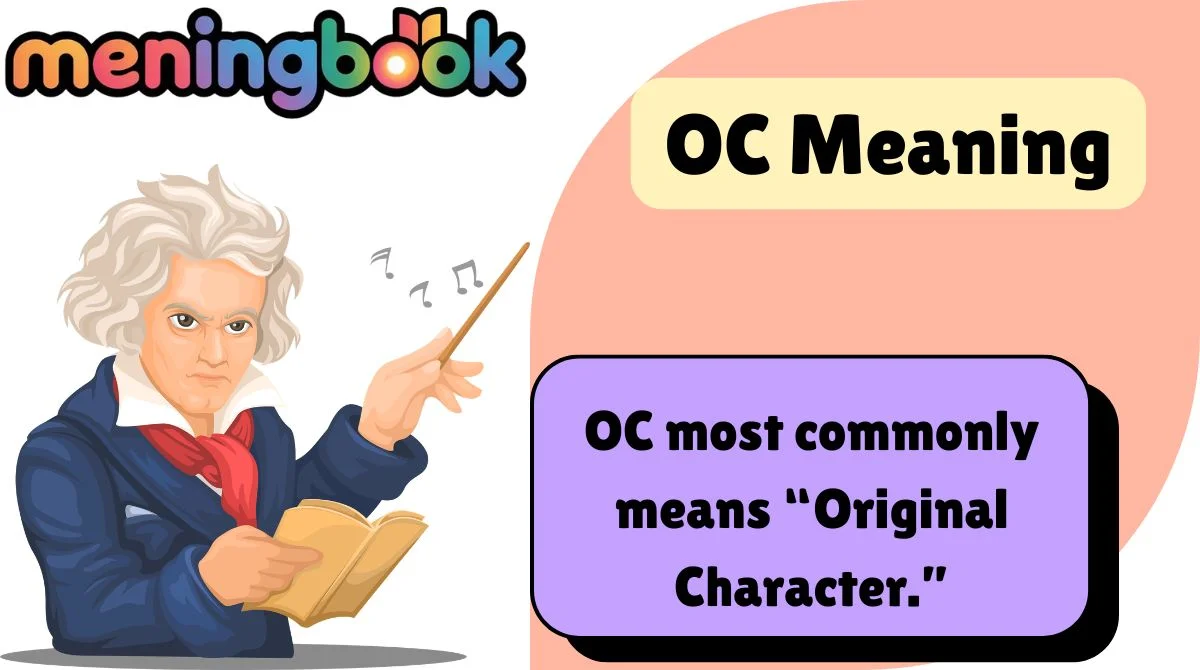
OC most commonly means “Original Character.” It refers to a fictional character created by an individual rather than an existing character from a movie, TV show, game, comic, or book.
Depending on the context, OC can also mean Original Content, Of Course, or several less common phrases. The intended meaning is usually determined by the surrounding conversation.
Detailed Meaning Breakdown
Original Character (Primary Meaning)
The most common meaning of OC online is “Original Character.”
An Original Character is a fictional person, creature, hero, villain, or personality that someone creates themselves. These characters are especially common in:
- Fan fiction
- Digital art communities
- Role-playing groups
- Gaming communities
- Animation projects
- Storytelling forums
Example:
- “This is my OC from a fantasy world.”
- “I drew my OC today.”
In these cases, the person is referring to a character they personally designed.
Original Content
Another common meaning is “Original Content.”
This usage is popular on:
- TikTok
- YouTube
- X
Creators often label posts as OC to indicate that the content is their own work rather than something reposted from another source.
Example:
- “OC — I took this photo myself.”
- “All artwork shown here is OC.”
Of Course
In casual texting, some people use OC as a shortened version of “Of Course.”
Example:
- “Can you help me later?”
- “OC!”
Although this meaning exists, it is less common than Original Character or Original Content.
Rare Meanings
Depending on the industry or community, OC may occasionally mean:
- Orange County
- Officer Commanding
- Operating Costs
- Open Circuit
- Organized Crime
These meanings are usually easy to identify because they appear in specific professional or regional contexts.
What “OC” Means in Different Situations
Everyday Texting
In normal texting conversations, OC often means “Of Course.”
Examples:
- “Will you be there tonight?”
- “OC, I’ll be there.”
Some younger users may also use OC when discussing art, gaming, or fictional characters.
Example:
- “I finally finished designing my OC.”
The surrounding conversation usually reveals the intended meaning.
Social Media Platforms
On social media, OC frequently means “Original Content.”
Creators use it to show ownership of their work.
Examples:
- “OC artwork.”
- “OC photography.”
- “OC video.”
The label helps distinguish original creations from reposted content.
Dating & Relationships
OC is not widely used as a dating abbreviation. However, if one partner is involved in creative communities, they may refer to an Original Character.
Example:
- “My OC is based on some of my personality traits.”
In this context, the conversation focuses on creativity rather than romance.
Professional Communication
Professional workplaces rarely use OC without clarification because it has multiple interpretations.
For example:
- Operating Costs
- Officer Commanding
- Open Circuit
Using the full phrase is generally safer in business communication.
Cultural or Regional Differences
Certain meanings vary by region.
In parts of the United States, OC may refer to Orange County.
Examples:
- Orange County, California
- Orange County, Florida
Meanwhile, online creative communities almost always interpret OC as Original Character or Original Content.
Psychological & Tone Analysis
Why People Use It
People use abbreviations because they:
- Save time
- Reduce typing
- Signal community membership
- Create familiarity
- Follow online trends
OC is especially useful because it communicates a complete idea in only two letters.
What It Signals Socially
Using OC often signals involvement in:
- Creative communities
- Fan cultures
- Art spaces
- Gaming groups
- Content creation platforms
It can also show ownership and pride in original work.
Emotional Layer Behind It
When someone shares an OC as an Original Character, they are often sharing something personal.
Characters may represent:
- Creativity
- Self-expression
- Aspirations
- Personal experiences
- Imagination
As a result, discussions about OCs can carry emotional significance.
15 Real Conversation Examples (Explained)
1. “Meet my new OC!”
Meaning: The speaker created a new Original Character.
2. “I spent six hours drawing my OC.”
Meaning: The person created artwork featuring their own character.
3. “This video is OC.”
Meaning: The creator made the content themselves.
4. “Everything on this page is OC.”
Meaning: All content is original.
5. “Can you come tomorrow?”
“OC.”
Meaning: Of Course.
6. “My OC is a space explorer.”
Meaning: A fictional character created by the speaker.
7. “Rate my OC design.”
Meaning: The user wants feedback on a self-created character.
8. “This is not OC.”
Meaning: The content was not originally created by the poster.
9. “I wrote a story about my OC.”
Meaning: The story centers on a self-created character.
10. “OC artwork only.”
Meaning: Only original artwork is allowed.
11. “Her OC has an interesting backstory.”
Meaning: Discussion about a fictional character she created.
12. “Please post only OC photos.”
Meaning: Upload only photos you personally took.
13. “I redesigned my OC.”
Meaning: The creator updated their character’s appearance.
14. “OC content gets more engagement.”
Meaning: Original content often performs better online.
15. “That’s my favorite OC.”
Meaning: The speaker likes a specific original character.
When “OC” Can Be Misunderstood
Context Confusion
Different communities use OC differently.
Example:
- Artist: Original Character
- Creator: Original Content
- Friend texting: Of Course
Without context, misunderstandings can occur.
Generational Gap
Younger internet users often recognize OC immediately.
Older users may be unfamiliar with creative-community meanings and interpret it differently.
Platform Differences
The platform often changes the meaning.
Examples:
- TikTok → Original Content
- Fan fiction site → Original Character
- Text messages → Of Course
Understanding where the conversation occurs helps determine the correct interpretation.
Similar Words, Symbols, or Abbreviations
1. OCs
Plural form of Original Characters.
2. FC
Fan Character.
3. MC
Main Character.
4. NPC
Non-Player Character.
5. Canon
Official story content.
6. Fanfic
Fan-created fiction.
7. AU
Alternate Universe.
8. RP
Role Play.
9. UGC
User-Generated Content.
10. OP
Original Poster.
When Not to Use “OC”
Professional Risks
Not everyone understands internet abbreviations.
Using OC in formal documents may create confusion.
Cultural Risks
Different groups assign different meanings to OC.
Assuming everyone interprets it the same way can lead to misunderstandings.
Tone Risks
Some audiences prefer complete words.
Excessive abbreviation may appear informal or unclear.
Expert Tips for Using “OC” Correctly
1. Consider Your Audience
Use OC only if your audience is likely to understand it.
2. Clarify on First Mention
Write the full phrase first when necessary.
Example:
“Original Character (OC).”
3. Pay Attention to Platform Culture
Different platforms favor different meanings.
4. Avoid Ambiguity
If multiple interpretations are possible, explain what you mean.
5. Use It Naturally
Avoid forcing abbreviations into conversations.
6. Match the Context
Creative communities often expect OC terminology.
Professional settings may not.
7. Respect Creator Ownership
When OC means Original Content, always credit creators properly.
8. Learn Community Norms
Every online community develops its own language habits.
Understanding those norms improves communication.
Frequently Asked Questions
What does OC mean in texting?
OC usually means Original Character or Of Course, depending on the conversation.
What does OC mean on social media?
On social media, OC most commonly means Original Content created by the person posting it.
What is an OC character?
An OC character is a fictional character designed by an individual rather than taken from an existing franchise.
What does OC mean in fan fiction?
In fan fiction communities, OC refers to an Original Character created by the author.
Is OC the same as Original Content?
Not always. OC can mean Original Character or Original Content depending on context.
Why do artists use OC?
Artists use OC to describe characters, artwork, and creative concepts they personally created.
Can OC mean Of Course?
Yes. In casual texting, some people use OC as shorthand for Of Course.
How do I know which meaning of OC is correct?
Look at the conversation topic, platform, and surrounding words. Context almost always reveals the intended meaning.
Final Summary
OC is a versatile abbreviation with several meanings, but its most common uses are Original Character and Original Content. In creative communities, it typically refers to a character someone created themselves.
On social media, it often indicates content produced by the original creator. In casual texting, it can occasionally mean “Of Course.”
Because OC has multiple interpretations, context is essential.
By paying attention to the platform, audience, and surrounding conversation, you can quickly determine the intended meaning and use the abbreviation confidently in your own communication.

I am Noah Peterson, an educational content writer passionate about simplifying complex topics into clear and practical learning