You’re scrolling through messages and someone replies with just “igh.” No emoji. No punctuation. Just that one short word. Now you pause—was that agreement? Annoyance? Dismissal?
This is a common confusion in modern texting. Words are getting shorter, tone is getting subtler, and meanings depend heavily on context.
“igh” is one of those expressions that looks simple but can carry very different emotional signals depending on how and where it’s used.
In this guide, you’ll get complete clarity on what “igh” really means, how people use it in different situations, and how to interpret it correctly.
By the end, you won’t second-guess this term again—you’ll understand it like a pro.
Quick Definition of “igh”
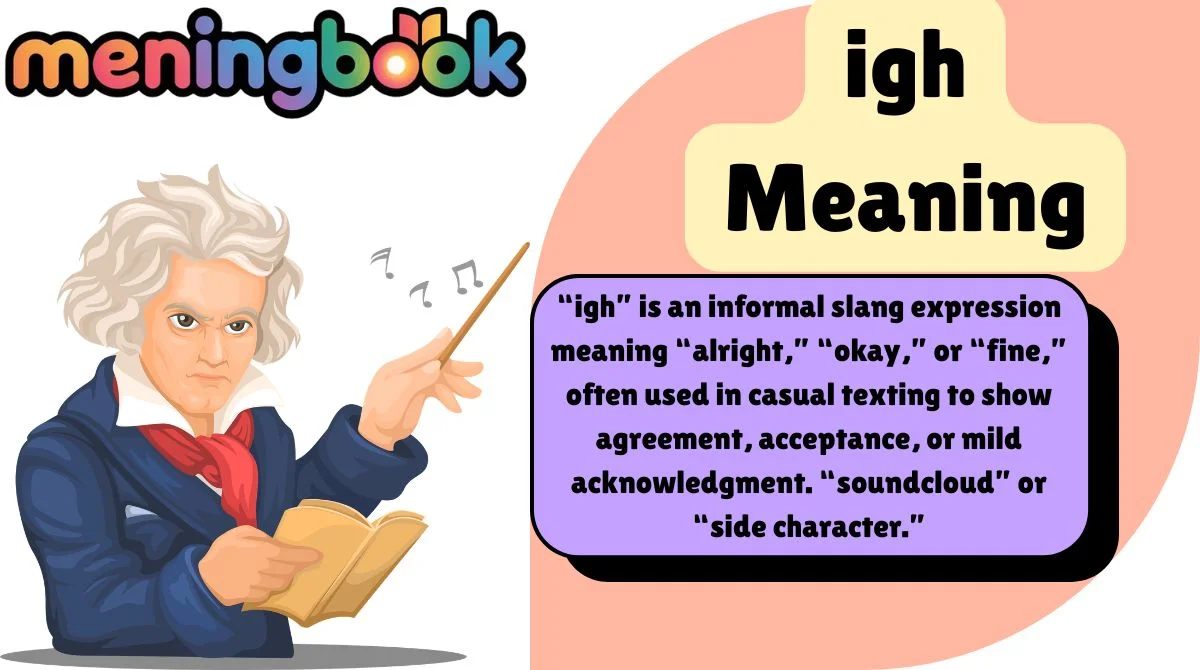
“igh” is an informal slang expression meaning “alright,” “okay,” or “fine,” often used in casual texting to show agreement, acceptance, or mild acknowledgment.
It can also carry subtle tones like reluctance, indifference, or quiet approval depending on context and delivery.
Detailed Meaning Breakdown
Primary Meaning
At its core, “igh” is a shortened, stylized version of “alright.”
People use it to:
- Agree with something
- Accept a situation
- Acknowledge a message
Example:
- “We meeting at 7?”
- “igh”
This simply means: “Okay” or “Sounds good.”
Secondary Meanings
Depending on tone and timing, “igh” can also mean:
- Reluctant agreement
(“I guess I have no choice, but okay.”) - Low-energy acknowledgment
(“I saw your message, but I don’t have much to say.”) - Mild annoyance or impatience
(“Fine, whatever.”)
Rare Meanings
In rare cases, “igh” may be used as:
- A stylistic or aesthetic choice in texting culture
- A minimal reply to avoid continuing a conversation
What “igh” Means in Different Situations
Everyday Texting
In casual chats with friends, “igh” usually means:
- “Okay”
- “Got it”
- “Cool”
Tone depends on:
- Response speed
- Previous conversation energy
Social Media Platforms
On platforms like chats or comments, “igh” often signals:
- Agreement without enthusiasm
- A quick acknowledgment
Example:
- “This plan is kinda messy”
- “igh”
Here, it may suggest quiet agreement.
Dating & Relationships
In relationships, “igh” becomes more emotional.
It could mean:
- Passive agreement
- Slight annoyance
- Emotional withdrawal
Example:
- “We can talk later then”
- “igh”
This might signal distance rather than simple agreement.
Professional Communication
“igh” is not appropriate in professional settings.
In work-related messages, it may appear:
- Unprofessional
- Dismissive
- Lazy
Always use:
- “Okay”
- “Understood”
- “Sounds good”
Cultural or Regional Differences
“igh” is more common among:
- Younger users (Gen Z and late Millennials)
- Casual digital communities
It may be less understood by:
- Older generations
- Formal communication environments
Psychological & Tone Analysis
Why People Use It
People use “igh” because:
- It’s fast to type
- It feels casual and modern
- It avoids over-explaining
What It Signals Socially
Using “igh” can signal:
- Informality
- Comfort with the person
- Low emotional investment in the moment
Emotional Layer Behind It
Tone is everything.
“igh” can carry:
- Neutral acceptance
- Slight boredom
- Mild frustration
- Quiet agreement
The emotional meaning comes from:
- Context
- Timing
- Relationship with the sender
15 Real Conversation Examples (Explained)
“Let’s go out tonight”
“igh”
→ Simple agreement.
“I can’t make it today”
“igh”
→ Acceptance, possibly disappointed.
“You need to redo this”
“igh”
→ Reluctant compliance.
“We’re meeting earlier now”
“igh”
→ Slight annoyance but agreeing.
“Send me the file ASAP”
“igh”
→ Acknowledgment, low enthusiasm.
“I think you were wrong”
“igh”
→ Passive agreement or disengagement.
“Can we talk later?”
“igh”
→ Could signal emotional distance.
“I’m choosing the movie tonight”
“igh”
→ Giving in.
“You forgot again”
“igh”
→ Admitting fault without explanation.
“Let’s cancel the plan”
“igh”
→ Acceptance, maybe relief or disappointment.
“Do it now please”
“igh”
→ Slight irritation but compliance.
“That wasn’t funny”
“igh”
→ Acknowledgment, possibly awkward.
“I’ll call you tomorrow”
“igh”
→ Neutral acknowledgment.
“You always do this”
“igh”
→ Defensive or disengaged tone.
“Everything is fine now”
“igh”
→ Skeptical or hesitant agreement.
When “igh” Can Be Misunderstood
Context Confusion
Without tone or emojis, “igh” can be read as:
- Agreement
- Sarcasm
- Annoyance
Generational Gap
Older users may:
- Not understand it
- Misinterpret it as a typo
Younger users:
- See it as normal slang
Platform Differences
On:
- Fast chats → normal
- Emails or work apps → inappropriate
Similar Words, Symbols, or Abbreviations
- Ok / Okay – Standard agreement
- Alright / Aight – Casual agreement
- K – Short, sometimes cold acknowledgment
- Bet – Confident agreement
- Sure – Polite acceptance
- Fine – Neutral or slightly annoyed agreement
- Yup – Positive confirmation
- Mm – Soft acknowledgment
- Cool – Relaxed agreement
- I guess – Reluctant agreement
When Not to Use “igh”
Professional Risks
Avoid in:
- Emails
- Work chats
- Client communication
It looks:
- Unprofessional
- Disengaged
Cultural Risks
In formal cultures, it may:
- Seem disrespectful
- Lack clarity
Tone Risks
It can come across as:
- Passive-aggressive
- Dismissive
- Emotionally distant
Especially in sensitive conversations.
Expert Tips for Using “igh” Correctly
- Use it only in casual conversations
- Avoid it when tone clarity matters
- Add emojis if you want to soften meaning
(e.g., “igh 🙂”) - Don’t use it in serious or emotional discussions
- Match the other person’s communication style
- Be careful in relationships—it can feel cold
- Use full words if you want to sound respectful
- Consider timing—delayed “igh” can seem dismissive
Frequently Asked Questions
What does “igh” mean in texting?
It means “alright” or “okay,” often used casually to agree or acknowledge something.
Is “igh” rude?
Not always, but it can sound dismissive or cold depending on context and tone.
Does “igh” mean someone is annoyed?
Sometimes. It can signal mild frustration or reluctant agreement.
Is “igh” the same as “aight”?
Yes, both are variations of “alright,” but “igh” is shorter and more minimal.
Can I use “igh” in professional messages?
No. It’s considered too informal and may appear unprofessional.
Why do people reply with just “igh”?
To respond quickly without adding extra words or emotion.
Does “igh” mean yes or no?
Usually yes (agreement), but sometimes it implies reluctant acceptance.
How do I know the tone of “igh”?
Look at context, timing, and relationship with the sender.
Conclusion
“igh” is a compact, modern slang term that means “alright” or “okay,” but its real meaning depends heavily on tone and context.
It can signal anything from simple agreement to subtle annoyance or emotional distance.
Use it wisely:
- Great for casual chats
- Risky in emotional or professional settings
If clarity matters, choose fuller words. If speed and informality are fine, “igh” works perfectly.
Understanding small expressions like this can make a big difference in how you communicate—and how others perceive you.
Use it with awareness, and you’ll never misread it again.

I am Noah Peterson, an educational content writer passionate about simplifying complex topics into clear and practical learning