You’re texting someone, and suddenly they reply with just “cb.” No punctuation. No explanation. Just two letters. You pause and wonder—are they annoyed? Busy? Ending the conversation?
Short text abbreviations like this are everywhere now.
They save time, but they also create confusion. The same two letters can mean very different things depending on context, tone, and even the relationship between people.
That’s exactly why “cb” often trips people up. It can be casual, dismissive, or completely harmless—depending on how it’s used.
This guide breaks it all down in plain language. You’ll learn what “cb” really means, when to use it, when to avoid it, and how to interpret it correctly in real conversations.
No guesswork. Just clear, practical understanding.
Quick Definition of “cb meaning in text”
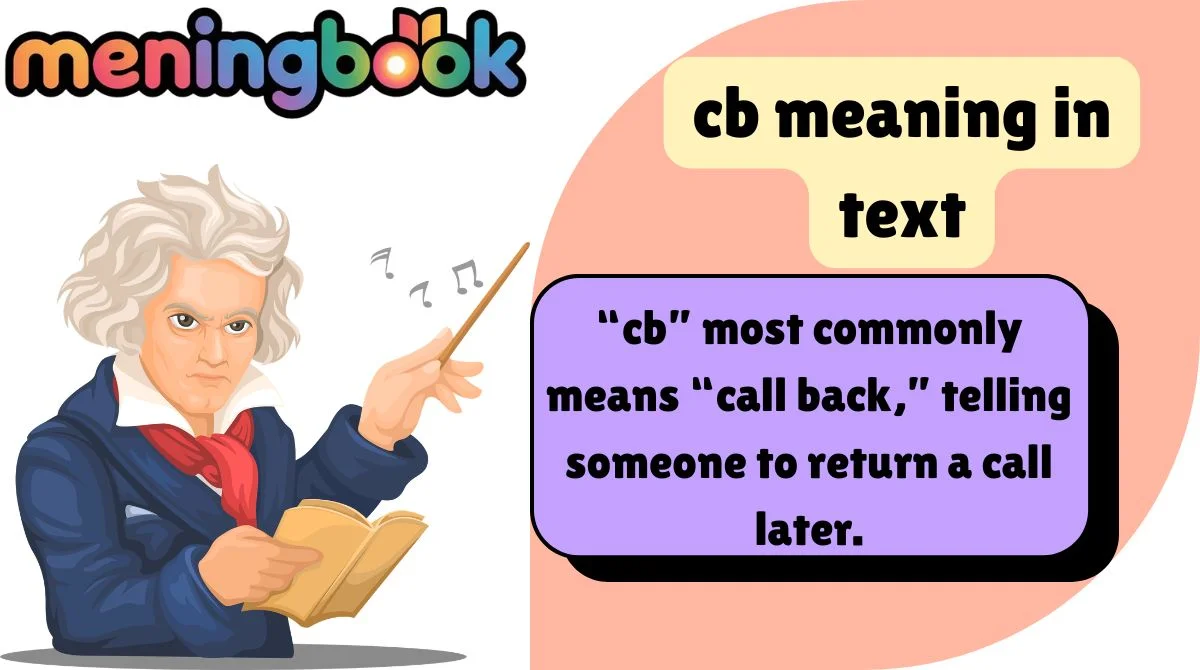
“cb” most commonly means “call back,” telling someone to return a call later.
It can also mean “come back,” “can’t be bothered,” or in some regions, slang with stronger or informal meanings.
The exact meaning depends heavily on context, tone, and who is using it.
Detailed Meaning Breakdown
Primary Meaning: Call Back
The most widely accepted meaning of “cb” is “call back.”
It’s typically used when:
- Someone missed your call
- They are busy and want you to call later
- They prefer voice over text
Example:
- “In a meeting, cb in 10 mins”
This usage is short, practical, and common in fast communication.
Secondary Meanings
1. Come Back
Sometimes “cb” is used to tell someone to return—either physically or in a conversation.
Example:
- “Where did you go? cb!”
2. Can’t Be Bothered
In casual or slang-heavy conversations, “cb” may mean:
- “I can’t be bothered”
- Used to show laziness or disinterest
Example:
- “Want to go out?”
- “Nah cb today”
Rare or Context-Specific Meanings
In certain regions or communities, “cb” can have:
- Strong slang meanings
- Inside jokes
- Gaming or group-specific uses
Because of this, context is everything.
What “cb” Means in Different Situations
Everyday Texting
In normal texting, “cb” usually means:
- Call back
- Come back
It’s quick, efficient, and often used when:
- Time is limited
- The sender expects you to understand
Tone: Neutral to slightly abrupt
Social Media Platforms
On platforms like messaging apps or comments, “cb” may mean:
- Come back to a post
- Return to a conversation
Example:
- “Wait, cb to this thread later”
Tone: Casual and informal
Dating & Relationships
Here, tone matters more than the words.
“cb” could mean:
- “Call me later” (interest remains)
- “I’m not in the mood” (distance or disinterest)
Example:
- “Busy rn, cb later ❤️” → positive
- “cb” → possibly cold or uninterested
Professional Communication
In work settings, “cb” usually means:
- Call back
But using it casually can seem:
- Too brief
- Slightly unprofessional
Better alternative:
- “Please call me back when you’re available.”
Cultural or Regional Differences
In some regions:
- “cb” can carry slang meanings
- Tone may be harsher or more casual
Always consider:
- Who you’re talking to
- Their background
- The platform
Psychological & Tone Analysis
Why People Use “cb”
People use “cb” because:
- It saves time
- It reduces typing effort
- It feels casual and modern
It’s part of digital shorthand culture.
What It Signals Socially
Depending on tone, “cb” can signal:
- Efficiency → “Call me back quickly”
- Familiarity → Close relationship
- Dismissiveness → Minimal effort reply
- Urgency → Need immediate follow-up
Emotional Layer Behind It
“cb” can feel different emotionally:
- Neutral → Informational
- Warm → With emojis or context
- Cold → Standalone reply
- Distant → Avoiding conversation
Same word. Different emotional impact.
15 Real Conversation Examples (Explained)
- “Missed your call, cb when free.”
→ Clear request to return call. - “Busy rn, cb in 5.”
→ Short-term delay, not dismissive. - “cb.”
→ Can feel cold or abrupt. - “Hey, cb later tonight?”
→ Polite request. - “Let’s talk tomorrow, cb.”
→ Ending conversation for now. - “Where did you go? cb!”
→ Asking someone to return. - “Nah cb today.”
→ Not interested or too lazy. - “In class, cb after.”
→ Temporary unavailability. - “Call me, don’t text. cb asap.”
→ Urgent tone. - “We lost connection, cb.”
→ Resume communication. - “I’ll cb you.”
→ Promise to return call. - “cb when you see this.”
→ No urgency but expected reply. - “Can’t talk, cb later pls.”
→ Polite version. - “cb if you still care lol”
→ Emotional or sarcastic tone. - “Just cb bro.”
→ Casual, friendly request.
When “cb” Can Be Misunderstood
Context Confusion
Without context, “cb” could mean:
- Call back
- Come back
- Can’t be bothered
This leads to:
- Misinterpretation
- Awkward replies
Generational Gap
Older users may:
- Not recognize the abbreviation
- Misread tone
Younger users:
- Use it naturally
Platform Differences
On formal platforms:
- “cb” feels abrupt
On casual chats:
- It’s normal
Context changes meaning and tone.
Similar Words, Symbols, or Abbreviations
- brb – Be right back
- ttyl – Talk to you later
- idk – I don’t know
- np – No problem
- omw – On my way
- lmk – Let me know
- asap – As soon as possible
- gtg – Got to go
- wyd – What are you doing
- hmu – Hit me up
Each of these serves a similar purpose: fast communication with fewer words.
When Not to Use “cb”
Professional Risks
Avoid “cb” in:
- Emails
- Job communication
- Client messages
It may seem:
- Too casual
- Unclear
- Unprofessional
Cultural Risks
In some regions:
- It may carry unintended meanings
- It may sound rude
Always adapt to your audience.
Tone Risks
Using “cb” alone can feel:
- Cold
- Dismissive
- Impatient
Add context to soften tone.
Expert Tips for Using “cb” Correctly
- Always add context when needed
Example: “In a meeting, cb in 15.” - Avoid using it alone in serious conversations
It can feel abrupt. - Use it with people who understand texting slang
Not everyone does. - Match tone with relationship
Close friend → casual
Boss → avoid - Use punctuation or emojis for clarity
“cb later 🙂” feels warmer. - Don’t rely on it for important communication
Spell it out when clarity matters. - Be aware of regional meanings
Avoid confusion or offense. - Read the conversation before interpreting tone
Context changes everything.
Frequently Asked Questions
What does “cb” mean in texting?
It usually means “call back,” but can also mean “come back” or “can’t be bothered” depending on context.
Is “cb” rude?
Not always. It can feel rude if used alone without context, especially in serious conversations.
Does “cb” always mean call back?
No. While that’s the most common meaning, it can vary based on situation and tone.
How do I reply to “cb”?
If it means call back, you can:
- Call them
- Reply: “Will do” or “Okay, calling now”
Is “cb” professional?
No. It’s best avoided in formal or workplace communication.
What does “cb” mean in relationships?
It can mean call back, but tone matters. It may signal interest or distance depending on context.
Can “cb” mean something negative?
Yes. In some contexts, it may mean “can’t be bothered,” which can sound dismissive.
Why do people use “cb” instead of full words?
To save time and type faster, especially in quick digital conversations.
Conclusion
“cb” is a simple abbreviation with multiple meanings, but one core idea: short, efficient communication.
Most of the time, it means “call back.”
But depending on context, it can also mean:
- Come back
- Can’t be bothered
The difference comes down to:
- Tone
- Relationship
- Platform
To use it well:
- Add context when needed
- Avoid it in formal settings
- Be aware of how it may sound
When used carefully, “cb” is helpful and efficient. When used carelessly, it can confuse or even offend.
Clear communication always wins—shortcuts should never replace clarity.

I am Noah Peterson, an educational content writer passionate about simplifying complex topics into clear and practical learning