Imagine you are chatting with a friend and you send them a message about a difficult day. They reply with only one word: “oof.” You might wonder: Are they feeling sorry for you?
Are they surprised? Are they joking? Are they showing sympathy? This small word can carry several emotions depending on the situation.
The term “oof” has become common in texting, social media, gaming communities, and online conversations. Many people use it casually, but its meaning is not always obvious because it depends heavily on tone and context.
In simple terms, “oof” is an emotional reaction word. It can express discomfort, sympathy, surprise, disappointment, embarrassment, or the feeling of experiencing something painful or awkward.
This guide explains the full meaning of “oof” in text, how people use it in different situations, what emotions it communicates, examples from real conversations, and how to use it naturally. By the end, you will understand exactly what someone means when they type “oof.”
Quick Definition of “Oof Meaning in Text”
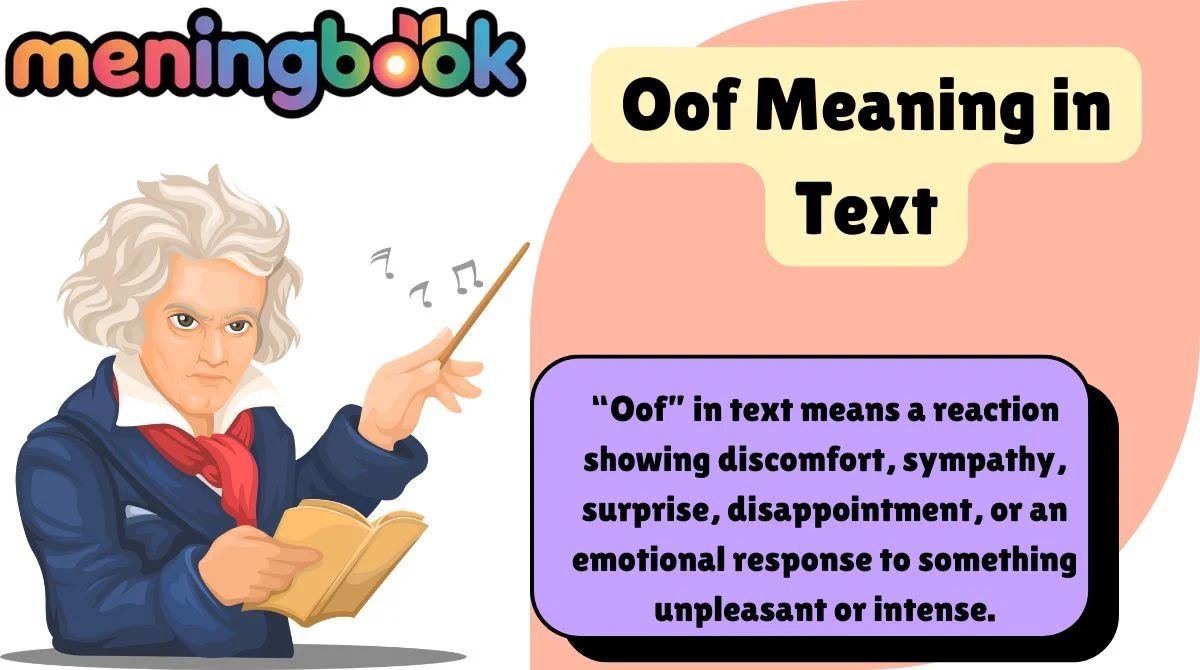
“Oof” in text means a reaction showing discomfort, sympathy, surprise, disappointment, or an emotional response to something unpleasant or intense. It is similar to saying “that hurts,” “wow, that’s rough,” or “that was awkward.” It can also be used humorously, especially online.
Detailed Meaning Breakdown
The word “oof” originally represents a sound people make when they experience a physical impact, such as getting hit, falling, or lifting something heavy. Over time, online communication changed the word into a broader emotional reaction.
Primary Meaning of Oof
The most common meaning of “oof” in texting is a reaction to something painful, difficult, or unfortunate.
Example:
“I failed my exam after studying all week.”
Reply:
“Oof.”
Here, “oof” means the person understands the situation is painful or disappointing.
It does not always mean physical pain. It can describe emotional pain, bad luck, awkward moments, or uncomfortable situations.
Secondary Meanings of Oof
“Oof” can also communicate:
- Sympathy: showing that you feel bad for someone
- Surprise: reacting to unexpected information
- Disappointment: acknowledging something went wrong
- Embarrassment: reacting to an awkward moment
- Humor: making fun of a situation in a light way
Example:
“My boss accidentally emailed the entire company.”
“Oof.”
The speaker is reacting to the embarrassing situation.
Rare Meanings of Oof
In some online communities, especially gaming, “oof” can be used as a meme, joke, or exaggerated reaction.
It may not represent real concern. Sometimes people use it simply because it sounds funny or dramatic.
What “Oof” Means in Different Situations
Everyday Texting
In normal conversations, “oof” usually shows a quick emotional reaction.
People use it when they do not need a long explanation but want to acknowledge something.
Example:
“I have to work 12 hours tomorrow.”
“Oof.”
Meaning:
“That sounds difficult.”
It creates a feeling of understanding without writing a full sentence.
Social Media Platforms
On platforms like comments, posts, and short messages, “oof” is often used as a reaction.
It is common under:
- Bad news
- Funny mistakes
- Awkward situations
- Unexpected events
Example:
Someone posts:
“I just locked myself out of my house.”
Comment:
“Oof 😭”
The emoji adds extra emotion and makes the reaction more playful.
Dating & Relationships
In dating conversations, “oof” can have different meanings.
Example:
“I texted my crush and they left me on read.”
Reply:
“Oof.”
Meaning:
“That is unfortunate.”
However, depending on the relationship, it can also sound teasing.
Example:
“You sent a romantic message at 3 AM?”
“Oof.”
Meaning:
“That was probably not the best idea.”
Professional Communication
“Oof” is usually too casual for formal workplace communication.
In a friendly team chat, it may be acceptable.
Example:
“We lost the client because of a small mistake.”
“Oof, that’s frustrating.”
This can work in an informal workplace.
But in emails or official messages, better alternatives are:
- “That is unfortunate.”
- “I understand the challenge.”
- “That sounds difficult.”
Cultural or Regional Differences
“Oof” is mainly common in English internet culture. It is especially popular among younger online users.
People who spend more time on social media, gaming platforms, or casual messaging are more likely to understand it.
Older generations or people unfamiliar with online slang may not understand its emotional meaning.
Psychological & Tone Analysis
The reason people use “oof” is because it communicates emotion quickly.
Instead of writing:
“That sounds really painful and I feel sorry for you,”
someone can simply write:
“Oof.”
The word creates an emotional connection with fewer characters.
Social Meaning
“Oof” can signal:
- “I understand what happened.”
- “That situation is difficult.”
- “I feel your pain.”
- “That was awkward.”
It shows a reaction rather than providing advice.
Emotional Layer Behind Oof
The emotion behind “oof” depends on the situation.
It can feel:
- Caring
- Funny
- Surprised
- Awkward
- Dramatic
- Sympathetic
The surrounding words, emojis, and relationship between people decide the true meaning.
15 Real Conversation Examples (Explained)
1.
Person A:
“I forgot my wallet at home and already ordered food.”
Person B:
“Oof.”
Meaning:
They are reacting to an inconvenient situation.
2.
Person A:
“My phone broke yesterday.”
Person B:
“Oof, that sucks.”
Meaning:
Showing sympathy.
3.
Person A:
“I accidentally called my teacher ‘mom.’”
Person B:
“Oof 😭”
Meaning:
Reacting to an embarrassing moment.
4.
Person A:
“I have three exams tomorrow.”
Person B:
“Oof.”
Meaning:
“That sounds stressful.”
5.
Person A:
“My favorite team lost in the final.”
Person B:
“Oof, that hurts.”
Meaning:
Sharing disappointment.
6.
Person A:
“I spent $200 and lost everything in the game.”
Person B:
“Oof.”
Meaning:
Reacting to bad luck.
7.
Person A:
“My ex saw my message from two years ago.”
Person B:
“Oof.”
Meaning:
Awkward reaction.
8.
Person A:
“I burned my dinner.”
Person B:
“Oof, try again.”
Meaning:
Light sympathy.
9.
Person A:
“I got rejected.”
Person B:
“Oof. Sorry.”
Meaning:
Emotional support.
10.
Person A:
“I forgot my presentation.”
Person B:
“Oof, good luck.”
Meaning:
Acknowledging difficulty.
11.
Person A:
“My computer crashed before saving my work.”
Person B:
“Oof.”
Meaning:
Reacting to frustration.
12.
Person A:
“I waved back at someone who wasn’t waving at me.”
Person B:
“Oof 😂”
Meaning:
Funny embarrassment.
13.
Person A:
“My vacation got canceled.”
Person B:
“Oof, that’s rough.”
Meaning:
Showing disappointment.
14.
Person A:
“I accidentally sent the message to the wrong person.”
Person B:
“Oof.”
Meaning:
Reacting to a mistake.
15.
Person A:
“My internet stopped during the final game.”
Person B:
“Oof.”
Meaning:
Frustration and sympathy.
When “Oof” Can Be Misunderstood
Although “oof” is simple, people can misunderstand it.
Context Confusion
Someone may think “oof” is rude if they expected a longer response.
Example:
“I lost my job.”
“Oof.”
Some people may see this as too short or uncaring.
The relationship matters.
Generational Gap
Younger users may see “oof” as normal internet language, while others may find it unclear.
Platform Differences
On social media, “oof” can be funny.
In serious conversations, it may appear insensitive.
The same word can have different meanings depending on where it appears.
Similar Words, Symbols, or Abbreviations
1. Ouch
A reaction to pain or discomfort.
2. Yikes
Shows concern, shock, or awkwardness.
3. Wow
Shows surprise or strong reaction.
4. RIP
Often used jokingly to mean something is finished or ruined.
5. Bruh
A casual reaction showing disbelief or frustration.
6. OMG
Shows surprise or shock.
7. Oops
Used after a mistake.
8. Ugh
Shows annoyance or frustration.
9. LOL
Shows laughter or amusement.
10. Smh
Means “shaking my head,” showing disappointment.
When Not to Use “Oof”
Professional Risks
Using “oof” in formal emails may appear too casual.
Example:
A customer complains about a problem.
“Oof, that’s bad.”
This sounds unprofessional.
Cultural Risks
Some people may not understand internet slang.
Tone Risks
In serious situations, “oof” may seem like you are minimizing someone’s problem.
Example:
“I lost someone important.”
“Oof.”
This may feel insensitive.
Expert Tips for Using “Oof” Correctly
- Use it in casual conversations.
- Consider the seriousness of the topic.
- Add extra words when someone needs support.
- Use emojis carefully to show tone.
- Avoid using it in formal communication.
- Understand the relationship with the person.
- Do not use it when a serious response is needed.
- Match the emotional level of the conversation.
Frequently Asked Questions
What does oof mean in texting?
Oof in texting means a reaction to something painful, awkward, surprising, or unfortunate. It is often similar to saying “that’s rough” or “ouch.”
Is oof a bad word?
No, oof is not a bad word. It is a casual expression used to show an emotional reaction.
Does oof mean sympathy?
Yes, many people use oof to show sympathy when someone shares a difficult experience.
Can oof be used as a joke?
Yes. Online users often use oof humorously when reacting to awkward or funny situations.
Is oof rude in text messages?
It depends on the situation. A single “oof” may feel rude in serious conversations because it is very short.
Where did oof come from?
Oof originally represented a sound made when someone experiences impact or discomfort. Internet culture expanded its meaning.
What is the difference between oof and ouch?
“Ouch” usually relates to physical pain, while “oof” can describe emotional, social, or awkward situations.
Can I use oof at work?
It depends on the workplace. It may be fine in casual team chats but is usually not suitable for formal communication.
Final Summary
“Oof” in text is a short but powerful reaction word. It can express sympathy, discomfort, surprise, embarrassment, disappointment, or humor. The exact meaning depends on the situation, relationship, and tone of the conversation.
In casual texting and online spaces, “oof” is a natural way to react quickly. However, in serious or professional situations, adding more words can make your message clearer and more respectful.
Understanding the context behind “oof” helps you communicate better and avoid misunderstandings in modern digital conversations.

I am Noah Peterson, an educational content writer passionate about simplifying complex topics into clear and practical learning