You’re texting someone, and they reply with just “mm.” No emoji. No extra words. Now you’re stuck wondering—are they agreeing, annoyed, bored, or just distracted?
Short text responses like “mm” can feel confusing because they carry tone without explanation.
Unlike full sentences, they rely heavily on context, timing, and relationship dynamics. The same two letters can mean agreement in one situation and disinterest in another.
This guide clears that confusion. You’ll learn exactly what “mm” means in text, how it changes across platforms, and how to interpret it correctly in real conversations.
By the end, you’ll understand not just the definition, but the emotion and intention behind it—so you can respond confidently every time.
Quick Definition of “mm”
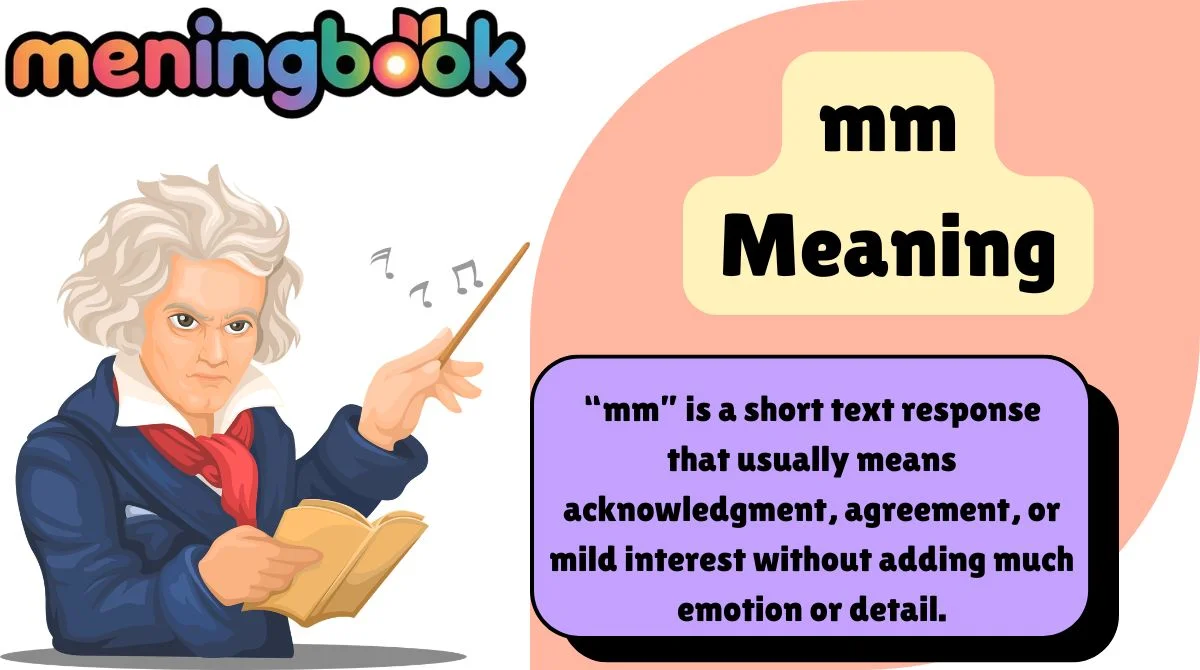
“mm” is a short text response that usually means acknowledgment, agreement, or mild interest without adding much emotion or detail.
It can also signal hesitation, passive listening, boredom, or a neutral reaction depending on context, tone, and timing.
Detailed Meaning Breakdown
Primary Meaning
At its core, “mm” is a minimal acknowledgment. It’s similar to saying:
- “I hear you”
- “Okay”
- “Hmm”
It shows the person is present in the conversation but not necessarily engaged deeply. It often replaces verbal sounds people make in real life while listening.
Secondary Meanings
Depending on context, “mm” can take on different shades of meaning:
- Agreement: “mm” can mean “yes” without enthusiasm
- Thinking: It can signal the person is processing information
- Reluctance: A soft, non-committal response
- Polite listening: Used to avoid ignoring someone
Rare Meanings
In some cases, “mm” may indicate:
- Disinterest or boredom
- Emotional distance
- Passive disagreement
These meanings usually depend on repeated usage or lack of follow-up.
What “mm” Means in Different Situations
Everyday Texting
In casual chats, “mm” is often neutral. It means:
- “I’m listening”
- “Got it”
Example:
- “I’ll call you later.”
- “mm” → Acknowledgment, not excitement
Social Media Platforms
On messaging apps like WhatsApp or Instagram:
- “mm” can feel colder than emojis or full replies
- It may suggest low effort or quick response
People often interpret it as slightly distant if used repeatedly.
Dating & Relationships
This is where “mm” becomes tricky.
- Can signal lack of interest
- May show emotional withdrawal
- Sometimes just lazy texting
Example:
- “I miss you.”
- “mm” → Could feel dismissive or awkward
Context matters heavily here.
Professional Communication
In work settings, “mm” is generally inappropriate.
- It may seem unprofessional
- It lacks clarity
- It can be misread as dismissive
Better alternatives:
- “Noted”
- “Understood”
Cultural or Regional Differences
In some cultures, short responses are normal and not rude. In others, they can seem:
- Abrupt
- Disrespectful
- Emotionally distant
Understanding communication style is key.
Psychological & Tone Analysis
Why People Use It
People use “mm” because it is:
- Fast and effortless
- Non-committal
- Low emotional investment
It allows them to stay in a conversation without fully engaging.
What It Signals Socially
“mm” can signal:
- Passive listening
- Low energy
- Neutral stance
- Mild agreement
Repeated use may suggest disinterest.
Emotional Layer Behind It
Tone depends on context:
- Single “mm”: neutral acknowledgment
- Repeated “mm mm”: attentive listening
- Delayed “mm”: possible disinterest
- Short replies only: emotional distance
15 Real Conversation Examples (Explained)
- “I had a long day.”
“mm”
→ Listening, but not engaging deeply - “Want to go out tonight?”
“mm”
→ Uncertain or uninterested - “I got the job!”
“mm”
→ Seems dismissive or distracted - “I’ll send it tomorrow.”
“mm”
→ Acknowledgment - “You okay?”
“mm”
→ Possibly hiding feelings - “Let’s meet at 5.”
“mm”
→ Agreement without enthusiasm - “I miss you.”
“mm”
→ Emotional disconnect or awkwardness - “This movie is great.”
“mm”
→ Mild agreement - “Can you help me?”
“mm”
→ Hesitation or reluctance - “I’m excited!”
“mm”
→ Lack of shared excitement - “I’ll be late.”
“mm”
→ Acknowledgment - “Do you like it?”
“mm”
→ Unclear answer - “We need to talk.”
“mm”
→ Serious attention or tension - “I’m bored.”
“mm”
→ Matching low energy - “Goodnight.”
“mm”
→ Emotionally flat response
When “mm” Can Be Misunderstood
Context Confusion
Without tone or body language, “mm” can mean:
- Agreement
- Disinterest
- Thinking
This ambiguity causes confusion.
Generational Gap
- Younger users may see it as normal
- Older users may find it rude or dismissive
Platform Differences
- On WhatsApp: neutral
- On dating apps: often negative
- On work chats: unprofessional
Similar Words, Symbols, or Abbreviations
- Hmm – Thinking or uncertainty
- K – Short for “okay,” often seen as cold
- Ok – Neutral acknowledgment
- Yeah – Casual agreement
- Yup – Friendly confirmation
- Uh-huh – Active listening
- Mhm – Similar to “mm,” slightly warmer
- … – Silence or hesitation
- Lol – Light humor or filler
- Sure – Agreement, sometimes reluctant
When Not to Use “mm”
Professional Risks
Avoid using “mm” in:
- Emails
- Workplace chats
- Client communication
It can seem careless or unclear.
Cultural Risks
In some cultures, it may be seen as:
- Disrespectful
- Dismissive
Tone Risks
Avoid using “mm” when:
- Someone shares emotions
- A clear answer is expected
- You want to show enthusiasm
Expert Tips for Using “mm” Correctly
- Use it only in casual conversations
- Pair it with other words for clarity
- Avoid overusing it
- Consider the emotional context
- Don’t use it in serious discussions
- Match the other person’s tone
- Add emojis if needed for warmth
- Replace it with full words in important conversations
Frequently Asked Questions
What does “mm” mean in texting?
It usually means acknowledgment or mild agreement without strong emotion.
Is “mm” rude?
Not always, but it can feel rude depending on tone and context.
What’s the difference between “mm” and “hmm”?
“mm” shows acknowledgment, while “hmm” suggests thinking or questioning.
Does “mm” mean yes or no?
It can mean a soft “yes,” but it’s often unclear without context.
Why do people reply with just “mm”?
Because it’s quick and requires little effort while still responding.
Is “mm” a sign of disinterest?
Sometimes, especially if used repeatedly without engagement.
Can “mm” be used in professional chats?
It’s not recommended due to lack of clarity and professionalism.
What should I reply to “mm”?
Ask a follow-up question or provide more context to continue the conversation.
Final Summary
“mm” is a simple but powerful text response. It can mean acknowledgment, agreement, hesitation, or even emotional distance—all depending on how and when it’s used.
The key to understanding “mm” lies in context, tone, and relationship.
A single “mm” isn’t enough to judge intent, but patterns of usage can reveal interest levels and emotional engagement.
To communicate clearly:
- Use “mm” sparingly
- Add words when clarity matters
- Pay attention to how others use it
Mastering small responses like this can significantly improve your digital communication skills.
When used thoughtfully, even a tiny reply like “mm” can say exactly what you mean.

I am Noah Peterson, an educational content writer passionate about simplifying complex topics into clear and practical learning