People send short messages every day. While texting, they often use abbreviations to save time and space.
One abbreviation that appears in conversations, emails, social media posts, school assignments, and workplace communication is “ETC.”
You may have seen someone write, “Bring pens, notebooks, etc.” or “We talked about movies, games, etc.” and wondered exactly what it means.
Does it replace a long list? Is it formal or informal? Can it be used in professional writing? Why do some people use it often while others avoid it?
Understanding the meaning of “ETC” is important because it appears in many different communication settings. While its basic definition is simple, its proper use depends on context, tone, and audience.
This guide explains the complete meaning of ETC in text, where it comes from, how people use it in everyday conversations, examples of correct usage, common misunderstandings, related abbreviations, and expert tips for using it confidently in 2026.
Quick Definition of “ETC”
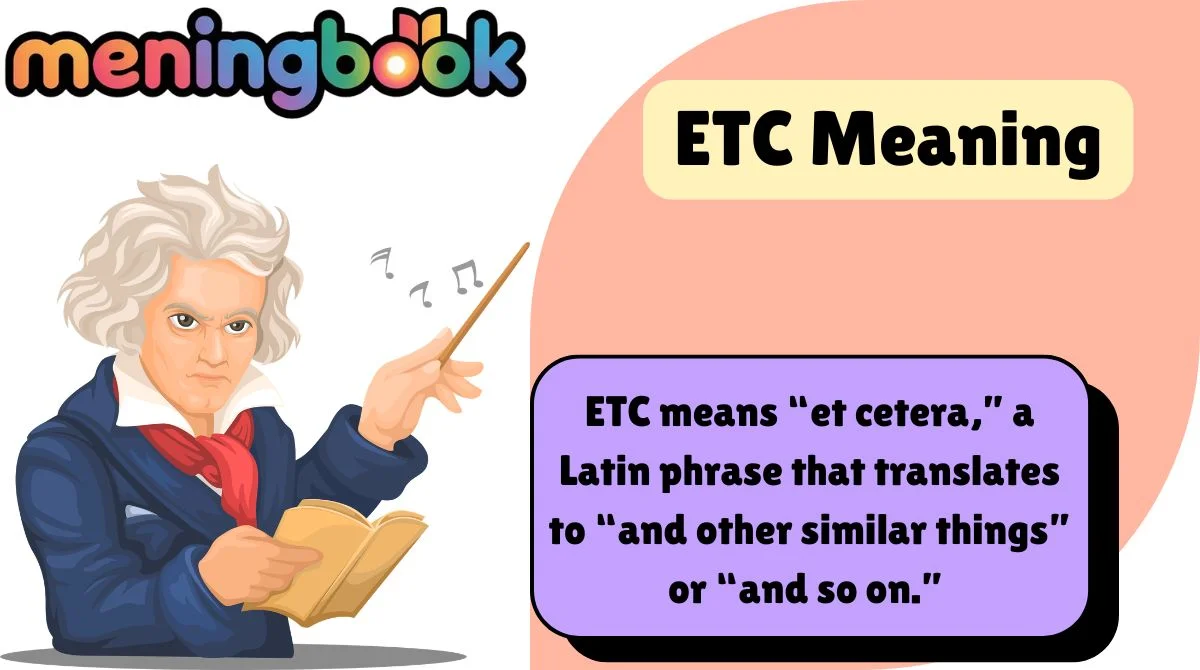
ETC means “et cetera,” a Latin phrase that translates to “and other similar things” or “and so on.” People use it after listing a few examples to indicate that additional similar items exist but are not specifically mentioned.
In modern texting and online communication, ETC helps shorten messages while still communicating that the list continues beyond the examples provided.
Detailed Meaning Breakdown
Primary Meaning
The primary meaning of ETC is “and so on” or “and other things of the same type.”
It signals that the speaker or writer does not want to list every item individually.
Example:
- We need bread, milk, eggs, etc.
This means there are additional grocery items beyond those listed.
Secondary Meanings
Although ETC almost always means “et cetera,” its purpose can vary depending on context.
Indicating Additional Examples
People use ETC when they provide enough examples for the reader to understand the category.
Example:
- I enjoy football, basketball, tennis, etc.
Saving Time
Instead of creating a long list, ETC allows users to communicate efficiently.
Example:
- The project includes planning, testing, documentation, etc.
Creating Informal Tone
In casual conversations, ETC can make communication feel relaxed and conversational.
Example:
- We talked about school, work, family, etc.
Rare Meanings
Outside normal communication, ETC may appear as part of company names, technical terms, or acronyms. However, in texting and general writing, ETC almost always means “et cetera.”
What “ETC” Means in Different Situations
Everyday Texting
In texting, ETC is commonly used to shorten messages.
Examples:
- I bought snacks, drinks, etc.
- We discussed movies, music, etc.
The sender expects the reader to understand that additional similar items are included.
Social Media Platforms
On platforms like Instagram, TikTok, and X, ETC helps users keep posts short.
Example:
- My travel essentials: passport, charger, headphones, etc.
It prevents overly long captions while conveying complete meaning.
Dating & Relationships
In dating conversations, ETC often indicates additional interests, activities, or preferences.
Examples:
- I like hiking, reading, traveling, etc.
- We talked about future goals, family plans, etc.
The abbreviation keeps conversations flowing naturally.
Professional Communication
ETC appears in workplace communication but should be used carefully.
Example:
- The report includes sales figures, customer feedback, market trends, etc.
However, excessive use may make writing appear vague or incomplete.
Cultural or Regional Differences
The meaning of ETC remains largely consistent across English-speaking countries.
Whether someone is in the United States, Canada, Australia, or the United Kingdom, ETC generally means “and so on.”
Minor differences exist in writing style preferences, but the core definition stays the same.
Psychological & Tone Analysis
Why People Use It
People use ETC because it reduces effort.
Instead of typing every item in a list, they provide enough examples to communicate the idea.
What It Signals Socially
ETC often signals:
- Efficiency
- Informal communication
- Shared understanding
- Convenience
It suggests the writer believes the reader can infer the remaining items.
Emotional Layer Behind It
ETC usually carries little emotional weight. However, depending on context, it can suggest:
- Casualness
- Confidence
- Familiarity
- Impatience when overused
For example:
- You always forget keys, wallet, phone, etc.
This may imply frustration.
15 Real Conversation Examples (Explained)
1. Bring pens, pencils, notebooks, etc.
The speaker means additional school supplies are needed.
2. We talked about sports, movies, music, etc.
The conversation covered many entertainment topics.
3. I need apples, oranges, bananas, etc.
More fruits are included beyond those listed.
4. The package contains cables, adapters, chargers, etc.
Additional accessories are present.
5. She enjoys painting, drawing, crafting, etc.
The person has several creative hobbies.
6. We discussed deadlines, budgets, staffing, etc.
Many business topics were covered.
7. Pack sunscreen, sunglasses, hats, etc.
Additional travel items are recommended.
8. The website sells books, games, electronics, etc.
The store offers many categories of products.
9. He collects coins, stamps, cards, etc.
More collectibles exist in his collection.
10. We need tables, chairs, decorations, etc.
The event requires other supplies too.
11. The course teaches grammar, vocabulary, pronunciation, etc.
Students will learn more language skills than those listed.
12. She watches documentaries, dramas, comedies, etc.
Additional entertainment genres are included.
13. Bring snacks, drinks, napkins, etc.
The speaker is referring to other party supplies as well.
14. We compared prices, features, warranties, etc.
Several purchasing factors were discussed.
15. The app tracks calories, exercise, sleep, etc.
The software includes more health-monitoring features.
When “ETC” Can Be Misunderstood
Context Confusion
If the category is unclear, readers may not know what ETC refers to.
Example:
- Bring tools, etc.
Which tools? The meaning becomes vague.
Generational Gap
Older users sometimes prefer complete lists.
Younger users often use ETC more casually and frequently.
Platform Differences
Texting allows greater flexibility.
Professional documents typically require more precision.
Using ETC in a formal report may leave readers wanting specific information.
Similar Words, Symbols, or Abbreviations
1. And So On
Direct English equivalent of ETC.
2. And More
Suggests additional items exist.
3. So Forth
Means additional related things continue.
4. Such As
Introduces examples rather than ending a list.
5. Including
Indicates examples are part of a larger group.
6. Namely
Introduces specific items.
7. E.g.
Means “for example.”
8. I.e.
Means “that is” or “in other words.”
9. Among Others
Refers to additional unnamed examples.
10. Etcetera
The full spelling of ETC.
When Not to Use “ETC”
Professional Risks
Formal documents often require complete information.
Avoid:
- Budget includes salaries, software, etc.
Instead, specify all important categories.
Cultural Risks
Non-native English speakers may misunderstand what items are included.
Clarity is often better than abbreviation.
Tone Risks
Overusing ETC can make writing seem lazy or incomplete.
Example:
- We discussed marketing, etc.
Readers may want more details.
Expert Tips for Using “ETC” Correctly
Use It Only After Similar Items
All listed items should belong to the same category.
Avoid Repeating Categories
Incorrect:
- Dogs, cats, animals, etc.
The category is already included.
Do Not Overuse It
Too much ETC can reduce clarity.
Be Specific When Necessary
Formal writing benefits from complete lists.
Match the Tone
ETC works best in casual and semi-formal communication.
Ensure Readers Understand the Category
Provide enough examples before using ETC.
Consider Your Audience
Professional readers may expect more detail.
Use Proper Punctuation
Most style guides recommend writing it as “etc.” with a period.
Frequently Asked Questions
What does ETC mean in text messages?
ETC means “et cetera,” which translates to “and other similar things” or “and so on.”
Is ETC an abbreviation?
Yes. ETC is the abbreviated form of the Latin phrase “et cetera.”
What is the full form of ETC?
The full form is “et cetera.”
Can ETC be used in professional emails?
Yes, but only when the omitted items are obvious. Excessive use may reduce clarity.
Is ETC formal or informal?
It can be both, although it appears more frequently in casual communication.
Should I write ETC or etc.?
Most writing styles prefer “etc.” in lowercase.
What is the difference between ETC and E.G.?
ETC ends a list and implies additional examples exist. E.G. introduces examples.
Can ETC sound rude?
Not usually. However, excessive use may make messages seem dismissive or incomplete.
Final Summary
ETC is one of the most common abbreviations used in modern communication.
Derived from the Latin phrase “et cetera,” it means “and other similar things” or “and so on.” People use it in texting, social media posts, emails, school assignments, and workplace communication to avoid lengthy lists.
Its meaning remains consistent across most situations, but context determines how effective it is. When used correctly, ETC makes communication shorter and more efficient.
When overused, it can create confusion or appear vague.
The best approach is simple: provide enough examples for readers to understand the category, then use ETC only when the remaining items are obvious.
Doing so will help you communicate clearly, naturally, and confidently in both personal and professional conversations.

I am Noah Peterson, an educational content writer passionate about simplifying complex topics into clear and practical learning