Have you ever received a text that simply said “DC” and wondered what the sender meant?
You’re not alone. Many texting abbreviations have multiple meanings, and “DC” is one of the most confusing.
Depending on the conversation, platform, and relationship between the people communicating, DC can refer to disconnecting from a conversation, a famous location, a comic book brand, or several other meanings.
Because texting culture moves quickly, abbreviations often develop new uses while older meanings continue to exist.
This creates confusion, especially for people who communicate across different age groups, social media platforms, and professional environments.
Understanding the meaning of DC requires looking at the context surrounding the message. A single abbreviation can carry different interpretations depending on who sent it and why.
This guide explains exactly what DC means in text messages, social media conversations, online communities, dating chats, and professional communication.
You’ll learn common definitions, real examples, potential misunderstandings, and practical tips for using the abbreviation correctly in 2026.
Quick Definition of “DC”
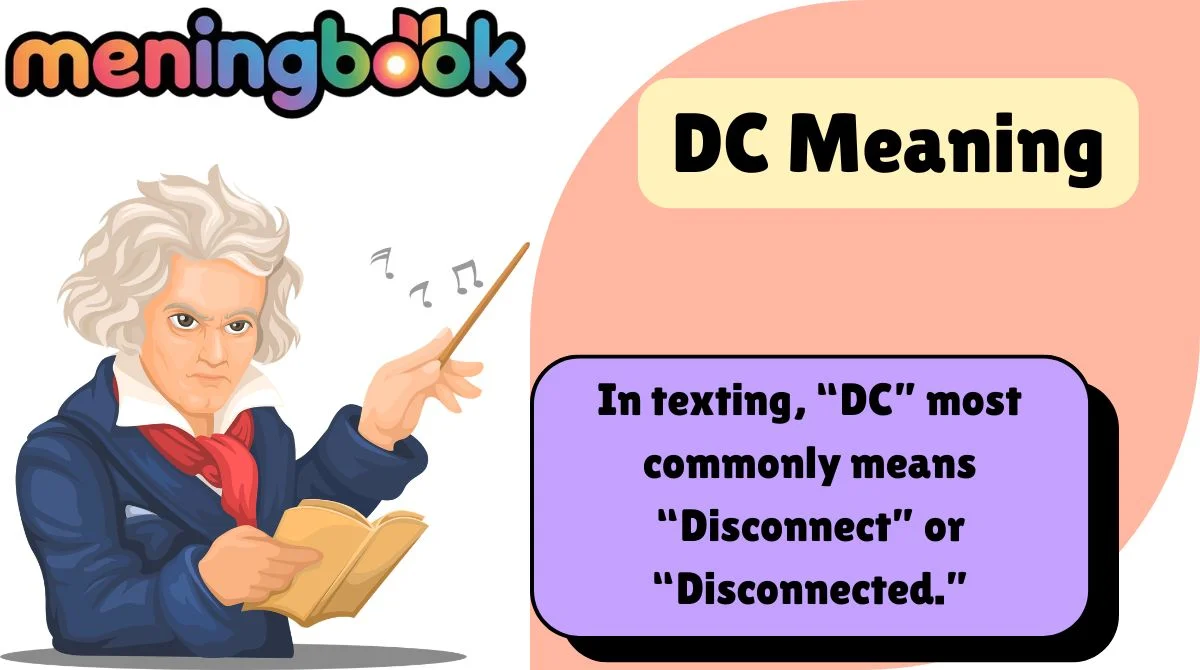
In texting, “DC” most commonly means “Disconnect” or “Disconnected.” It is often used to indicate that someone left a chat, lost an internet connection, ended a conversation, or became unavailable.
Depending on context, DC can also mean Washington, D.C., DC Comics, Discord, Don’t Care, or several niche meanings used in specific communities.
Detailed Meaning Breakdown
Primary Meaning: Disconnect or Disconnected
The most common texting meaning of DC is “disconnect” or “disconnected.”
People use it when:
- They lose internet access
- They leave a game
- A call drops unexpectedly
- Someone exits a chat
- A connection issue occurs
Examples:
- “Sorry, I DC’d during the meeting.”
- “My Wi-Fi is bad. I might DC again.”
- “He DC’d before finishing the game.”
This meaning is especially common in gaming, online calls, and group chats.
Secondary Meaning: Washington, D.C.
DC may refer to the capital city of the United States.
Examples:
- “I’m flying to DC tomorrow.”
- “My office is located in DC.”
- “We visited DC during vacation.”
In travel, politics, and government-related conversations, this meaning is very common.
Secondary Meaning: Discord
Some online users shorten Discord to DC.
Examples:
- “Send the link on DC.”
- “Let’s talk on DC later.”
- “Are you active on DC?”
This usage is common among gamers and online communities.
Secondary Meaning: Don’t Care
In some casual conversations, DC can stand for “don’t care.”
Examples:
- “Where should we eat?”
- “DC, you choose.”
This meaning is less common but still appears in texting.
Rare Meanings
Less common meanings include:
- DC Comics
- Direct Current (electricity)
- Dance Club
- Data Center
- District Coordinator
- Double Check
These meanings usually appear in specialized conversations where the topic makes the meaning obvious.
What “DC” Means in Different Situations
Everyday Texting
In personal texting, DC most often refers to disconnecting or becoming unavailable.
Examples:
- “Sorry, I DC’d.”
- “My phone keeps making me DC.”
- “I got DC’d during the call.”
Friends generally understand the meaning immediately because the context involves communication or technology.
Social Media Platforms
On social media, DC can have several meanings.
Common interpretations include:
- Disconnect
- Discord
- Washington, D.C.
- DC Comics
Examples:
- “Join our DC server.”
- “I got DC’d from the livestream.”
- “Best museums in DC?”
The surrounding topic usually reveals the correct meaning.
Dating and Relationships
In dating conversations, DC often refers to someone disappearing from a conversation or losing connection.
Examples:
- “Sorry, I DC’d last night.”
- “I thought you ignored me.”
- “No, I just DC’d.”
Sometimes people use DC as an explanation for delayed replies.
Professional Communication
In workplace communication, DC usually means:
- Disconnect
- Data Center
- District Coordinator
- Washington, D.C.
Examples:
- “The user was DC’d from the network.”
- “The DC requires maintenance.”
- “The conference is in DC.”
Professional settings require careful interpretation because multiple meanings may exist.
Cultural or Regional Differences
Different regions may use DC differently.
In the United States:
- Washington, D.C. is common.
In gaming communities worldwide:
- Disconnect is dominant.
In technology sectors:
- Data Center is often assumed.
Understanding the audience helps determine the intended meaning.
Psychological & Tone Analysis
Why People Use It
People use abbreviations because they:
- Save time
- Reduce typing effort
- Match online communication styles
- Create group familiarity
Short forms help conversations move faster.
What It Signals Socially
Using DC can signal:
- Digital literacy
- Familiarity with online culture
- Membership in gaming communities
- Casual communication style
Frequent use often reflects comfort with internet slang.
Emotional Layer Behind It
The emotional tone depends on context.
Examples:
- Neutral: “I DC’d.”
- Frustrated: “I keep DC’ing.”
- Apologetic: “Sorry, I DC’d.”
- Casual: “Oops, DC again.”
Tone comes from the surrounding message rather than the abbreviation itself.
15 Real Conversation Examples (Explained)
1.
Person A: “Where did you go?”
Person B: “I DC’d.”
Explanation: The person lost connection or left unexpectedly.
2.
Person A: “You stopped talking suddenly.”
Person B: “My internet DC’d.”
Explanation: Internet failure interrupted communication.
3.
Person A: “Ready for another game?”
Person B: “Not yet. I DC’d.”
Explanation: Gaming connection was lost.
4.
Person A: “Where are you traveling?”
Person B: “DC.”
Explanation: Refers to Washington, D.C.
5.
Person A: “Do you use Discord?”
Person B: “Yeah, add me on DC.”
Explanation: DC means Discord.
6.
Person A: “Which restaurant?”
Person B: “DC.”
Explanation: Means “don’t care.”
7.
Person A: “Why were you absent?”
Person B: “My computer DC’d.”
Explanation: Technical disconnection occurred.
8.
Person A: “The call ended.”
Person B: “Sorry, I DC’d.”
Explanation: The call disconnected.
9.
Person A: “Are you joining tonight?”
Person B: “If I don’t DC again.”
Explanation: Concern about losing connection.
10.
Person A: “Where is the conference?”
Person B: “In DC.”
Explanation: Washington, D.C.
11.
Person A: “Can we move to Discord?”
Person B: “Sure, send the DC invite.”
Explanation: Refers to Discord.
12.
Person A: “Why didn’t you answer?”
Person B: “I DC’d before seeing your message.”
Explanation: Lost access to the conversation.
13.
Person A: “Who publishes Batman?”
Person B: “DC.”
Explanation: Refers to DC Comics.
14.
Person A: “Did you leave intentionally?”
Person B: “No, I got DC’d.”
Explanation: Forced disconnection.
15.
Person A: “What city are you visiting?”
Person B: “DC next week.”
Explanation: Washington, D.C.
When “DC” Can Be Misunderstood
Context Confusion
One abbreviation can have many meanings.
For example:
- “Meet me in DC.”
Could mean:
- Washington, D.C.
- Discord chat
- Something else depending on context
Generational Gap
Younger users often associate DC with gaming and internet culture.
Older users may think of Washington, D.C. first.
Different age groups can interpret the abbreviation differently.
Platform Differences
Gaming platforms often use DC to mean disconnect.
Travel forums usually mean Washington, D.C.
Professional platforms may use industry-specific meanings.
Always consider where the conversation is happening.
Similar Words, Symbols, or Abbreviations
AFK
Away From Keyboard.
BRB
Be Right Back.
GTG
Got To Go.
IDK
I Don’t Know.
IMO
In My Opinion.
TBH
To Be Honest.
NVM
Never Mind.
IRL
In Real Life.
OMW
On My Way.
LOL
Laughing Out Loud.
These abbreviations commonly appear alongside DC in online conversations.
When Not to Use “DC”
Professional Risks
Some coworkers may not understand the abbreviation.
Instead of writing:
- “I DC’d.”
Consider:
- “I lost connection.”
Cultural Risks
International audiences may interpret DC differently.
Clarity matters when communicating across regions.
Tone Risks
In serious situations, abbreviations can seem careless.
Examples include:
- Formal reports
- Business proposals
- Academic writing
- Legal communication
Using complete words is often safer.
Expert Tips for Using “DC” Correctly
Know Your Audience
Use DC only if the recipient is likely to understand it.
Consider Context
Make sure the meaning is obvious from the conversation.
Avoid Professional Documents
Spell out the intended phrase instead.
Add Extra Words When Needed
Example:
- “I got disconnected (DC’d).”
Watch for Multiple Meanings
DC can mean several things simultaneously.
Match the Platform
Gaming communities understand DC differently from business users.
Use Clarity Over Speed
Saving a few characters is not worth causing confusion.
Ask When Unsure
If someone sends “DC” and the meaning isn’t clear, ask for clarification.
Frequently Asked Questions
What does DC mean in text messages?
Most commonly, DC means “disconnect” or “disconnected,” especially during online chats, calls, and gaming sessions.
What does DC mean from a girl in a text?
Usually it has the same meaning as anyone else’s message. It often refers to losing connection, leaving a conversation, or using Discord.
Does DC mean Don’t Care?
Yes. In some conversations, DC can stand for “don’t care,” although this usage is less common.
What does DC mean in gaming?
In gaming, DC almost always means disconnecting from the game server or losing internet connection.
What does DC mean on social media?
It may mean disconnect, Discord, Washington, D.C., or another context-specific meaning depending on the discussion.
What does DC mean in Discord conversations?
Many users shorten Discord to DC when discussing servers, chats, and online communities.
What does DC mean in business communication?
It can mean disconnect, data center, district coordinator, or Washington, D.C., depending on the industry.
How can I tell which meaning of DC is correct?
Look at the surrounding conversation, platform, audience, and topic. Context almost always reveals the intended meaning.
Final Summary
DC is a versatile abbreviation with several meanings, but in modern texting and online communication, it most commonly means disconnect or disconnected.
It is frequently used when someone loses internet access, leaves a call, exits a game, or becomes unavailable during a conversation.
Other popular meanings include Washington, D.C., Discord, and occasionally don’t care. Because the abbreviation can represent multiple ideas, context is essential for accurate interpretation.
By understanding the audience, platform, and surrounding conversation, you can confidently identify and use DC without confusion.
Whether you’re texting friends, chatting in gaming communities, using social media, or communicating at work, knowing the correct meaning helps keep conversations clear and effective.

I am Noah Peterson, an educational content writer passionate about simplifying complex topics into clear and practical learning